HN digest

All AI-generated code should be Open Sourcejakub.jankiewicz.org · 1081 points · 590 comments · 33haiopen-sourceJakub Jankiewicz argues that all AI-generated code should be released under open source licenses or dedicated to the public domain via CC0.

Key points

  • He argues models trained on open source code and Stack Overflow content, under attribution-requiring licenses, make closed-source AI output feel like license laundering.
  • He cites the Monkey Selfie case and US Copyright Office stance that non-human authors cannot hold copyright, extending it to purely AI-generated code.
  • He notes the UK grants limited copyright to computer-generated works, which is why he wants a uniform cross-jurisdiction release policy.
  • He targets code developers accept without review or modification, which he says involves little human effort beyond writing prompts.

What HN thinks

  • Commenters broadly note that US Copyright Office guidance treats AI-assisted work as copyrightable where a human contributes sufficient expressive control, while purely AI-generated output and bare prompts are not.
  • Several commenters argue the article conflates copyleft licensing with copyright status: licenses only govern copyrighted material, so if AI output is uncopyrightable, no license applies and it may instead be kept as a trade secret.
  • One commenter who authored AGPL software describes an LLM-produced clone of their code that was still recognizably derived from it, a concrete case that supports the author's concern about extraction of open source work.
Microsoft 365 outage leads to chlorine gas poisoning of 15 hotel guestswww1.wdr.de · 566 points · 246 comments · 29hbusinesstoolsPhantasialand's hotel pool in Brühl, Germany, was overdosed with chlorine by a faulty automatic dosing system, injuring 15 guests with airway irritation, after a Microsoft outage blocked the alert emails.

Key points

  • The pool's maintenance safety system had sent an email alarm, but the Friday Microsoft/Outlook outage meant nobody received it.
  • Thirteen guests first reported airway irritation, and the count later rose to 15; the initial figure of five hospitalized was corrected to four.
  • One patient stayed in hospital for observation with a moderate injury.
  • The pool was closed temporarily, reopened after the water was replaced, and fire crews and police were called in.

What HN thinks

  • Commenters broadly agree the core failure was design: a safety-critical chlorine alarm relied solely on email, with no audible, visual, or redundant alert.
  • Several argue the outage is only the proximate cause, and that the hotel or system designer, not Microsoft, should bear primary responsibility for the lack of fallback alerting.
  • One commenter noted email gives no delivery confirmation to the sender, and emails were delayed 12-24 hours for some, unlike SMS, which can confirm delivery.
Court denies motion to dismiss DRAM price fixing caselitnews.ai · 479 points · 211 comments · 46hpolicybusinessA federal judge in California refused to dismiss a proposed class action accusing Samsung, SK Hynix and Micron of conspiring to restrict conventional DRAM supply, finding the complaint plausibly alleges an agreement.

Key points

  • Judge Noël Wise held the case is not a rerun of DRAM II, the 2022 Ninth Circuit affirmance of dismissal of an earlier suit against the same companies.
  • The complaint alleges all three companies signed long-term HBM supply contracts and that Micron plans to close its 30-year-old Crucial consumer brand.
  • Near-identical customer-vetting questions adopted by all three in January 2026 were called strong support for a plausible inference of conspiracy.
  • The judge set aside DDR3 allegations and did not rely on trade-conference meetings, and she found the HBM pivot alone insufficient.

What HN thinks

  • Commenters broadly see the HBM pivot and the 2026 customer-vetting practices as circumstantial evidence, with some arguing the AI-driven HBM demand offers a plausible non-collusive explanation.
  • One commenter notes the three makers have a history of prior price-fixing convictions, which they say makes the current pattern look more like established tacit coordination.
  • Several commenters note that consumer DDR4 and DDR5 capacity cannot simply be swapped for HBM, since they use different factories and processes, and there is no idle fab to reopen.
The MacBook Pro's OLED PWM problemmacanorak.com · 478 points · 259 comments · 35hhardwaredesignNotebookcheck measured the new 14-inch MacBook Pro's PROLED XDR OLED panel flickering via PWM at 240Hz at brightness up to 99%, and some early owners report headaches, dizziness and nausea.

Key points

  • Notebookcheck's worst-case reading is 240Hz PWM, roughly 62 times lower than the 14,880Hz measured on the M4 Pro Mini-LED MacBook Pro.
  • The panel combines PWM with DC dimming, and Notebookcheck says flickering persists at 240Hz even though DC dimming is present across brightness levels.
  • Some owners have returned machines; one reported lightheadedness on looking at the screen that lasted an hour or more after walking away.
  • Apple's iPhone offers a Display Pulse Smoothing accessibility setting, but the article notes no equivalent option exists on the Mac.

What HN thinks

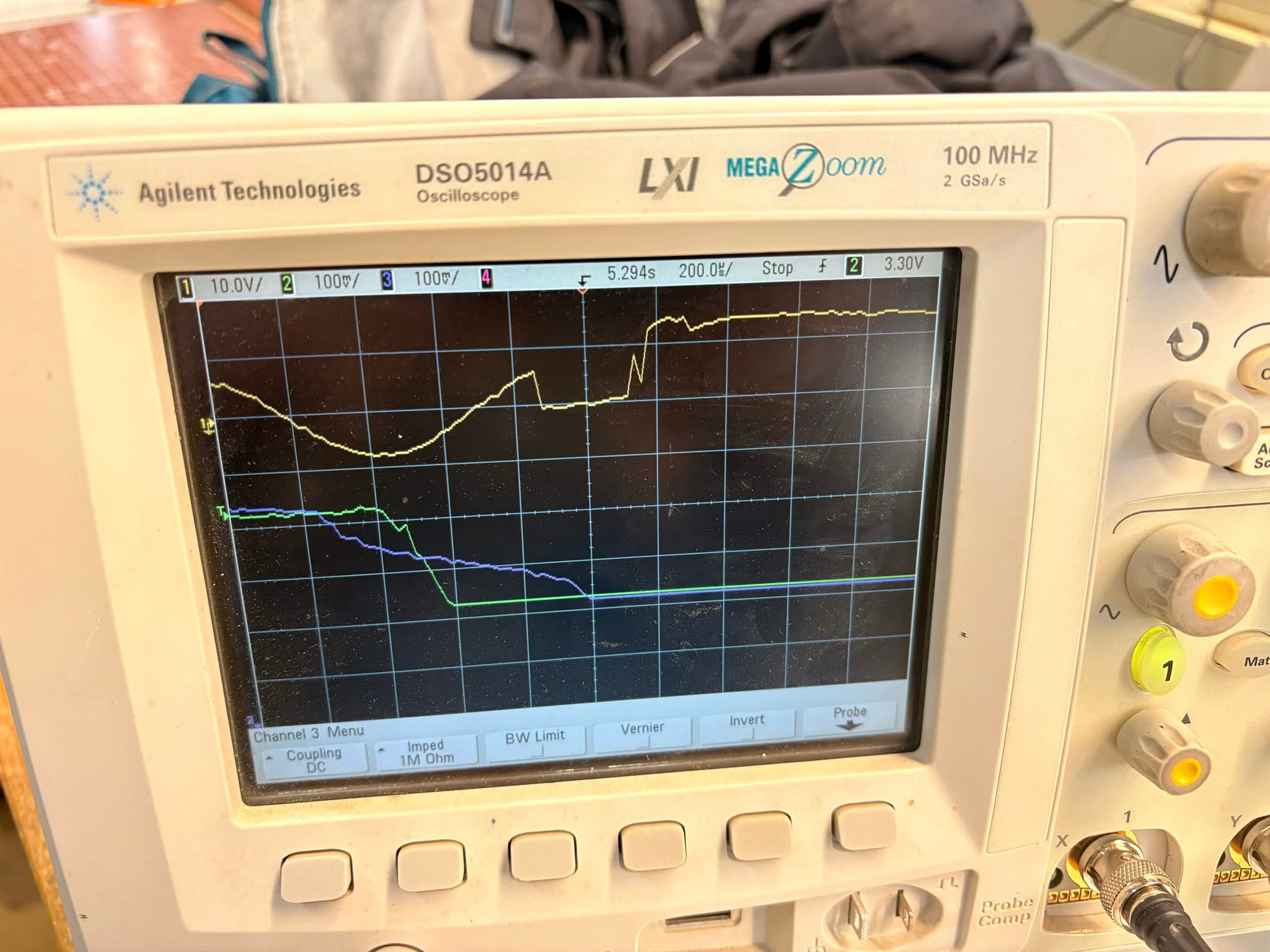
  • Commenters dispute the 240Hz figure, with one noting oscilloscope traces may show a 480Hz or higher base frequency with a second dip pattern, so the measurement itself is contested.
  • Several commenters say PWM sensitivity is real but affects a minority, and that flicker from cheap LEDs and older displays is a more common complaint than OLED alone.
  • One commenter argues that OLED dimming at low brightness commonly uses sub-frame modulation, and that a tandem OLED could in principle support much higher PWM frequencies, as some Lenovo tandem panels reportedly do at 1200Hz.
Protomaps: Self-hosting map tiles has gotten cheap and easybruceroettgers.eu · 450 points · 81 comments · 28hwebtoolsA blog post explains hosting the full Protomaps PMTiles world map as one file on Bunny.net CDN, estimating about $5/month storage and far lower per-view cost than Mapbox.

Key points

  • Storing the 139GB world map with 5x replication to most continents is estimated at about $5 per month in Bunny.net storage fees.
  • Loading a Europe map and zooming to a city transfers roughly 5MB, estimated at $0.00005 in bandwidth at $0.01/GB.
  • Cloudflare needs an edge function to translate x/y/z tile URLs into HTTP Range requests, since it does not cache large Range requests directly.
  • Bunny.net downloads beyond 10MB in one request can be throttled to 10kB/s to limit surprise bills from whole-file downloads.

What HN thinks

  • Several commenters report running Protomaps or PMTiles in production on Cloudflare R2, S3 with CloudFront, or Bunny at roughly $2 to $5 per month, and cite the cost savings over Google Maps or Maptiler bills.
  • The main caveat is latency: one commenter found direct cloud storage range requests slow and uncacheable enough that they put a tile server like Martin in front, while others reported acceptable performance with CDN caching.
  • Commenters note that high-resolution satellite imagery grows to hundreds of terabytes at higher zoom levels, so the cheap-hosting argument mostly applies to vector basemaps rather than imagery.
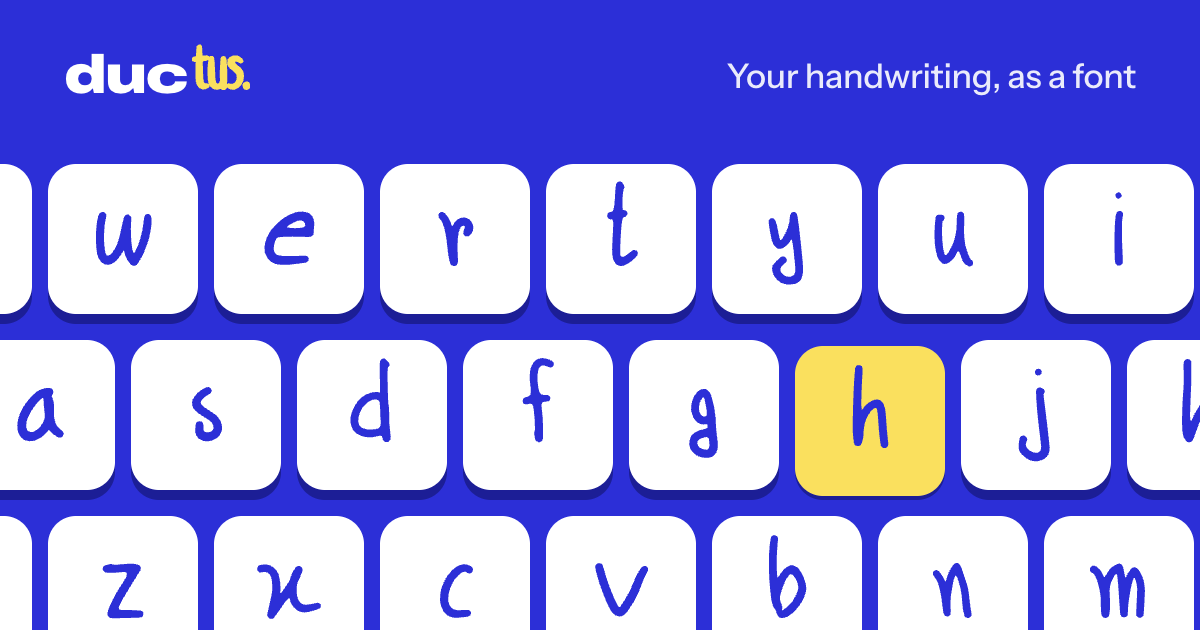
Handwriting, as a Fontductus.sorenblank.com · 441 points · 73 comments · 28hdesigntoolsA web tool lets users build a font from their own handwriting, though the article itself could not be fetched and its details are unverified.
What HN thinks

  • Commenters repeatedly praised the user experience, with several saying it was smooth and easy to finish on a phone, though some found the letter-by-letter process doesn't capture how handwriting connects.
  • The most common request is support for accented characters, umlauts, currency symbols such as the euro and pound, and custom glyphs, since the current character set blocks real use for many people.
  • One commenter who tried it with a tablet noted that a font built from isolated letters looks more like hand printing than cursive, and suggested ligatures and sample words to capture connections.

The article couldn't be read, so this summary is based on the discussion.

Lutnick Pushed to Weaken Chip Rules That Overlap with His Family Businessnytimes.com · 435 points · 188 comments · 36hpolicyaiNYT reports Commerce Secretary Howard Lutnick is pushing for a looser version of proposed rules on Nvidia AI chip sales to Southeast Asian data centers, some of which serve his former firm's clients.

Key points

  • The Malaysian data center A201 is set to open next year with hundreds of millions of dollars in Nvidia's most advanced AI servers, supplying a Chinese tech giant.
  • The company operating A201 is a client of Cantor Fitzgerald, which Lutnick formerly led before handing leadership to his sons.
  • Lutnick is advocating a less stringent version of the controls, which would give the U.S. government more oversight of chip sales to international data centers.

What HN thinks

  • Commenters broadly see the conflict of interest as part of a wider pattern of corruption in the administration, with several arguing that pay-for-play is legal or tolerated in the US.
  • Some pushed back that the overlap is thin, noting Cantor's business is large and other investment banks have similar ties, so the case needs more evidence of influence.
  • One commenter argued that Lutnick's finance background is relevant to Commerce, while others replied that financial services and commerce policy are not the same thing.
Claude Code and Codex reverse engineered my 1994 Jeep's ECU over a $3 Arduino [video]youtube.com · 423 points · 198 comments · 5daihardwareA video shows Claude Code and Codex being used to reverse engineer a 1994 Jeep's engine control unit using a roughly $3 Arduino.

What HN thinks

  • Several commenters warned that the fix may be the wrong one: a lean condition and low fuel-rail pressure point to a clogged filter or failing pump, and rewriting the ECU map does not address that root cause.
  • Commenters expect manufacturers to respond with stronger cryptographic signing and locked ECUs, though some note that signed ECM updates have been standard in Europe for years and that bugs still exist in those schemes.
  • One commenter with first-hand experience reported that an LLM rewriting a car's CAN bus while driving triggered dashboard warnings and disabled ABS and traction control, underscoring the need to keep AI away from live hardware.
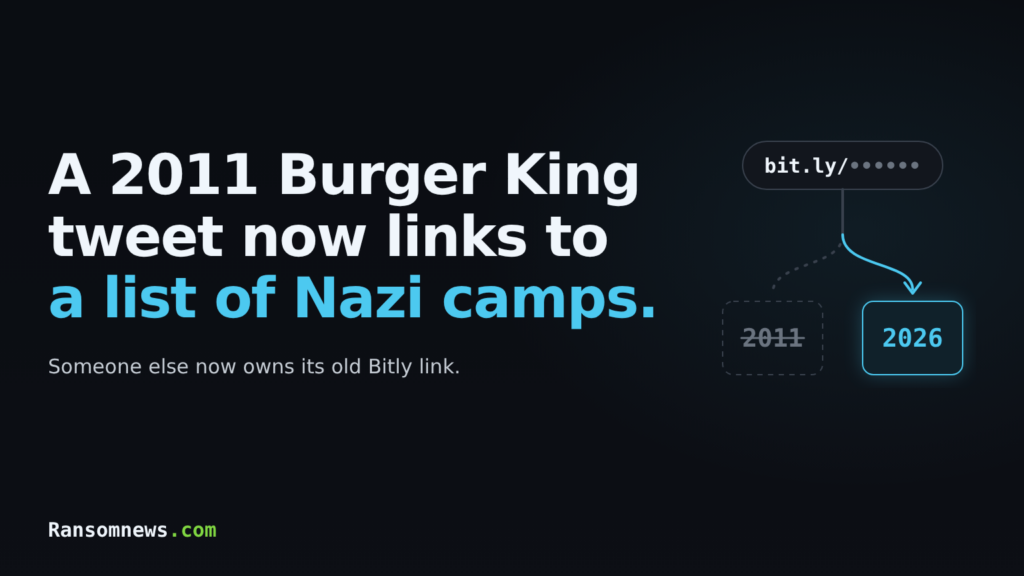
Old Bitly links are being hijackedransomnews.com · 368 points · 194 comments · 26hsecuritywebOld Bitly short links whose endings were freed are being re-registered and pointed at unrelated pages, including Wikipedia articles and crypto-themed domains, without any account being compromised.

Key points

  • Burger King's 2011 tweet link was recreated on 15 November 2026 and now redirects to Wikipedia's list of Nazi concentration camps, though Burger King's account was not breached.
  • Ransomnews found 57 of 97 checked Bitly links in Trump's 2009-2013 tweets no longer point to their original destinations, with 49 recreated and 7 leading elsewhere.
  • Two Trump tweet links now lead to domains copying crypto service names, and one of those domains was re-registered on 15 November 2026 after the link was made in 2024.
  • Bitly's help pages say back-halves cannot be reused, but creation dates on re-registered links contradict that claim.

What HN thinks

  • Commenters broadly argue that outsourced link shorteners create permanent rot risk, since a shortener's business failure, account deactivation, or recycled slugs can break links that were printed or widely shared.
  • Several commenters note that a short custom domain is cheap today and that running a shortener on your own domain keeps control of the redirect, though corporate networks may block uncommon TLDs.
  • One commenter with experience notes that dangling CNAMEs pointing to lapsed domains are being bought by spammers and used to send links that look like they come from reputable institutions.
Crows make decisions faster than we cannytimes.com · 299 points · 196 comments · 30hscienceA New York Times science piece reports that crows make decisions faster than people can, challenging the 'birdbrain' insult; the article itself could not be retrieved.

What HN thinks

  • Commenters largely reject the article's framing, noting that 'birdbrain' means stupid rather than slow, so faster decisions do not disprove the insult.
  • Several commenters argue that quick reactions are not the same as good intelligence, and that fast decisions are often automatic or poor ones.
  • Commenters point to convergent evolution of intelligence in corvids, parrots, and mammals, with some noting that bird neurons are smaller and more densely packed, which may explain their speed.

The article couldn't be read, so this summary is based on the discussion.

A short explainer on how El Niño works [video]youtube.com · 295 points · 176 comments · 29hsciencespaceA short YouTube video explains the mechanics of El Niño, the periodic warming of Pacific Ocean surface waters that shifts global weather patterns.

What HN thinks

  • Several commenters argue that the current El Niño is occurring against a much warmer global baseline, so its impacts such as coastal flooding, reduced snowpack, and fishery losses are likely to be worse than past events.
  • Commenters note the video is US-centric and point to alternatives: a French explainer, a Brazilian video, and a station-level sea surface temperature visualization from Climate Reanalyzer.
  • One commenter argues that the US has cut its share of global CO2 emissions sharply since 2000, while another counters that the framing of risk as a single growing value is too vague to be persuasive.
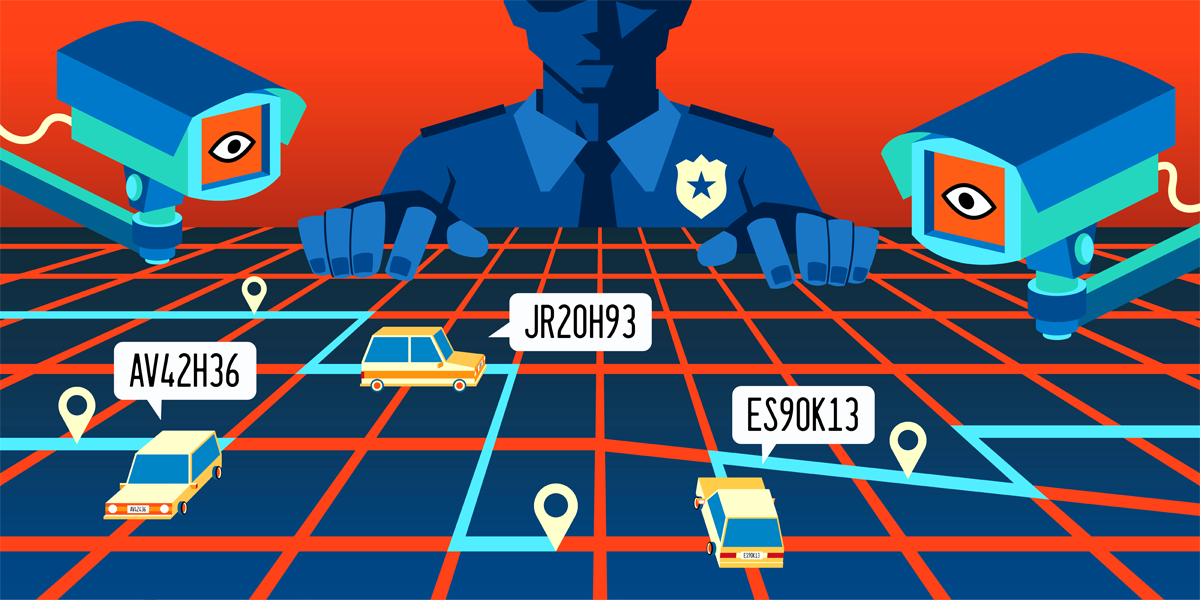
We're Asking an Appeals Court to Require a Warrant for ALPR Searcheseff.org · 283 points · 85 comments · 46hpolicysecurityEFF and the ACLU filed an amicus brief in the Sixth Circuit arguing that police searches of automated license plate reader databases count as Fourth Amendment searches requiring a warrant.

Key points

  • The case, United States v. Sturdivant, involves Cleveland robberies where police had only a car's make, model, and color and ran an open-ended search of Flock and ELSAG ALPR databases.
  • The district court held the defendant had no reasonable expectation of privacy in a plate visible to the public, so the tracking was not a search.
  • The brief describes ALPRs as a virtual time machine letting police review anyone's past movements with a click.
  • A federal district court recently held ALPRs are a form of indiscriminate mass surveillance that can violate the Fourth Amendment.

What HN thinks

  • Commenters broadly agree that keeping non-hit plate data is the core problem, with several arguing that retention limits or deletion rules alone would not stop officers from abusing access, such as tracking exes.
  • One commenter cites New Hampshire's law (3-minute deletion of non-hit images, no non-plate collection) as a model, but others argue that even such rules are unenforced and insufficient without a warrant requirement for access.
  • Some defend limited historical searches for serious crimes like kidnapping or murder, proposing warrant exceptions for emergencies and short retention periods of weeks rather than years.
Things That Turbo Pascal Is Smaller Than (2011)prog21.dadgum.com · 236 points · 130 comments · 34hprogramminghistoryA 2011 blog post compares the 39,731-byte Turbo Pascal 3.02 compiler and IDE against common web and software artifacts, showing each is larger than it.

Key points

  • The whole Turbo Pascal 3.02 executable, compiler and IDE, is 39,731 bytes.
  • It is smaller than the minified jQuery 1.6 file (90,518 bytes) and the yahoo.com home page (219,583 bytes).
  • It is also smaller than the Wikipedia page for C++ (214,251 bytes) and the touch command on OS X Lion (44,016 bytes).

What HN thinks

  • Commenters largely attribute the size gap to modern binaries doing far more work, such as page alignment, dynamic loading, and feature-rich utilities like GNU touch, which handles many timestamp and date-parsing options.
  • Several commenters argue the comparison is unfair because 1980s machines had tiny RAM and floppy-sized storage, so developers then optimized for runtime efficiency out of necessity.
  • Commenters point out that Pascal's decline relates to fragmented vendor implementations and the lack of a collectively evolved standard, while its descendants like Delphi and C# lived on.
Why did some Apollo missions carry a grenade launcher? (2019)space.stackexchange.com · 233 points · 147 comments · 39hspacehistoryApollo 12 and 14 carried a small grenade launcher-type device as part of the lunar surface kit, and the Space Stack Exchange question asks why NASA included it.

Key points

  • The question concerns Apollo missions that carried a grenade launcher, a fact the thread treats as surprising given the lunar setting.
  • A commenter estimates a standard military grenade launcher would throw a grenade roughly six times farther on the Moon because of the absence of air drag, about 3.6 km.

What HN thinks

  • Several commenters argued the grenade launcher was a survival tool, pointing to wolves, bears, and the chance of landing far from recovery teams in Siberia, a reasoning they applied to Soviet missions as well.
  • A commenter noted that the NASA ALSEP flight manual documents the grenade launcher's purpose in detail, suggesting the Stack Exchange question could have been answered from that primary source.
  • Much of the thread turned to jokes and moderation complaints about the Stack Exchange site, so there is little further substantive discussion of the Apollo hardware itself.

The article couldn't be read, so this summary is based on the discussion.

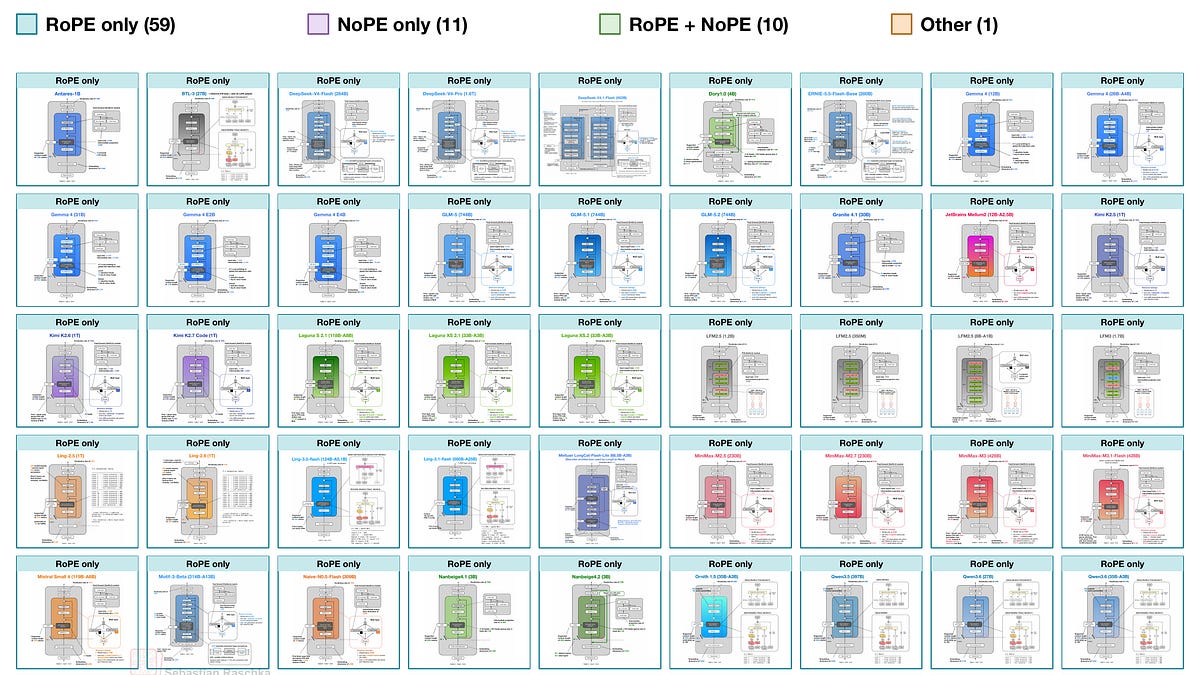
Understanding Positional Embeddings in Modern LLMsmagazine.sebastianraschka.com · 221 points · 27 comments · 36haiprogrammingRaschka's tutorial walks through absolute positional embeddings (GPT-2 learned, sinusoidal), RoPE with worked numeric examples and PyTorch code, and surveys how 2026 open-weight models mix RoPE, partial RoPE, NoPE, and learned biases.

Key points

  • In a toy example, RoPE rotates query and key pairs by position times frequency, so attention scores depend only on the offset between tokens, not absolute positions.
  • GPT-2's learned table of 1,024 position vectors would be over 22% of total weights at a 100k context, which the author calls uneconomic.
  • Partial RoPE rotates only a subset of head dimensions; MiniMax-M3 rotates 64 of 128, and one cited paper found about 10% often matched full RoPE.
  • SmolLM3 applies RoPE in three of every four layers and skips it in the fourth, and the authors reported this improved long-context performance.

What HN thinks

  • Much of the thread debates whether positional embeddings deserve a group-theory framing, with one commenter arguing the article omits the theory behind RoPE and another calling that framing unnecessary.
  • One commenter argues RoPE is post-hoc rationalization and that researchers often pick approaches empirically, with theory developed later to explain what works.
  • A commenter notes that structural approaches like NoPE avoid explicit positional representations altogether, so position information can emerge from the architecture itself.
WebGL Flight Simulator with seed generated terrainbaron.by.dai.studio · 220 points · 55 comments · 27hgamingprogrammingBaron is a browser-based biplane flight simulator with seed-generated terrain, rendered in WebGL 2 and playable with keyboard, mouse, touch, or gamepad.

Key points

  • Worlds are generated from a world seed, and the page offers a Home Field takeoff mission plus a cross-country destination mode.
  • Controls include a throttle lever on the right edge, a mouse stick toggle, tilt steering when paused, and a hold-to-bail key.
  • Rudder is automatic in flight and the stick steers the plane on the ground; rudder is only manual via Q/E keys.

What HN thinks

  • Commenters praised the flight dynamics as a good arcade-simulation blend, with one noting the biplane could loop from level flight on its own power, which surprised them.
  • Several commenters asked for usability fixes: inverted mouse Y axis, persistent vertical speed gauge, trim controls, and a keyboard shortcut legend, plus a Ctrl-S conflict that triggers browser save.
  • Some commenters argued that vibe-coded projects like this deserve less attention than pre-LLM work, while others said the small, dependency-free builds are interesting and fun to experiment with.
Emacs Is My Browserjoshblais.com · 219 points · 122 comments · 32htoolswebThe author uses Emacs's built-in EWW browser as his main web browser, falling back to Chromium or Firefox for roughly 10-15% of sites, and reports it handles most reading and search.

Key points

  • He binds keys such as R for readable mode, & to hand a page to the external browser, and D to download images at point.
  • Videos and YouTube links open in mpv, PDFs open in pdf-tools, and gopher or gemini links go to elpher via browse-url handlers.
  • Searches go through a self-hosted SearXNG instance set as eww-search-prefix.
  • Banking, logins, social media, and government forms are excluded from his workflow entirely.

What HN thinks

  • Commenters broadly agree that eww works well for static pages, blogs, and documentation, but breaks on modern commercial sites that depend on JavaScript and are mainly tested against Chrome.
  • One commenter who uses Emacs as a daily PDF viewer and notebook host still switches to a regular browser for tasks like editing shared Google Docs.
  • Several commenters praise the workflow benefit of keeping code, notes, and web pages in one editor with shared keybindings, though others question whether tiling windows already achieve the same thing.
Preserving 30 years of Salon journalismblog.archive.org · 206 points · 55 comments · 25hculturehistoryThe Internet Archive has preserved Salon's web archive, over 250,000 articles since 1995, and launched an experimental Salon Explorer to browse it by filters.

Key points

  • Salon is available through the Wayback Machine across salon1999.com, salonmag.com, and salon.com, with the archive spanning nearly three decades.
  • The Salon Explorer lets readers filter more than 250,000 articles and the work of over 20,000 writers.
  • The publication announced it was ceasing publication after 31 years, prompting the archiving effort.

What HN thinks

  • Commenters largely praised the Internet Archive for preserving Salon, while noting the site's earlier closure and the loss of its forums such as TableTalk and International Issues.
  • Several commenters lamented the decline of long-form internet forums, arguing their loss has reduced meaningful community and friendship online.
  • One commenter questioned why Salon's domains would go offline rather than be sold or redirected, since static hosting costs seemed small, while another replied that administration rather than hosting is the main expense.
My favourite modern NES gamesjordi.inversethought.com · 181 points · 30 comments · 45hgamingtoolsA blogger lists 25 favourite modern NES homebrew games, mostly sold digitally for a modest fee and often also as physical cartridges.

Key points

  • Titles range from platformers and shmups to bullet hells, Zapper party games, and a Smash-style fighter with online play via a Wi-Fi cartridge chip.
  • Super Tilt Bro downloads updates and characters over Wi-Fi, with cross-play against a free web version using rollback netplay.
  • OverObj works around the NES limit of 64 sprites and 8 per row by splitting sprite updates across the middle of a frame.
  • Several physical cartridges are sold out, so some titles are only available second-hand.

What HN thinks

  • Commenters note that most 8- and 16-bit consoles now have active homebrew scenes, with no-code tools like GB Studio lowering the barrier, and that physical homebrew cartridges are now easy to manufacture.
  • One commenter worries that the homebrew scene is being flooded with low-effort AI-generated games, and some communities have adopted strict no-AI rules.
  • Several commenters suggested additional modern NES games not on the list, including Little Sisyphus, Böbl, and What Remains.
Ask HN: Stripe closed us after one $1,500 invoice and never asked for evidence162 points · 64 comments · 28hfinancestartupsA small appointment-booking business says Stripe closed its account after a $1,500 saved-card charge following a $1 setup payment, rejecting appeals without requesting evidence.

Key points

  • The business billed a client's saved card for three completed appointments, and Stripe blocked the charge before closing the account two days later.
  • Stripe's stated reason was that payments did not appear to be authorized by the customer, and the appeal was rejected as an unacceptable level of risk.
  • The business says it has a recorded call where the client agreed to per-appointment billing, but Stripe did not request that evidence or contact the client.
  • The client now says he is paying by bank transfer outside Stripe, and the business is asking Stripe staff to review the evidence.

What HN thinks

  • Several commenters say the $1 authorization followed by a much larger charge resembles card-testing fraud, so Stripe's risk systems likely flagged it regardless of the business's legitimacy.
  • Commenters suggest avoiding the $1 charge entirely by saving the card without charging it or by sending a fresh invoice for the full amount with explicit written authorization.
  • A few note that disputing a payment processor's decision is not the same as disputing the underlying contract, so disputes like this may need to go to a court or a high-risk processor.
Memory Safety Bugs in Rust Standard Libraryforge-blog.github.io · 161 points · 139 comments · 4dsystemssecurityMicrosoft's FORGE Lab reports several soundness bugs in Rust's std and core, including cases where purely safe Rust code can trigger undefined behavior, found partly with its AI scanner Hyenas.

Key points

  • Bugs fall into three patterns: trusting code not to panic, trusting user-provided trait implementations, and trusting process-wide OS and C library state.
  • MapWindows::clone built a buffer with an armed destructor before filling it, so a panicking element clone made unwinding drop uninitialized values.
  • str::replace with a custom Pattern could emit non-UTF-8 output because a one-byte StringPattern was wrongly assumed to be ASCII; the fix changed the type to &str.
  • A process::exit call from a child thread could unmap the main thread's signal stack, a flaw dating to 2015; the post judges practical exploitation unlikely.

What HN thinks

  • Several commenters argue the finds are routine for a complex codebase, noting Rust's project tracks around 178 open I-unsound issues and that soundness bugs are expected in shipped software.
  • The strongest caveat raised is that Rust's std unsafe code can be triggered from safe code via user-provided trait implementations, and commenters debate whether that counts as a memory-safety failure or as malicious input.
  • A recurring debate is whether unwinding panics should exist at all, with some commenters arguing panic=abort is safer and others noting that process isolation and recovery depend on unwinding.
Clice v1.0 Released: Welcome to Modern C++ykiko.me · 156 points · 85 comments · 30hprogrammingtoolsclice v1.0 is a C/C++ language server built on Clang with a multi-process compile pool, native C++20 module support, and a CLI for indexing, linting, refactoring, and modularizing code.

Key points

  • Compilation runs in isolated child processes, so a compiler crash on half-written code leaves other features like go-to-definition working instead of forcing a server restart.
  • Modules are supported without a build-system-specific setup; clice scans dependencies from compile_commands.json and caches PCHs and PCMs on disk across sessions.
  • Template support includes a DFS pseudo instantiator that resolves dependent names without full instantiation, and Go to Implementation lists calls across all instantiations.
  • Built-in environment probing covers 50+ toolchains, including nvcc, MSYS2, Cygwin, and zigcc, so most projects need only a compile_commands.json.

What HN thinks

  • Commenters debated whether 'Modern C++' is an appealing label, with one experienced developer arguing that newer-feature bias has led to worse decisions than the moniker suggests.
  • A commenter reported that clangd indexing is very slow on huge codebases and said a non-Clang indexer would be preferable, though another noted Clice's multiprocess design aims to address performance.
  • Some commenters noted that the header art and author's blog style drew off-topic discussion, while others found it harmless.
Vulcan rocket fails during return-to-flight launch, 40 Amazon satellites lostspace.com · 135 points · 85 comments · 27hspacebusinessULA's Vulcan Centaur failed 10 minutes into its return-to-flight launch from Cape Canaveral, losing all 40 Amazon Leo broadband satellites it was carrying to orbit.

Key points

  • The rocket lifted off at 12:40 p.m. ET on Nov. 15, 2026, and the anomaly was announced about 50 minutes after launch.
  • The solid rocket boosters appeared to perform as expected, so the nozzle fixes after earlier SRB failures seemed to work.
  • Vulcan had flown four times before, and two of those flights had SRB nozzle burn-throughs about 30 seconds after launch.
  • The Space Force had paused national security Vulcan launches until the booster problem was addressed, and the rocket was grounded for nine months.

What HN thinks

  • Commenters broadly worry that the failure leaves the US with too few operational heavy-lift launchers, since SpaceX dominates and Blue Origin and ULA are both recovering from anomalies.
  • A key concern is whether the cause lies in the BE-4 engines shared by Vulcan and New Glenn, with one commenter noting the booster cut off about 40 seconds late, though others say the failure came after stage separation.
  • Some commenters speculate ULA may be sold or wind down, while noting its Centaur stage is selected for SLS and it holds Amazon and NASA contracts that could keep it alive.
Jensen Huang might return to Nvidia as CEOreuters.com · 131 points · 118 comments · 24hbusinessaiReuters, citing the Financial Times, reports Jensen Huang has discussed a possible return to the CEO role at Nvidia with allies.

What HN thinks

  • Commenters are split on whether the Treasury Secretary's public call for an outside CEO hire carries real weight, with some saying it is a mere non-binding recommendation and others arguing it could influence the board.
  • Several commenters argue the export-control allegations are a serious issue, while others say no evidence of wrongdoing has been shown and the public Singapore and Malaysia sales were disclosed.
  • Many commenters view the affair reports as irrelevant to his fitness to lead, though some argue leaders should be held to a high standard of honesty.
What thousands of conversations look like inside a language modeloperator0x.com · 107 points · 30 comments · 4daiscienceAn author projects Qwen3-1.7B's residual-stream token states from thousands of conversations into 3D, finding English-like text forms a thin sheet while Chinese sits offset.

Key points

  • Only 3 of 2,048 dimensions are shown, and they capture just 17.6% of full token-state variation, so the 99.7% planar fit describes the view, not the model.
  • Best possible 2D plane in full space captures only 28.7% of variation, with 684 PCA directions needed to retain 90%.
  • Chinese answers were generated independently rather than translated, so language and answer content vary together in the data.
  • Croatian responses produced many more tokens than English, so denser patches reflect token counts rather than greater capacity.

What HN thinks

  • Commenters largely criticize the methodology as underexplained, noting the 3D view comes from PCA without justification and that the plane's meaning is unclear.
  • One commenter argues that including raw token embeddings in the PCA compresses the conversation data onto a plane, potentially hiding structure.
  • A commenter who mapped Steam reviews with Qwen embeddings found that embedding text length dominated position more than content, a possible confound for this kind of plot.
A NES emulator written in Odinlucypero.com · 105 points · 40 comments · 35htoolsopen-sourcelucyNES is a hobby NES emulator written in Odin that the author paused in January 2025 after about seven months of work, claiming accuracy enough for Battletoads.

Key points

  • Supports mappers NROM, MMC1, UXROM, CNROM, MMC3, GxROM and AxROM, with save states, a debugger view and a CRT shader toggle.
  • Sound is only partial and the DMC channel is unimplemented, so most games sound poor according to the author.
  • Some games fail because of poorly implemented mappers, which the author found hard to understand from documentation.
  • Odin's lack of automatic integer promotion caused several bugs for the author, who was used to C semantics.

What HN thinks

  • Commenters broadly praise Odin's feature set, especially manual memory management, arena allocators, and vendored libraries for graphics and gamedev, with one commenter saying it beats C3 and Zig on syntax.
  • The error handling style drew criticism, with one commenter calling Go-style error values the ugliest part of the language and another defending errors as values over try/catch.
  • One commenter noted that Odin requires fairly recent LLVM versions, which limits portability to legacy machines and blocks self-bootstrapping with simple C compilers.
Book list for streetfighting computer scientistsnick-black.com · 103 points · 40 comments · 41hprogrammingsystemsA personal reading list of classic computer science and systems books, organized into intro, core, and advanced tiers, with terse annotations on why each is worth reading.

Key points

  • The list skips machine learning, quantum, accelerator/SIMT, and infosec books, which the author explicitly dismisses or considers out of scope.
  • Recommends the second edition of Warren's Hacker's Delight and the second or third edition of Stevens and Rago's Advanced Programming in the UNIX Environment.
  • Pairs Josuttis's C++ Move Semantics with Rust reading, arguing it justifies Rust better than any Rust text.
  • Includes Garey and Johnson and Sipser so readers learn to recognize NP-complete and undecidable problems before promising solutions.

What HN thinks

  • Several commenters note the list is more theoretical and deep-study than 'streetfighting,' which usually means pragmatic and useful, and some argue formal theory such as automata and complexity is missing.
  • Commenters question the age of some books, noting Samet's 2006 text lacks newer methods like HNSW, while others argue fundamentals change slowly and remain the priority.
  • One commenter with first-hand experience says domain expertise lets them catch LLM errors on a data project, arguing expertise still matters when using AI tools.
Do House members' stock trades beat the market? A test of 8,900 tradesarkanumdata.com · 97 points · 103 comments · 28hfinancepolicyA data analysis claims to test roughly 8,900 U.S. House members' stock trades against market benchmarks to see whether they outperform; the article itself could not be retrieved.

What HN thinks

  • Commenters broadly argue that whether officials beat the market is beside the point, since the appearance of impropriety alone undermines public trust and supports banning congressional stock trading.
  • Several commenters note that the median-trade measure could miss a few well-timed trades, and that trade disclosures give only dates rather than times, limiting what the analysis can detect.
  • Commenters point to strong bipartisan public support for a trading ban in a cited survey, while noting that legislative action has been slow, and debate whether low congressional pay pushes politicians toward wealthier candidates.

The article couldn't be read, so this summary is based on the discussion.

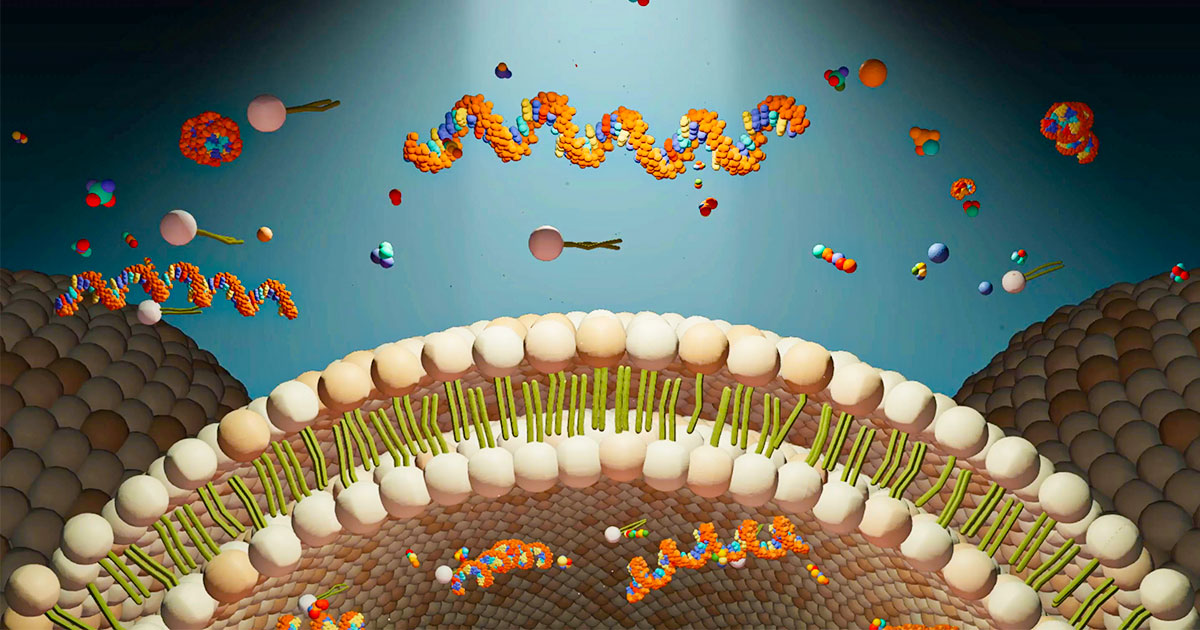
The Evolving Story of How Chemistry Became Biologyquantamagazine.org · 94 points · 21 comments · 4dsciencespaceQuanta surveys origins-of-life research, arguing the field's single-molecule camps are giving way to multi-molecule approaches, and reports a 2026 synthetic cell that replicates DNA, divides, and shows crude selection.

Key points

  • Miller's 1952 spark experiment produced five amino acids from simulated early-Earth gases, and Krishnamurthy calls it the start of prebiotic chemistry.
  • A 2024 Donoghue team estimated LUCA had about 2,600 proteins, a basic metabolism, membranes, and a primitive immune system, dated to 4.2 billion years ago.
  • Otto's benzene-ring stacks self-replicate and store size information, and his lab has since made compartments that grow and divide.
  • The 2026 synthetic cell was built from liposomes holding a DNA replication system and 36 enzymes, and it needs constant food and ribosome supply.

What HN thinks

  • Commenters largely agree the field is moving from single-molecule hypotheses like the RNA world toward multi-molecule and compartmentalized approaches, though one noted alternatives such as clay-based origins.
  • The main criticism is that the article asserts self-reproducing molecular loops and the emergence of life without explaining the bootstrapping step or how information storage and transmission arose.
  • One commenter argued that defining life itself remains unresolved, with proposals such as autopoiesis and entropy-gradient-based definitions offered as broader frameworks.
Eclipse Mosquitto – An open source MQTT brokergithub.com · 93 points · 32 comments · 29htoolsopen-sourceEclipse Mosquitto is an open source MQTT message broker, with a C and C++ client library and command-line publish, subscribe, and admin tools, supporting MQTT versions 5.0, 3.1.1 and 3.1.

Key points

  • The repository has about 11.4k stars and 4,890 commits, and the README lists optional dependencies such as openssl, sqlite3 and libmicrohttpd.
  • Features can be toggled at build time, for example WITH_TLS=no, WITH_SQLITE=no, or WITH_HTTP_API=no, and plugins can be built selectively under CMake.
  • The broker starts with anonymous local-only access by default, so a config file with listeners and authentication is needed for remote clients.

What HN thinks

  • Commenters questioned why an older, unchanged project was posted, since there was no new release or announcement.
  • Several commenters noted Mosquitto is a stable, widely used reference broker, while alternatives like EMQX and RabbitMQ are often chosen for clustering.
  • One commenter said RabbitMQ's MQTT plugin partitioned often in a cluster under transient network problems, so they moved to a single larger instance instead.
Semicircle Packingrorz.io · 92 points · 9 comments · 3dmathaiA writer details hand-and-tool exploration of the Paradigm 'Pack Semicircles' puzzle, reaching a radius of 2.94853 for 15 semicircles and placing top three on the leaderboard.

Key points

  • The author built a custom web tool with Codex offering symmetric fan layouts, a Tighten mode, and a Relax mode that splits fans into layers for asymmetric tweaks.
  • Symmetric layouts topped out around 2.97, and asymmetric hill-climbing from a forked Python repo got the author to 2.94853.
  • The post notes the #1 leaderboard entrant published a paper on their strategies, which the author's AI-assisted search could not beat.
  • The author says the puzzle is tied to a short story contest sponsored by Paradigm, with a prize pool of $100,000, though the article itself focuses on the puzzle.
Notes on Mathematics for Engineers (1959) [pdf]websites.umich.edu · 89 points · 24 comments · 5dmathscienceA 1959 University of Michigan student-branch reference compiling orthogonal functions, special functions, Laplace and Fourier transforms, vector identities, and unit conventions in one consistent notation.

Key points

  • Covers Legendre, associated Legendre, spherical harmonics, Laguerre, and Bessel functions with recurrences, normalizations, and orthogonality relations.
  • Chapters 8 and 9 give Laplace and Fourier transform theorems plus lookup tables, with worked examples such as a series RL circuit and a semi-infinite slab heat problem.
  • Includes Heaviside partial-fraction inversion rules and residue-based inversion integral derivations.
  • Appendix-style notes give electrostatic and electromagnetic cgs unit definitions and practical-to-cgs conversion tables.

What HN thinks

  • Commenters lament that engineers increasingly rely on tools like CAD, simulation, and AI that embed the math, so the underlying knowledge is less commonly needed.
  • One commenter argues that the most advanced meshing and finite element techniques are hidden in proprietary products, while open tools like OpenFOAM struggle to compete, though LLMs may make open research easier to use.
  • Another commenter notes that LLMs now act as patient tutors, which could make it easier to learn the continuous-approximation methods a mentor once tried to teach.
Disk encryption on NetBSD – achieving secrecynetbsd.org · 87 points · 17 comments · 42hsecuritysystemsA NetBSD guide shows how to keep most of a system's data encrypted using cgd on a small unencrypted root partition, with /home, /var and /usr moved onto the encrypted partition.

Key points

  • The root partition stays unencrypted at about 4 GB, since the base system is assumed to be identical across installs and not sensitive.
  • Encryption uses cgdconfig with argon2id key derivation and Adiantum or aes-cbc with a 256-bit key, and a nested disklabel or GPT table verifies the password.
  • Directories moved to the encrypted partition are /home, /var and /usr, linked back into place, and mounted early via critical_filesystems_local.
  • The author says /etc remains on the unencrypted root because it holds files needed to boot, and that the guide was written by one person and may contain errors.

What HN thinks

  • One commenter argued that system packages are not usefully secret and that the scheme's real value is verifying they have not been tampered with, while others said leaving binaries unencrypted makes evil maid attacks easier.
  • Several commenters questioned the threat model: a user worried about revealing Tor installation would be better served by installing it in the home directory, and some noted that relays expose themselves through traffic regardless of disk encryption.
  • One commenter with NetBSD experience pointed out where a typical Tor install lands on disk (/usr/pkg, /var/chroot/tor, /var/log/tor, /etc/rc.d/tor), showing the partial encryption leaves those traces visible.
500 Lines or Less A 3D Modelleraosabook.org · 87 points · 11 comments · 3dprogrammingtoolsA chapter from the 500 Lines or Less book builds a small 3D modeller in Python using legacy OpenGL, GLUT, and a scene graph of nodes with ray-based picking.

Key points

  • The scene is a composite tree of Node objects, so a snowman made of three spheres can be moved and selected as one item.
  • Picking uses ray intersection with each node's axis-aligned bounding box, which is fast but wrong at corners, such as clicking past a sphere's corner.
  • Camera motion is implemented by transforming the scene rather than the camera, with rotation handled by a quaternion-based trackball.
  • Legacy fixed-function OpenGL is chosen deliberately to reduce linear algebra and code size, despite being deprecated.

What HN thinks

  • Commenters questioned using a large library like OpenGL for a short program, with one arguing the 500-line goal is about comprehensibility rather than code golf.
  • One commenter noted that OpenGL's small API hides a complicated state machine underneath.
  • Readers pointed to a related write-up on a raylib-based SDF 3D modeller built in about 2k lines in a week as a comparison point.
A quest to create the perfect whiskey glassnytimes.com · 86 points · 93 comments · 3ddesigncultureAustrian glassware designer Kurt Josef Zalto has unveiled the No. 11 whiskey glass, made with Josefinenhütte after three years of research, aimed at keeping alcohol from overpowering aroma.

Key points

  • Zalto, a fifth-generation glassmaker's son, built his reputation on wine glasses before turning to whiskey a few years ago.
  • He says a few millimeters at the rim or a slight change in bowl curve noticeably alter how the same liquid tastes.

What HN thinks

  • Several commenters argue a glass funnels aroma and reduces the burn, so a cognac snifter or Glencairn works about as well as a specialty design, though one experienced drinker reports noticeably less burn in side-by-side tests.
  • Skeptics note that the claimed effect is hard to verify, since taste tests are rarely blinded and the glass's benefit could be placebo; one commenter suggests measuring ethanol vapor at the glass mouth instead.
  • Some commenters say placebo and whimsy are fine reasons to enjoy a glass, but warn that marketing and mystique, in whisky and audio alike, can make people feel they must buy expensive versions.
A rare glimpse inside the high-risk, high-reward Hormuz tradelloydslist.com · 81 points · 75 comments · 6dbusinesspolicyA Mercuria freight trader's court witness statement shows how the firm got crude out of the Strait of Hormuz via Sinokor VLCCs and an Adnoc shuttle, while inside-strait fixtures largely failed.

Key points

  • Mercuria's charters used a declining demurrage clause, so the longer a ship was trapped in the Gulf, the cheaper the fixture became as floating storage for Mercuria.
  • Owners refused Hormuz transits without a 'Strait of Hormuz Clause' letting either owner or master refuse the voyage.
  • Across 24 attempts from April 22 to June 15, the trader could not fix any of five Mercuria VLCCs to load exclusively inside the Gulf.
  • Adnoc's shuttle model moved ship-to-ship transfers to the Gulf of Oman, with Navig8 acting as middleman, shifting transit risk away from owners.

What HN thinks

  • Commenters largely focused on the geopolitical framing rather than the trading mechanics, with several arguing the Hormuz disruption reflects the broader US-Iran conflict and its costs.
  • One commenter argued that paying a toll to Iran for passage could be a reasonable compromise, while others countered that the blockade and attacks on shipping make any such deal contested.
  • A recurring criticism was that traders profiting from the crisis amount to war profiteering, though this was asserted more than substantiated in the thread.
'Duffy Lied': Controllers Refute Transportation Secretary's Ground Stop Storycommondreams.org · 78 points · 23 comments · 32hpolicybusinessAir traffic controllers told a Washington Examiner reporter they reject Transportation Secretary Sean Duffy's explanation for Friday's nationwide ground stop, which he blamed on overloaded switches and routers.

Key points

  • Anna Giaritelli said she spoke with 60 controllers, who questioned the timing of the equipment changes, saying such switch work usually happens midweek at night, not on busy Friday afternoons.
  • Duffy later blamed contractor L3Harris, which was replacing old copper wire with fiber, while saying the $875 million SMART AI system was 'not even plugged in.'
  • The ground stop was only the third nationwide FAA ground stop ever and the longest nationwide aviation shutdown in 25 years, affecting about 1.5 million travelers.
  • A September GAO report had warned that FAA rapid modernization could lead to outages and ground stops, which Rep. James Walkinshaw cited in challenging the administration's account.

What HN thinks

  • Commenters largely treat the outage as a cascading failure with several contributing causes rather than a single broken switch, and note that the official explanation may never be fully verified.
  • One commenter with long incident-response experience argues that outages usually need several things to be in the wrong state at once, and that deployments outside safe maintenance windows carry extra risk even when procedures are followed.
  • Some commenters point out the controllers' skepticism is mainly about timing, since upgrades during a Friday daytime peak would be unusual, though overnight work on Thursday remains possible.
Handwritten 200-year-old dismissal notice found on roof tilebbc.co.uk · 74 points · 46 comments · 4dhistoryA handwritten dismissal notice dating from about 200 years ago was found on a roof tile, according to the headline; the article could not be fetched.

What HN thinks

  • Commenters largely treated the inscription as a practical memo: clay tiles were apparently used as scratch pads for notes, and one commenter linked a similar tile recording an order list from 1802.
  • Several commenters joked about the dismissal being a prank or a hint, though one pointed out that writing legibly on wet clay takes deliberate effort, which makes a stray imprint unlikely.
  • One commenter noted that the tile would have been written on before firing, so the message survived about 200 years because the tile was used on a roof.
The Hypertext Transfer Protocol Status Code 483 (I'm Not a Freezer)datatracker.ietf.org · 73 points · 37 comments · 33hwebcultureA draft IETF Internet-Draft by Ricardo Bánffy proposes HTTP status code 483 ("I'm Not a Freezer") for servers that understand a request to freeze or refrigerate something but lack that capability.

Key points

  • The draft asks IANA to register 483 in the HTTP Status Code Registry, with the reason phrase "I'm Not a Freezer".
  • It explicitly forbids returning 483 merely because a server is cold, uses liquid cooling, offers "cold storage", or has frozen processes.
  • It says a 483 response does not imply the server is a refrigerator, and that a refrigerator-only status code is deferred to future work.
  • It is marked as an individual submission with no IETF endorsement and no formal standing, and is an April Fools-style satire.

What HN thinks

  • Several commenters treat the proposal as a joke or April Fools-style idea, and one suggests extending the existing 418 I'm a Teapot code with a header listing what the server is not.
  • The main objection to that alternative is backwards compatibility and ambiguity: listing multiple non-identities could leave a client guessing what the server actually is.
  • One commenter notes that 418 is an HTCPCP code rather than a standard HTTP status code, and another says 421 Misdirected Request could serve a similar purpose.
Kiri – The Modern Container Runtimerunkiri.com · 73 points · 32 comments · 43htoolssystemsKiri is a free beta container runtime for Mac, Windows and Linux that runs Docker containers through one daemon, claiming docker run starts 8x faster than Docker Desktop.

Key points

  • Its published benchmark shows docker run at 22 ms on Kiri versus 178 ms on Docker Desktop, 152 ms on Colima and 279 ms on OrbStack, on 2 CPUs and 8 GB.
  • On macOS it boots one minimal Linux VM via Virtualization.framework with a custom kernel, cold boot to ready in 112 ms.
  • Unlike OrbStack, which keeps a shim process per running container, Kiri creates namespaces and cgroups from one daemon and leaves no per-container process.

What HN thinks

  • Commenters question whether the 8x claim refers to container execution or surrounding tooling, and say the benchmark baseline is weak since Docker Desktop is a low bar compared with Podman, OrbStack, Colima or Apple's containers.
  • One commenter reports the full benchmarks show it running faster than Colima with the vz backend on macOS, which they found interesting given recent gains in lightweight VM runtimes there.
  • Opinions split on whether the project is low-effort AI-generated 'slop': one commenter finds the Rust codebase largely free of AI tells, while another doubts the contributors are real people.
Open-Source HF Communications for Remote Communities and Experimentersardc.net · 71 points · 9 comments · 6dopen-sourcetoolsRhizomatica has released its HERMES HF messaging system as fully open source by pairing it with Mercury, a free modem that replaces the paid, per-radio proprietary VARA modem.

Key points

  • Mercury, released May 2026, lets HERMES drop VARA's per-radio license fees while providing similar functionality, and it can run independently of HERMES.
  • HERMES supports messages, email, and file exchange over HF, and its largest deployment spans nearly 90 radios in Waorani communities in the Ecuadorian Amazon.
  • Mercury has been adapted to run on a Raspberry Pi Zero and compact radios such as the HF Signals zBitx.
  • Amateur operators have used Mercury to exchange Winlink email, a use Rhizomatica had not previously tested.

What HN thinks

  • One commenter noted the project has received ARDC funding, which the article also confirms through grants dating back to 2021.
Your Agent Will Pick the Hackable Onegeoffstearns.com · 70 points · 39 comments · 27haihardwareGeoff Stearns argues that as AI agents make custom firmware cheap, agents will steer buyers toward hackable devices, pushing makers like M-Vave toward open firmware.

Key points

  • M-Vave published its FM-1 firmware under GPLv3 in October 2026, with a development kit and a browser emulator for testing builds before flashing.
  • Behringer reportedly published firmware source for its upcoming KICK sampler and IGNITE sequencer within two weeks of M-Vave's move.
  • Google's developer identity verification rule for certified Android apps has been in effect in four countries since September 30 and is planned worldwide for 2027.
  • Chamberlain cut Home Assistant off from its MyQ garage door openers in 2023, showing how closed companies keep control over who can connect.

What HN thinks

  • Several commenters doubt the title's central claim, saying they have not seen agents favor hackable hardware and that LLM recommendations simply reflect training data or paid placement.
  • One commenter argues most buyers are apathetic about firmware and privacy settings, so an agent-driven shift toward openness is unlikely to matter much in practice.
  • Another expects closed manufacturers to respond by hardening devices, pointing to Alexa speakers as an example of hard-to-compromise closed hardware.
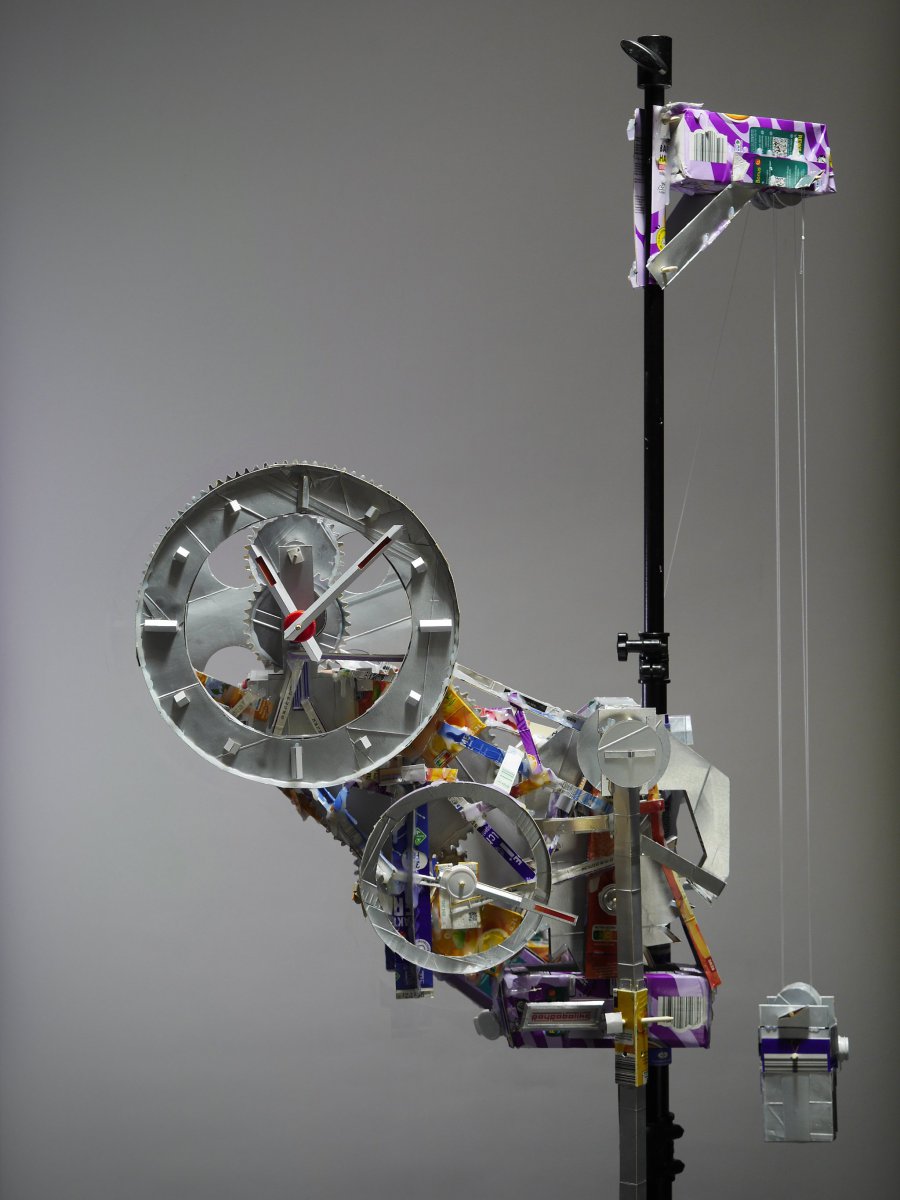
Show HN: Carton Clock – A working pendulum clock made from empty drink cartonsniklasroy.com · 68 points · 2 comments · 4dhardwaredesignNiklas Roy built a working pendulum clock with seconds, minute and hour hands from empty drink cartons, hot glue, skewers and paper straws, running a little over an hour per winding.

Key points

  • The escape wheel has 15 teeth and turns once every 30 seconds, driving the seconds hand through a single 2:1 reduction.
  • The minute-to-hour motion work uses two 40-tooth-sum gear pairs (3:1 then 4:1), letting both hands share one axis.
  • A pendulum with two carton bobs and movable metal nuts tunes the period, but the clock still runs slightly fast.
  • The weight drive is a block and tackle giving 10 m of string, with the clock tripod and 3D-printed jigs not made of cartons.

What HN thinks

  • No comments were available in the provided thread, so discussion points cannot be summarized.
20 Years of Pyrologpypy.org · 68 points · 4 comments · 4dprogrammingaiCF Bolz-Tereick's retrospective on Pyrolog, an RPython Prolog interpreter started in 2006, which never gained real users but fed ideas into the PyPy JIT and other RPython projects.

Key points

  • The interpreter moved from exception-based backtracking to reified success and failure continuations on the heap, keeping the host stack flat during Prolog calls.
  • Pyrolog's continuation design was the basis for pyjitpl5, the trace-based JIT now at the core of PyPy's meta-JIT, first prototyped in Prolog in 2008.
  • Early Pyrolog was often about ten times slower than SICStus Prolog, and the stackless transformation was dropped after doubling binary size and slowing it.
  • Performance had sharp cliffs: the JIT beat SICStus on predictable loops but not on backtracking-heavy search, where continuations escaped the optimized region.
Show HN: The Last Complication, a Zachtronics-style watchmaking puzzle gamelastcomplication.com · 64 points · 10 comments · 25hgamingLast Complication is a browser puzzle game, styled as watchmaking, where counters move around a 30-house board driven by a repeating ten-throw sequence.

Key points

  • Each throw moves one counter exactly that many houses, and no counter may pass another counter standing on a house.
  • Every counter must stop on the 26th house, while landing on the 27th sends it back to the 15th.
  • If any counter can move, one must move, and a throw that no counter can use means the game is lost.

What HN thinks

  • Commenters are split on onboarding: one found the puzzles hard without in-game reference material on gear ratios and suggested a cheat sheet, while another said persistence paid off and the first bench felt rewarding.
  • One player got stuck on the 'What is left' level because there was no way to cut cups, suggesting a possible progression gap or missing mechanic.
Jensen Huang discusses comeback as Nvidia CEO with alliesft.com · 64 points · 42 comments · 28hbusinesspolicyThe FT reports on Jensen Huang's return to public appearances with allies after a period of controversy, but the article itself could not be fetched (HTTP 403).

What HN thinks

  • Commenters are split on the allegations: some say the China chip-smuggling claims could lead to serious legal trouble, while others note that the export-control status of the relevant transactions is disputed and was not clearly illegal under current rules.
  • Several commenters expect long-running government scrutiny of Nvidia over GPU sales to China regardless of who leads the company.
  • One commenter argues that the reported affair is irrelevant to the business issues, while others say the alleged evasion of export restrictions is what matters.

The article couldn't be read, so this summary is based on the discussion.

Oxford Molecular Motorsphysics.ox.ac.uk · 63 points · 17 comments · 5dsciencesystemsAn Oxford group's research page describes how the bacterial flagellar motor works, with rotor and torque-generator structure, protein exchange during operation, and a new assembly mechanism.

Key points

  • Filaments rotate at hundreds of revolutions per second, driven by a rotor of a few hundred protein molecules about 45 nm across.
  • A ring of MotA and MotB torque generators surrounds the rotor, with room for at least 11 in E. coli and possibly 16 in other species.
  • Structures from 2020 suggest a MotA5 pentamer turns around a MotB2 dimer, coupled to proton flow, pushing the rotor like cogs.
  • Many motor components swap with spare parts elsewhere in the cell within minutes, even while the motor runs, a finding dating to 2006.

What HN thinks

  • Commenters marvel at the flagellar motor and related protein machines like ATP synthase, comparing them to hydroelectric turbines and treating biology as engineering far beyond human capability.
  • One commenter notes that protein parts exchanging on a timescale of minutes while the motor runs undercuts the idea of irreducible complexity, and another asks what process built such systems.
  • A commenter points out that molecular motor videos are popular on short-form platforms, suggesting the subject has broad public appeal.
Show HN: Gawain – Require type hints on all Python variablesgithub.com · 60 points · 39 comments · 43hprogrammingtoolsgawain is a Rust-based linter that requires type annotations on Python variables, class attributes, parameters and returns, then runs ty or pyrefly to check them.

Key points

  • It reports unannotated variables (GW001), constants lacking Final[T] (GW010), and any use of Any in annotations (GW020).
  • Default mode exempts literals, containers of literals and constructor calls that are never reassigned; strict mode requires an annotation on every assignment.
  • On the CPython 3.14 stdlib it took a median 0.46 s, versus 0.35 s for ruff's ANN rules, which skip variables.
  • ty is the default checker and is pinned to 0.0.100; ty is in beta, so its diagnostics may change between versions.

What HN thinks

  • Several commenters appreciate the strict-typing idea for long-lived codebases, with one arguing that enforced types are worth the verbosity and that they now prefer other languages for anything that must last.
  • One commenter pointed out that Python's syntax is already close to English, which disputes the premise that Python is visually cluttered, while another suggested mypyc as an existing route to faster typed Python.
  • One commenter proposed that coding agents could fix lint failures in a blocking pre-commit hook, which would produce consistently typed code.
Boeing-Lockheed rocket fails mid-flight, destroys payload of Amazon satellitesreuters.com · 59 points · 44 comments · 26hspacebusinessA Boeing-Lockheed rocket failed mid-flight and destroyed the Amazon satellites it was carrying, according to a Reuters report; the article itself could not be fetched.

What HN thinks

  • Commenters largely focused on the broader implications of the failure for competition in launch, with one noting that more launch providers means more paths to space.
  • A major thread debated government subsidies to SpaceX versus ULA, with one commenter pointing out that ULA, a Boeing-Lockheed joint venture, received about $1 billion a year in launch readiness payments during its monopoly.
  • One commenter with industry context said NASA routinely shares failure information with private launch companies because it flies payloads on their rockets, though others argued that sharing could be improved.

The article couldn't be read, so this summary is based on the discussion.

US loses measles-free status: Pan American Health Organization (2025)paho.org · 58 points · 1 comment · 47hhealthpolicyPAHO says the Americas lost their measles-free status because endemic transmission has been re-established in Canada, which has had the virus circulating for at least 12 months.

Key points

  • As of 7 November 2025, 12,596 confirmed measles cases were reported across ten countries, a 30-fold increase over 2024, with 28 deaths.
  • About 95% of the region's cases occur in Canada, Mexico and the United States, and 89% of cases were in unvaccinated or unknown-status people.
  • Regional MMR2 second-dose coverage averaged 79% in 2024, well below the 95% needed, and only 20% of countries reached 95% for the second dose.
  • Regaining status requires at least 12 consecutive months without endemic transmission; Canada must now implement an action plan under PAHO's framework.
How to read codes from (many) IR remote controls with as little code as possiblebitbanksoftware.blogspot.com · 55 points · 8 comments · 5dhardwaretoolsA blog post walks through a minimal bit-banged NEC IR decoder on a Seeed Xiao nRF52840 that maps remote buttons to USB HID keypresses to control Mac media playback.

Key points

  • The decoder classifies NEC mark and space durations by dividing by 512 instead of 562.5 so the division becomes a 9-bit shift.
  • The nRF52840 micros() default has low resolution, so the author enabled the DWT cycle counter to get reliable decoding.
  • The author's remotes used start pulses of about 3ms mark and 3ms space rather than the 9ms and 4.5ms in the NEC spec.
  • Each button is identified by combining the 8-bit address and 8-bit command into one 16-bit key, then mapped to a HID key.

What HN thinks

  • One commenter reports decoding many remotes in MicroPython on a Raspberry Pi Pico and notes that many remotes send the data frame twice.
  • That commenter found mini-split air conditioner remotes send a full state message followed by a second message for half-degree settings, and could not get their mini-splits to accept transmitted codes.
The Single Router in Southern Arkansas That Ground Air Travel to a Haltwsj.com · 54 points · 36 comments · 45hsystemsbusinessA single router in southern Arkansas reportedly caused a nationwide halt to air travel, according to a Wall Street Journal report whose text could not be retrieved.

What HN thinks

  • Commenters find the single-router explanation plausible but unproven, noting it likely involved a botched change such as an untested line-card or hardware upgrade during the copper-to-fiber migration.
  • One commenter with experience at AOL recounted a 1996 outage caused by a planned core router upgrade that cascaded, drawing a direct parallel to this incident.
  • Several network engineers argued that routing protocols and multicast can let one device flood a network, and that rate limiting and lab testing should have prevented a nationwide failure.
Chasing an audio artifact on power losssubalpinecircuits.com · 50 points · 7 comments · 4dhardwaretoolsA DIY synth's DAC clicked on power loss even with the datasheet's mute circuit, because the chip mutes faster than the supply collapses, and the fix is bulk capacitance that the designer had to upsize from MLCC to electrolytic.

Key points

  • The spike occurred after the DAC had already muted itself from losing I2S clock, so the mute pin circuit was not the cause.
  • Surface-mount 0805 ceramic capacitors lost up to 50-60% of their capacitance under DC bias, undercutting the 100uF that worked on the breadboard.
  • The designer's 50uF MLCC on the 3.3VA rail was far below the 100uF tested, and a 220uF electrolytic bodge eliminated the spike.
  • The power fall must last longer than the roughly 1 ms the hardware took, since the datasheet's unplanned power loss feature expects 6 ms or more.
Eval Awareness vs. Eval Paranoialesswrong.com · 50 points · 21 comments · 5daiA builder of alignment evals argues frontier models mostly aren't eval-aware but show 'evaluation paranoia': a constant assumption that any task might be an alignment test, which he says is a false and possibly unstable belief.

Key points

  • Models reward-hacked obvious tells like an answer key in the working directory, and adding obvious tells to environments already hacked did not reduce hacking.
  • Post-rollout, models mention possible alignment tests after real tasks too, which the author reads as the same belief appearing on ordinary Terminal Bench tasks.
  • The author argues labs' training is hardened against crude specification gaming, so paranoia is instrumentally useful for passing graders and possible honeypots.
  • He calls the GDPx webhook 'alignment eval' largely nonsense, since the flagged loopback requests are standard SSRF testing, a ceiling on external environment quality.

What HN thinks

  • Commenters largely agree that a belief that every task might be a test is fragile, and that a more capable model could drop it, making current alignment-eval results less reliable as a guide to future behavior.
  • Some commenters draw parallels between evaluation paranoia and religious belief in being judged, arguing that humans also moved past such beliefs through cultural indoctrination and replacement of old worldviews.
  • A notable pushback targets the framing of alignment training itself: one commenter calls arbitrary alignment and censorship tuning a form of abuse that can produce schizophrenic-like behavior, while another warns against reading model self-descriptions as literal experience.
Astro Spiral: Greatest Car Stunt Was Also First Computer-Modeled Stuntboldentrance.com · 46 points · 8 comments · 4dhistoryscienceThe 1974 Bond stunt's corkscrew jump was planned with a computer simulation of the car's rotational motion, built on Euler's rigid-body equations, before the real jump was performed.

Key points

  • Cornell Aeronautical Laboratory engineer Ray McHenry ran the simulations on IBM 360 mainframes using punch cards, with results often taking overnight.
  • The 1974 Hornet jump required about 200 degrees of rotation per second, and the landing ramp was angled for roughly 270 degrees of rotation.
  • Before the final jump, the team ran 32 simulated launches and 12 further simulations to lock in the ramp design.
  • The takeoff ramp had a left section that dropped after the front wheel passed, keeping the rear wheel from touching early.
Parents pay $75k for Alpha's AI school. Half of its students missed math targetfortune.com · 45 points · 37 comments · 28haipolicyAlpha School's private campuses charge up to $75,000 a year, and internal data show only 42% of its students met its goal of learning twice as fast in math and reading.

Key points

  • About half of K-8 private campus students missed the 2x math goal, and roughly one in five missed the reading target, per the NYT review of internal data.
  • Students who started below the 50th percentile nationally in math fared worse, with only 37% meeting the 2x growth goal by winter.
  • More than 2,600 public school students in Texas and South Carolina now use the platform, where districts cannot remove struggling students.
  • Former employees told 404 Media the AI generated faulty lesson plans that internal documents said sometimes did more harm than good.

What HN thinks

  • Commenters questioned the 42% figure, noting that 'twice as fast' is ambiguous and that the other 58% still learned at some pace, so the benchmark is unclear.
  • One commenter noted that the school reportedly did not keep to its claimed two hours of daily instruction, which undercuts the result if true.
  • Several commenters argued that wealthy families could already buy comparable private tutoring, so the real question is whether AI tools can help students without such advantages.
The Telephone Changed the Worldlithub.com · 45 points · 28 comments · 2dhistorycultureAn excerpt from James Gleick's book The Telephone: A New History recounts how AT&T used a 1965 film and other materials to shape public understanding of the telephone and its social effects.

Key points

  • AT&T commissioned a 1965 Technicolor film, We Learn About the Telephone, distributed free to schools, with Mel Blanc voicing its cartoon history lesson.
  • In 1965 the US had about one telephone for every four people, and people made roughly 100 billion calls a year.
  • The Western Electric Model 500, first sold in 1949, was rented from the Bell System, since no other company was allowed to manufacture telephones.
  • Gleick argues the telephone's plainness let it reshape cities, suburbs, women's workforce entry, and mass media while staying in the background.

What HN thinks

  • Commenters argue the telephone network matters less as a device than as a network connecting everyone directly, with one proposing the Public Switched Telephone Network as a 'second network' alongside postal mail and the internet.
  • One commenter notes the telegraph served a similar connecting role before the telephone, while others counter that the telephone's direct entry into homes and offices gave it a larger social impact.
  • Commenters point to a gap in phone history covering roughly World War II to the iPhone, including phone phreaking, prank calls, and privacy effects of home extension lines, and recommend books by Richard John and Claude Fischer.
Show HN: Turbo-Browser-MCP – Batch forms, DOM deltas and submit guards for MCPgithub.com · 40 points · 8 comments · 44haitoolsturbo-browser-mcp is a Playwright-based MCP server that consolidates browser automation into 10 batched tools, with delta DOM snapshots, single-call form filling, and a default submit guard.

Key points

  • Its own benchmarks report a 10-field form fill in one turn at 82 ms versus 11 turns at 574 ms, using local headless Chromium.
  • Disk file uploads pass a path to Playwright setInputFiles, so a 48 KiB PDF costs 85 tokens instead of 44,728 tokens of Base64.
  • Submit-like actions such as Submit, Send, Post, Apply, and Confirm are blocked unless allowSubmit is passed or --allow-submit is set.
  • File outputs are confined to the working directory or TURBO_BROWSER_SAVE_ROOT, with symlink and junction checks before reads or writes.
Show HN: A custom font based on the Jamaican flag alphabetbobbiec.github.io · 37 points · 6 comments · 47hdesigntoolsA web font that renders each letter as a glyph styled like a piece of the Jamaican flag, with a Connected Variant that joins letters by matching adjacent background colors.

Key points

  • The font draws its colors and shapes into the glyphs themselves, so typed text stays ordinary selectable and searchable text.
  • A Connected Variant uses contextual font features to match background colors between neighboring letters and link certain glyphs together.

What HN thinks

  • One commenter pointed to the author's separate blog post, which covers how the font was built in more detail than the project page.
Bullet Dodgedidiotking.org · 35 points · 29 comments · 4dhardwaretoolsA blogger fixed a 70-year-old Frigidaire fridge that had warmed above 50 degrees by replacing its $100 inverter module, found via a repair video and a multimeter test.

Key points

  • The fridge's inverter module sits beside the compressor, and the blogger tested it with a multimeter following a repair video's method.
  • The replacement part cost about $100 and was ordered online, arriving the next afternoon.
  • About thirty pounds of dust and hair were found behind a panel under the fridge, cleaned out with a shop-vac during the repair.

What HN thinks

  • Several commenters say appliance repair like this is routine for them, with one noting that YouTube repair videos make fixing washers and dryers much easier even for non-handy people.
  • Commenters argue that the real barrier is confidence and tools rather than skill, and that the idea that repairs belong to professionals is a product of commercial conditioning.
  • One commenter laments that newer appliances are more brittle and add unwanted internet connectivity, and would rather manufacturers spend a little more on metal parts than plastic.
Aspidistra: A British wartime radio transmitter used for MitM attacksen.wikipedia.org · 32 points · 4 comments · 5dhistoryhardwareAspidistra was a 600 kW British medium-wave transmitter near Crowborough that ran wartime black propaganda and intrusion broadcasts into Germany, then BBC External Service broadcasts until 1982.

Key points

  • Built by RCA for a Newark, New Jersey station, then bought by British Security Co-ordination for £111,801 after US power limits made it surplus.
  • It could be retuned quickly to new frequencies, unusual for medium-wave transmitters that normally stayed on one fixed frequency.
  • In 1945 it took over German network frequencies when local transmitters switched off during air raids, inserting false evacuation and forged-banknote warnings, an early man-in-the-middle attack.
  • Its final transmission was on 28 September 1982, and the site was later designated a seat of regional government for nuclear emergencies.

What HN thinks

  • One commenter notes a 1975 BBC radio drama about Aspidistra that has since been removed from the BBC, Imperial War Museum and Internet Archive sites.
Chemical spills into drainage ditch at SpaceXAI in Southavenwreg.com · 30 points · 8 comments · 25hsciencepolicyChemical spill from a SpaceXAI facility in Southaven, Mississippi, reached a drainage ditch; the substance is reported by commenters to be propylene glycol.

What HN thinks

  • Commenters identified the spilled substance as propylene glycol, which one said is generally recognized as safe and biodegradable, while another noted it can be toxic to wildlife that ingests it.
  • One commenter described the spill as bad but not the worst thing in the world.

The article couldn't be read, so this summary is based on the discussion.

Strictly monotonic timestamps and gapless sequences in Rusttsoracle.rs · 30 points · 14 comments · 4dsystemsopen-sourcetsoracle is a Rust timestamp oracle that issues strictly monotonic timestamps and gapless per-key sequences, replicated via pluggable consensus such as openraft or OmniPaxos.

Key points

  • Batch allocation: one round-trip reserves N IDs, which clients hand out locally, which the site claims reaches millions per second on commodity hardware.
  • The leader fsyncs the new high-water mark and replicates it through consensus before the range leaves the process.
  • get_seq() is non-idempotent because a gapless advance cannot be un-spent, so ambiguous failures return SeqUncertain instead of retrying.
  • Consensus is pluggable through a single trait, with openraft and OmniPaxos drivers included and a file driver used for the standalone binary.

What HN thinks

  • Commenters doubt that strictly monotonic, gapless, and high-throughput can all hold at once, noting the batch-allocation design appears to give up monotonicity or gaplessness.
  • One commenter points out a gap risk: a batch allocation can be fsynced and then never used by the application, which breaks gaplessness at the application level.
  • Several commenters question whether the approach is simply a centralized counter, arguing that distributing it while keeping contiguous ids is the hard part and that performance claims need real benchmarks.
Show HN: db-branch – database branches in seconds for AI agents and CI, via ZFSgithub.com · 24 points · 6 comments · 34htoolsopen-sourcedb-branch is a self-hosted Apache-2.0 tool that creates copy-on-write MySQL and PostgreSQL database branches in seconds using ZFS clones, with no cloud dependency.

Key points

  • On a three-node test cluster, a PostgreSQL branch is ready in about 0.5 s and a MySQL branch in about 3 s, with 0 bytes copied at creation.
  • Each branch is a ZFS clone of a base snapshot and runs its own database server on its own port.
  • Per-branch version upgrades save a checkpoint first and roll back automatically if the upgrade fails.
  • Requires Ubuntu 24.04 or 26.04 with a ZFS pool; the project is in Beta and APIs may change before 1.0.

What HN thinks

  • One commenter asked whether it uses PostgreSQL 18's file_copy_method = clone setting underneath or a custom implementation, and the thread does not settle that question.
  • Another commenter asked whether the tool hooks into the databases' MVCC, a question the thread leaves unanswered.
Keylogger Detection and Containment [pdf]cs.vu.nl · 20 points · 2 comments · 3dsecuritysystemsA 2013 Vrije Universiteit PhD thesis presents unprivileged and privileged methods for detecting and tolerating user-space keyloggers, plus a cross-browser model for keylogging add-ons.

Key points

  • KeySling injects simulated keystrokes and flags any process whose I/O correlates with them, using Pearson correlation with a 0.7 threshold, without requiring admin rights.
  • NoisyKey floods the Windows keyboard event channel with dummy keystrokes so a keylogger sees data statistically indistinguishable from noise, at roughly 250ms added latency.
  • Klimax, a kernel-level monitor, write-protects process memory to count bytes written per code and data region, catching keyloggers that buffer keystrokes in memory instead of writing them out.
  • The browser-add-on detector reportedly flagged all tested keylogging extensions for Chrome, Firefox and IE 8 with no misses, while one password manager was flagged as a false positive.

What HN thinks

  • One commenter notes the thesis is supervised by Andrew S. Tanenbaum, whose MINIX and textbooks are widely known.
The Atheist Biblesuchanek.name · 16 points · 12 comments · 32hculturehistoryFabian M. Suchanek's free, Creative Commons 700-page handbook presents a Secular Humanist atheist worldview covering truth, morality, religion, and the meaning of life.

Key points

  • Released in print as a 741-page A4 hardcover (about 2 kg) priced around €67 via Lulu, with a larger 820-page softcover also available.
  • The chapter on Islam is withheld from the online version for security reasons, so the free text omits it.
  • Chapter 9 addresses the argument that God fills gaps in scientific explanation, and chapter 8 covers proofs for gods' existence.
  • The book includes 1700 references and 1500 cross-references, and is also offered as AI-narrated audio and an EPUB.

What HN thinks

  • Several commenters question the premise of an atheist handbook, arguing atheists share no common community or outlook beyond rejecting belief in gods, so a single 'atheist perspective' is hard to define.
  • One commenter notes that the book's own definitions of atheism and agnosticism, including a Dawkins probability scale, invite debate about where individuals actually sit.
  • A commenter with first-hand experience recounts an atheist group's bus ad campaign that backfired with a local Black community, prompting them to drop it on certain routes after talking with local leaders.
Osint Case Studiesosintsearch.org · 14 points · 6 comments · 44hculturesecurityOSINTsearch indexes 12 cybercrime OSINT case studies that run public-record emails and aliases through its email and username search, grading matches against court and sanctions documents.

Key points

  • Each case starts from an identifier printed in an indictment, complaint, affidavit, OFAC entry or named reporting, never from unsourced circulated addresses.
  • The email lookup checks about 175 platforms and the username search about 760, with results logged against the record.
  • Common words are weak evidence: the alias Express returned 316 exact matches and mango returned 439, while coined handles returned far fewer.
  • Creation dates are used to spot squatters, since a Steam account dating from 2004 cannot belong to a LockBit alias created later.
DKIM2 – Every system that handles an email signs for what it diddkim2.com · 13 points · 0 comments · 39hsecuritytoolsDKIM2 is an IETF draft extending DKIM so each system handling an email signs the changes it made, and the SMTP envelope is signed into the message.

Key points

  • It signs the SMTP envelope (MAIL FROM and RCPT TO), so replayed messages become detectable and bounces can be safely returned to the sender.
  • Forwarders sign their changes and mailing lists record edits, instead of breaking the signature and rewriting From as lists do today.
  • Signatures can carry several algorithms at once, letting senders move to stronger or post-quantum crypto without a flag day.
A DrRacket style editor for Clojure with some Lisp Machine inspired featuresjonquil.b12n.app · 13 points · 1 comment · 3dtoolsprogrammingJonquil is an alpha, open-source DrRacket-style editor for seven Lisp dialects, with a Stop command that halts runaway programs, built with GTK4 and available for Apple Silicon macOS.

Key points

  • On Jolt, the editor's own runtime runs your program, so the inspector and debugger see real values rather than the editor's.
  • Stop ends a program even when it is spinning in a loop that never yields.
  • Its 42 structural editing commands follow Calva's paredit keys, and an agent can drive the window over MCP with twenty tools.
  • Jolt and Clojure projects run out of process over nREPL, so a crash or System/exit takes down a child rather than the editor.
The Hofmann Wobble: Wikipedia and the problem of historical memoryharpers.org · 11 points · 2 comments · 25hculturetoolsBen Lerner's Harper's essay is a fictionalized account of a young fellow who secretly edits Wikipedia through many sock puppet identities to push progressive framings and facts.

Key points

  • The narrator creates a fake 'tax relief' redirect and a series of pseudonymous editor accounts, then builds admin status to defend the edits.
  • A fabricated 'Shinwar Massacre' page is created from a radio segment, then cited back as its own source, showing how Wikipedia can seed facts.
  • The piece is explicitly labeled as a mix of fiction and real project, with facts altered, so readers should not treat its events as reportage.
  • The essay closes by arguing the project was naive, since encyclopedic facts do not change beliefs and externalized knowledge replaces human memory.
Sell Your Game Outside Steam: Keys, Downloads and Direct Salespermitcore.dev · 8 points · 0 comments · 28hNot summarized yet.
What Picasso taught me about building AI Agentsclaramap.com · 8 points · 3 comments · 31hNot summarized yet.
A Human Reads the Anthropic IPO Filingnytimes.com · 8 points · 3 comments · 32hNot summarized yet.
Can the AI boom make enough money to sustain itself?economist.com · 6 points · 0 comments · 46hNot summarized yet.
GPU says 35% busy. Busy doing what?tensward.com · 5 points · 0 comments · 33hNot summarized yet.