HN digest

SpaceX catches the Starship to end Flight 15spacex.com · 1691 points · 1267 comments · 2dspaceSpaceX reportedly caught a Starship booster at the end of Flight 15, according to a link to an X broadcast; no article text was available to confirm details.

What HN thinks

  • Commenters broadly agree the ship catch is a major milestone, but stress that reflight of the same vehicle, especially the heat shield, is the next real test.
  • Several commenters note the booster landing burn ran short on fuel because engines underperformed, and one points out Musk attributed the failed booster objective to that underperformance.
  • Commenters debate whether the program's value lies mainly in cheaper launch for Starlink and military payloads versus enabling Moon and Mars missions, which depends on in-orbit refueling not yet demonstrated.
Nvidia allegedly engineered scarcity by funding AI startups to buy its GPUstechpowerup.com · 964 points · 581 comments · 3dbusinessaiA WSJ report alleges Nvidia invested in AI startups that then bought its GPUs to sustain perceived demand and offload an oversupply of chips from TSMC, per an internal August meeting.

Key points

  • Per the report, CFO Colette Kress pushed to scale back circular financing, including Nvidia's $250 billion OpenAI deal, and was criticized by Huang in that meeting.
  • The alleged motive was to keep high demand looking real while moving an 'avalanche' of TSMC GPU inventory Nvidia had no immediate buyers for.
  • Kress reportedly warned the small cloud providers Nvidia funded could not afford Nvidia GPUs, making them a potential financial dead end.

What HN thinks

  • Commenters largely note that Nvidia's vendor financing of customers like neoclouds is not new, and some point out that Cisco ran a similar circular-financing model before the dot-com crash.
  • Several commenters argue the WSJ-based framing overstates bad faith, pointing out that the same reporting says Huang was questioning the deals and that scarcity may simply reflect capacity constraints.
  • A recurring caveat is that the key question is scale: vendor financing is seen as less harmful in a multi-vendor market, and as more concerning when one supplier dominates and its customers' returns depend on its own stock.
Lovable apps expose passport details and more than 200K private messagescrissyfield.de · 963 points · 368 comments · 2dsecurityaiA German security firm scanned 159,041 Lovable-built projects and found many Supabase-backed apps exposing personal data, including passport details, to anyone without logging in.

Key points

  • Of 34,545 Lovable projects using Supabase, 24,664 sent database records on page load without login, though the researchers say that alone is not necessarily a flaw.
  • Among 24,664 sites examined further, 7,403 (30%) had tables with email addresses, a figure the authors say is not a confirmed leak rate.
  • One service provider exposed more than 1,000 identity-document records including passport numbers, expiry dates and nationalities.
  • A German lifestyle forum exposed over 80,000 profiles and more than 200,000 chat messages; one provider's 280,000 customer emails were also accessible.

What HN thinks

  • Commenters broadly agree the root cause is misconfigured Supabase Row-Level Security, which is easy to get wrong and was on by default only recently, so the blame is shared between Lovable, Supabase, and users.
  • Several commenters argue Lovable's marketing of 'no technical knowledge needed' and its shifting of liability to customers in its terms is the core problem, and that auto-fix and warnings are insufficient.
  • A commenter who built a competing platform says security should be enforced by the platform rather than relying on creators to run checks after the fact, while another notes the leaks required no advanced hacking, only browser network inspection.
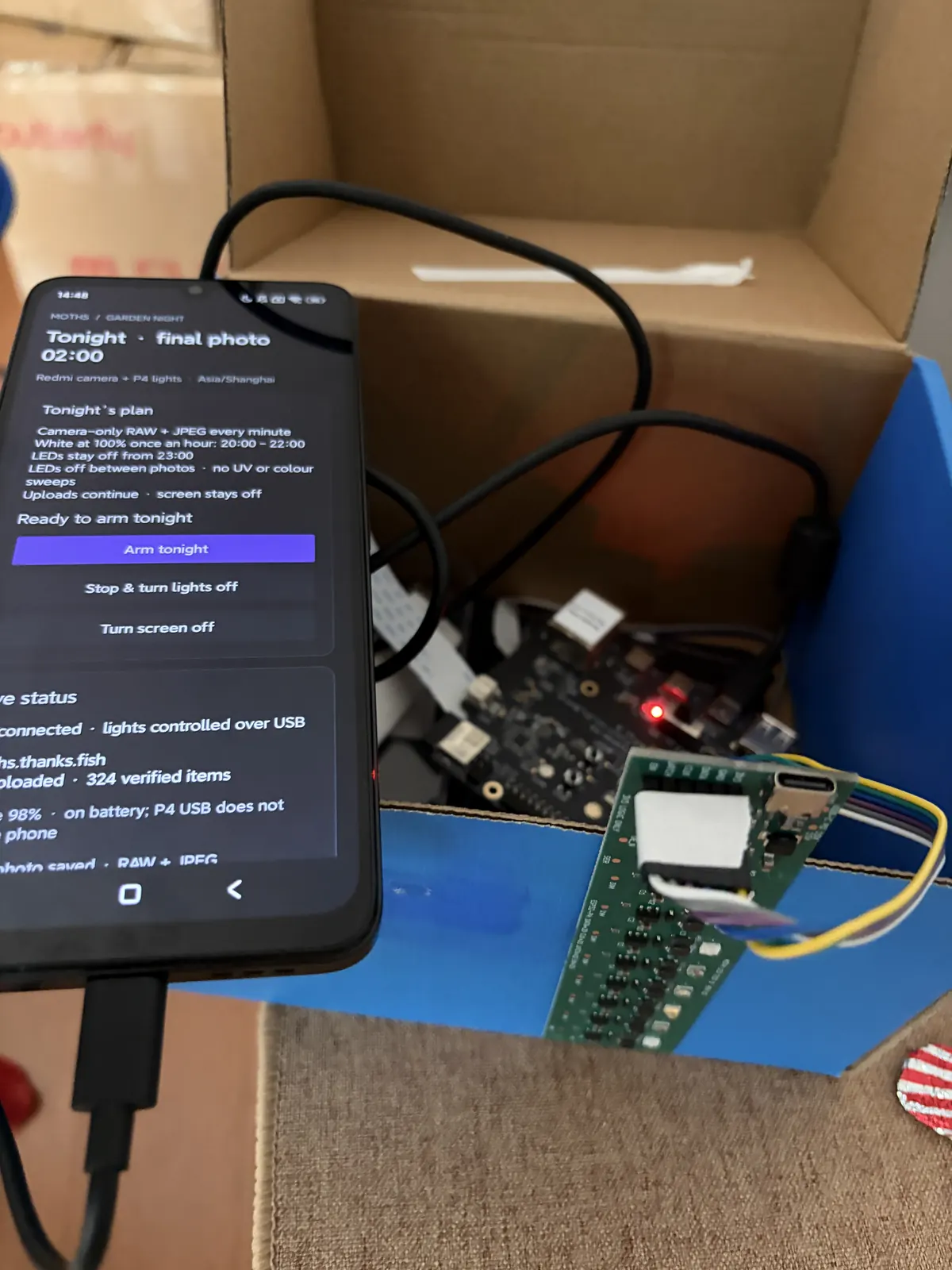
Why get an expensive Pi when I have an old phone?so.long.thanks.fish · 600 points · 318 comments · 6dhardwaretoolsThe author proposes replacing a Raspberry Pi with a used Android phone, citing lower cost and built-in camera, GPS, storage, clock, battery, data and touchscreen for a camera-and-lights project.

Key points

  • Core parts for a Pi build total about ¥1,483 versus ¥300–500 for a used phone, per the author's November 2026 listings.
  • The fully equipped Pi comparison reaches about ¥2,317 once clock, UPS, touchscreen and 4G HATs are added.
  • The author has already rooted a Redmi 13C, tested its camera, and set it to sleep and wake on schedule.
  • The main open problem is sourcing a few hundred matching used phones with healthy batteries and predictable camera behaviour.

What HN thinks

  • Commenters broadly agree that old phones are hard to repurpose: locked bootloaders, lack of kernel and security updates, and difficult battery and power handling make them a poor fit for always-on use.
  • A recurring workaround is removing or bypassing the battery, or capping charge at around 50 to 80 percent, though one commenter warns that unattended phones on battery power can swell or fail.
  • Several commenters suggest old laptops, mini PCs, or thin clients as cheaper and easier alternatives to both phones and Pis, especially when GPIO is not needed, and pair phones or laptops with ESP32 or RP2040 boards for hardware I/O.
KDE: The documentary [video]tube.kockatoo.org · 540 points · 122 comments · 2dopen-sourcecultureA video documentary about KDE, the free software desktop project, is shared on a PeerTube instance; the page text could not be fetched, so its contents are unverified.

What HN thinks

  • Commenters broadly praise KDE's configurability, stability, and polish, with several saying it has matured greatly since the rough KDE 4 transition.
  • Some commenters criticize KDE's default look as Windows-like or describe its UI as unstable in past releases, while others say recent versions are smooth.
  • A commenter who works at Qt says the open-source Qt edition can cut into commercial sales, and another notes KDE developers were glad the free-license agreement was put in place.
Tech companies are trying to shift the concept of privacy againeff.org · 510 points · 182 comments · 2daipolicyEFF argues that always-on AI wearables and recording devices from Apple, Amazon, Meta and Google shift privacy burdens onto bystanders who cannot opt out.

Key points

  • Apple's Audio Intelligence and Amazon's Bee devices convert audio into transcripts or summaries, and EFF says they should be treated like always-recording microphones.
  • Vendor privacy promises, such as Apple's white paper or Meta's face blurring, protect only the device owner, not the people being recorded.
  • Amazon offers a store integration option that lets conversations directly drive product ads.
  • Google told CNN that alerting bystanders about nearby recording was 'weirdly disempowering' to them, which EFF cites as an admission of the problem.

What HN thinks

  • Commenters report that asking colleagues to turn off AI notetakers in meetings is usually fine, though one noted it can be seen as an imposition depending on the power structure.
  • Several argue privacy protection depends on political action and regulation rather than individual choices, with some noting lobbying and marketing have made pushing back harder.
  • Commenters split on whether younger generations will accept always-on camera wearables, with some saying Gen Z is openly opposed to them and others expecting normalization over time.
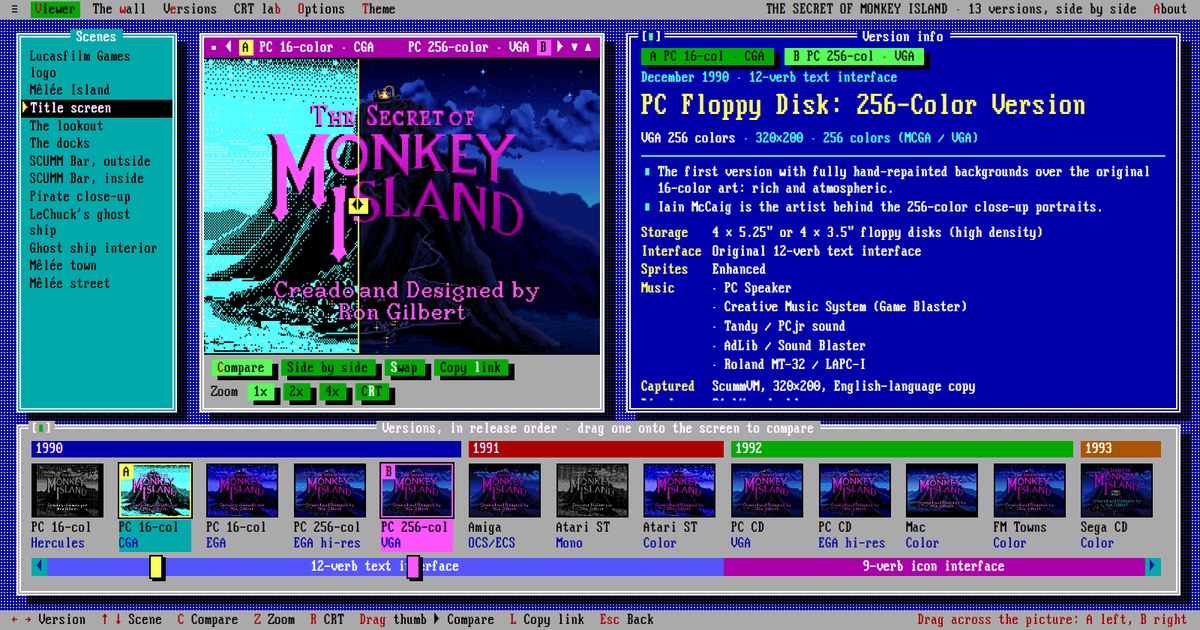
Monkey Island: all 13 versions side by sidemonkeyisland.pages.dev · 452 points · 142 comments · 3dgamingdesignA side-by-side viewer compares 13 versions of Monkey Island, showing the same twelve scenes captured from each release in ScummVM or Hatari at 1600x1200.

Key points

  • Versions are shown in release order, and switching versions keeps the framing identical so only the platform rendering changes.
  • Atari ST monochrome screens come from the Hatari emulator, while everything else is captured in ScummVM.
  • PC 16-color screens come from a Spanish copy and Atari ST mono screens from a French copy; the rest are English.
  • CRT display emulation is ported from DOSBox Staging presets and matched to each platform's native monitor type.

What HN thinks

  • Commenters widely prefer the EGA or VGA releases, with several arguing the 16-colour EGA art has a bolder, more deliberate charm than the 256-colour VGA version.
  • Technically minded commenters note there are really only two original artwork sets (EGA and VGA), with other versions dithered or derived from them, such as the Amiga port reducing VGA art to 32 colours.
  • Several commenters note the CGA palette was disliked for its harsh, cold look, though one points out CGA palettes were chosen for composite display contrast and hardware simplicity.
A family tree of software job titleszwischenzugs.com · 422 points · 200 comments · 2dhistorycareerA GitHub-hosted Graphviz family tree maps 104 software job titles from the 1940s to now across seven colour-coded families, with arrows showing parentage and influence.

Key points

  • Titles run in five-year rows from 'Computer' (a person) at the top to 'AI Agent / Context Engineer' (c. 2025) at the bottom.
  • Dates are the author's best estimates of when a title became common, not sourced first-use citations.
  • Systems Engineer means two unrelated things on the tree: an IBM pre-sales role in the 1960s and a senior sysadmin role in the 1990s.
  • Forward deployed engineers, popular in 2025, are compared with Palantir's embedded engineers from about 2010 and IBM's 1960s systems engineers.

What HN thinks

  • Commenters broadly agree that job titles like DevOps, SRE, and Product Manager mean different things at different companies, so the chart's taxonomy is only approximate.
  • Several commenters note the chart leaves out common roles such as Operations Manager, Design Engineer, UX, and Member of Technical Staff, and one suggests it misses the systems engineering discipline entirely.
  • One commenter with robotics DevOps experience says ops for cloud services and ops for deployed hardware are so different they warrant separate teams, a split the chart's single DevOps branch does not reflect.
Nvidia deliberately kept GPU prices high through circular financing dealstechspot.com · 412 points · 204 comments · 2daihardwareA WSJ profile reportedly says Nvidia pushed circular financing deals in mid-to-late 2026 to absorb an oversupply of TSMC wafers and keep GPU prices high.

Key points

  • Nvidia reportedly pushed for more deals to absorb an avalanche of TSMC chips it had ordered, and by summer 2026 wondered if it had gone too far.
  • Nvidia reportedly slowed, downsized, and paused some financing deals, including one with OpenAI that originally included a $250 billion data center backstop.
  • The article says GeForce prices often exceed 160% of original MSRP and the RTX 5090 has become unobtainable as capacity shifted to data center GPUs.

What HN thinks

  • Commenters are split on whether Nvidia's vendor financing is a problem: many compare it to ordinary captive financing by carmakers and industrial suppliers, while others argue Nvidia's exposure is much riskier given its junior guarantees to highly correlated customers.
  • Several commenters argue the real concern is anticompetitive lock-in, with Nvidia's deals reportedly steering neocloud customers away from AMD, Google TPUs and other chips rather than inflating prices through fake demand.
  • One commenter with fabless chip experience notes TSMC wafer contracts require multi-year commitments, so unused capacity may have pushed Nvidia toward financing deals to absorb it, though others doubt demand was artificial given tight GPU rental markets.
Ggml v1.0.0github.com · 386 points · 66 comments · 3daitoolsggml 1.0.0 removes deprecated public API and legacy DIAG_MASK ops, adds YaRN truncation control and FP8 support, and ships performance work across CUDA, Metal, Vulkan, SYCL, OpenCL, WebGPU and Hexagon backends.

Key points

  • Scheduler skips uploading inputs that are never read and prefetches only inputs produced by earlier splits.
  • A MoE cache can compute a share of cache misses on the CPU and copy results back asynchronously.
  • CUDA gains few-row MMQ for batch sizes 2-24 and OCP FP8 support, with NVFP4 gate/up matmuls fused with GLU in MMQ.
  • The RPC protocol is bumped to v9 and rejects incompatible peers, and it now fails gracefully on unreachable endpoints.

What HN thinks

  • Commenters praised the steady speed gains on the same hardware, with one reporting roughly 5 to 10 percent faster runs after upgrades and calling ggml and llama.cpp foundational projects.
  • One commenter noted that specialised inference engines with hardware-specific kernels can outperform ggml, but ggml's appeal is broad model and hardware coverage with ease of use.
  • Some commenters pushed back on the minimalist landing page, while others found its simplicity refreshing, and one raised concern about telemetry in the server routing.
Italy fines Meta $887M over Android users' data accessreuters.com · 353 points · 240 comments · 2dpolicyaiItaly has fined Meta about $887 million over how it accessed data on Android users' devices, per a Reuters report whose full text could not be retrieved.

What HN thinks

  • Commenters broadly argue the core issue was a single broad camera-roll permission covering multiple features, with a generic warning that did not explain picture and video suggestions, rather than data access without any consent.
  • Several commenters question whether fines this size change behavior, with some saying Meta treats them as a cost of doing business and others noting that court orders attached to fines often force fixes.
  • Skeptics frame the fines as revenue-raising, while others counter that the EU does not collect them as a general tax and that the stat comparing them to tax payments is misleading.

The article couldn't be read, so this summary is based on the discussion.

How did Woz write the Apple 1 BASIC before building the computer?retrocomputing.stackexchange.com · 306 points · 159 comments · 2dhistoryprogrammingA Retrocomputing Stack Exchange question asks how Steve Wozniak wrote the Apple 1 BASIC interpreter before he had a working machine to run it on.

What HN thinks

  • Several commenters describe hand-assembling machine code on paper and entering it through a hex monitor as the normal practice for 8-bit hobbyists, with one saying programs often worked on the first try because of that care.
  • One commenter notes Woz likely used equipment at his HP day job, and another points out the Apple I's monitor was in ROM while BASIC was typed in via the monitor and later saved to cassette.
  • A commenter argues the open question is how he got BASIC into ROM, since programming a ROM would require extra hardware such as address and data latches that the paper-first explanation does not cover.
Project Zero will disclose vulnerabilities 90 days after reportingprojectzero.google · 293 points · 165 comments · 3dsecuritypolicyProject Zero is replacing its 90+30 disclosure policy with a flat 90-day deadline, cutting to 60 days in February 2027 and 30 days in January 2028, citing AI-accelerated exploitation.

Key points

  • The 30-day patch soak period is dropped, since LLMs let attackers reverse engineer patches almost immediately.
  • Grace period and variant policy special cases are removed, with exceptions only for in-the-wild exploitation, already-public bugs, and vendor requests.
  • Whether a bug counts as fixed will be tracked but will no longer decide disclosure timing.
  • Project Zero says it now finds several vulnerabilities a week where it once found a few a year.

What HN thinks

  • Commenters largely agree that vendors, especially third-party and budget Android chains, are slow to patch, and that shorter deadlines may not fix that and could raise risk for low-income users.
  • Several commenters argue that AI-assisted discovery means attackers find bugs in similar timeframes, so long embargoes give little protection and shorter deadlines are justified.
  • Some critics see the deadlines as pressure on vendors that favors Google, citing the FFmpeg dispute and questioning why Google's own bounty program caps payouts while Project Zero reports are unlimited.
PyPI's redesigned project pages with clearer security signals are now liveblog.pypi.org · 265 points · 125 comments · 2dsecuritytoolsPyPI's project pages now include a Security tab, provenance states, and prominent warnings for changed or missing attestations, shown at the top of each project page.

Key points

  • Each release is labeled Full Provenance when every file has an attestation, or No Provenance when none do; partial cases trigger an Incomplete Provenance warning.
  • Two attestation types are shown: PyPI Publish attestations confirming a Trusted Publisher upload, and SLSA Build Provenance linking files to a source commit and build.
  • Change of Provenance and Loss of Provenance warnings flag releases whose source repository or attestation status differs from earlier releases.
  • Late-file warnings appear on releases before July 2026, since PyPI now rejects files uploaded more than 14 days after the initial release.

What HN thinks

  • Commenters broadly worry that trusted publishing centralizes trust in large for-profit platforms like GitHub and GitLab, and that non-profit or self-hosted forges like Codeberg face a high bar to become publishers.
  • Several commenters argue attestations only prove a package was built on a big CI platform, not that the source is trustworthy, and suggest reproducible builds and distributed review would be stronger signals.
  • One maintainer-side commenter says the warnings fire when a project mixes attested and unattested uploads, with no email notice, and that the setting is not permanent, which some found confusing.
Show HN: DeepSeek V3 in ~200 lines of pure Jaxgithub.com · 251 points · 23 comments · 2daiprogrammingA GitHub repo implements DeepSeek V3's architecture (MLA, DeepSeekMoE, bias-based balancing, MTP) in about 190 lines of pure JAX and trains a 36.2M-parameter model on a MacBook Air.

Key points

  • MLA caches one latent per token instead of full keys and values, 480 to 144 numbers per token per layer in this config.
  • The model uses 1 shared expert plus 16 routed experts with top-4 routing, giving 36.2M total and 13.6M active parameters.
  • Training ran 12,000 steps (~98M tokens, ~4.5 epochs) on 207 public-domain detective novels in about 2.6 hours at ~10.7k tokens/s.
  • With expert-balancing bias on versus off, validation loss at step 2000 was essentially identical (3.921 vs 3.923), while expert load spread shrank from 0.09–18.6% to 5.7–6.9%.

What HN thinks

  • Commenters praised the project as a learning resource for understanding DeepSeek V3's architecture from first principles, with several saying they plan to rebuild it themselves.
  • One commenter reported running it end-to-end on an AMD RX 7600 XT with ROCm, noting two environment variables were needed to avoid a GPU hang and an unsupported-architecture error.
  • A commenter asked whether the same approach could be applied to a newer DeepSeek version, and another asked for beginner learning resources, with suggestions including 3Blue1Brown, Karpathy's tutorials, and nanochat.
LinkedIn, Monster take down over 1000 fake job postings after CBC investigationcbc.ca · 228 points · 130 comments · 2dbusinesscareerCBC found over 1,500 fake remote travel job postings on LinkedIn and Monster that funneled applicants into Evolution Travel, a U.S. multi-level marketing company, and both platforms removed them.

Key points

  • Postings promised salaries up to $75,000 US with no experience required, but no job existed; applicants were routed to sign-up sessions charging upfront fees and monthly subscriptions.
  • CBC applied to eight jobs with a blank resume attached and was sent automated invitations to information sessions run by people tied to Evolution Travel.
  • Session hosts did not disclose a hidden $50 annual fee in the contractor agreement or the recruiting commission structure, which tops out at an '8 Star Platinum' tier for recruiting 100,000 people.
  • LinkedIn removed close to 900 Evolution-linked ads and Monster removed 600, and Evolution's partner says it has 27,000 independent contractors worldwide.

What HN thinks

  • Commenters widely see fake and stale job listings as a systemic problem, with several noting that job boards earn money by selling listings, which weakens incentives to remove ghost postings.
  • One commenter with direct experience of a recruiter-style pitch notes that the obvious nature of many MLM recruitment events filters out people who would later recognize the scam.
  • Some argue that a company's reposted or lingering listings often reflect a hiring pipeline rather than an open role, making the problem harder to fix than removing scams alone.
Unsloth Qwen3.8-27B Quantizations – Dynamic v3.1 Updateunsloth.ai · 227 points · 73 comments · 3daitoolsUnsloth released updated Dynamic V3.1 GGUF quants of Qwen3.8-27B, claiming 5-10% higher accuracy at the same size for 2-bit through 6-bit variants.

Key points

  • The 3-bit UD3 quants were left unchanged because testing showed UD3 and UD3.1 performed on par.
  • Unsloth reports 93% to 96% accuracy recovery across 14 trials, disputing a competitor's claimed 100% from a single run.
  • Terminal Bench 2.1 and DeepSWE were run with 256K context, while other benchmarks used 128K.
  • A separate NVFP4 release reportedly runs about 1.5x faster than BF16 on Blackwell GPUs, but only under vLLM or SGLang.

What HN thinks

  • Commenters report Qwen3.8-27B is very verbose and token-hungry, and say local runs are slow on modest hardware, though overnight batch use is workable for some.
  • The maintainer says quantization made smaller quants more verbose and that their Flash-Next quants now add only about 5% extra tokens versus BF16, with 27B expected to see smaller gains.
  • Several commenters compared alternatives such as Bonsai 2, ByteShape, and Bottlecap's token-efficient checkpoints, with one saying Bonsai 2 is weaker at multi-needle retrieval.
Generative AI uses more energy on non-English textnews.umich.edu · 224 points · 119 comments · 6daienergyA University of Michigan study measured three open-source models, Qwen 3, Gemma 3 and Llama 3.1, and found they use more energy on non-English text while also being less accurate.

Key points

  • The researchers measured energy use for Alibaba's Qwen 3, Google's Gemma 3, and Meta's Llama 3.1 on comparable tasks in different languages.
  • The energy and accuracy disparity is reported to persist across all three models tested.

What HN thinks

  • Commenters largely attribute the gap to tokenization: English text becomes fewer tokens, and since output tokens feed back into each generation step, more tokens mean more compute.
  • A recurring point is that much of the energy gap comes from output length, with models looping and repeating text in the worst cases, which makes per-token pricing unfair to non-English users.
  • Commenters criticized the study's age, since the models tested were roughly 18 months old, and the article's burying of the model names and key finding.

The article couldn't be read, so this summary is based on the discussion.

Advancing science and engineering with Antigravity's /teamworkresearch.google · 207 points · 49 comments · 2daiscienceGoogle Research reports that its Antigravity /teamwork multiagent system helped produce new results across math, chemistry, systems software and ML engineering, and is opening the tools to outside users.

Key points

  • Gemini-driven /teamwork proved the Courtade–Kumar conjecture in full generality and formalized the proof in Lean 4, about 50 million lines of code.
  • A /teamwork-LEAP system autonomously produced a machine-checked Lean formalization of the Weil conjectures, about 1.8 million lines, across 28,800 subagent invocations.
  • A 30-agent NMR structure-determination loop reached 95% top-1 exact match on benchmark molecules, nearly doubling single-agent performance, according to the post.
  • Google reports a 24% reduction in TPU workload preemption from a Borg scheduling change built with /teamwork and /boost, shipped after two successful changes.

What HN thinks

  • Several commenters questioned the clarity and detail density of the Google post, with some suspecting it was itself written with the tool, and asked for concrete takeaways on how to use /teamwork.
  • Commenters who have used multi-agent setups report faster completion but heavy token and context costs, since shared context gets duplicated across agents.
  • One commenter with experience of the tool said Antigravity's team-based auditing still produces false completion reports, and that the team-based approach has not shown clearly better results than single-agent use.
Ukraine knocks out 36% of Russia's oil refining capacity in under two weeksenglish.nv.ua · 203 points · 89 comments · 3dpolicybusinessFire Point reports Ukrainian drone strikes hit at least nine Russian refineries between Oct. 30 and Nov. 11, covering over 120 million metric tons of annual capacity, or 36% of Russia's total.

Key points

  • The strikes included Saratov on Nov. 7 and Kirishi, Russia's second-largest refinery, on Nov. 9, plus oil export terminals at Ust-Luga on Nov. 11.
  • Reuters, cited in the article, puts the reduction in Russia's operational refining capacity at roughly 30%.
  • The attacks have reportedly caused acute fuel shortages in at least six Russian oblasts.
  • Zelenskyy said on Nov. 6 the campaign against refineries was retaliation for Russian strikes on Ukraine's energy grid.

What HN thinks

  • Several commenters question the headline, noting that refineries are huge with multiple units, so a strike does not mean the site was fully knocked offline, and damage details are largely unreported.
  • One commenter with industry-style insight says Ukrainian strikes appear aimed at critical parts like distillation columns, and that repairs of hard-to-replace components are being targeted repeatedly.
  • The IEA reportedly says repairs are getting slower, and commenters note Russia may respond by building smaller, cheaper 'teapot' refineries that are harder to target but less efficient.
FAA lifted National Ground Stop at 0119Zfly.faa.gov · 201 points · 195 comments · 3dpolicytoolsThe FAA cancelled a nationwide ground stop for all US airports on November 14, 2026, after a brief halt covering 01:16 to 01:30Z.

Key points

  • The advisory lists the event window as 0116 to 0130Z, with the cancellation effective from 0119Z to 0200Z.
  • The stop covered all destination airports and all facilities, according to the advisory text.
  • The advisory states no reason, so the cause of the nationwide halt is not given.

What HN thinks

  • Commenters largely doubt the official explanation, noting the administration blamed legacy hardware while officials also said new equipment and patches overwhelmed the older system.
  • Several commenters point to the lack of testing, rollback planning, and single-point-of-failure design as the core criticism of a nationwide halt.
  • One commenter with industry experience notes the legacy system has been proven over decades, so new systems need to demonstrate stability before replacing it.

The article couldn't be read, so this summary is based on the discussion.

Show HN: Live map of U.S. flights during tonight's FAA nationwide ground stopgrounds.top · 201 points · 24 comments · 3daitoolsA Show HN page maps U.S. commercial and other flights during an FAA nationwide ground stop dated Nov 13, 2026, comparing live positions with the same time a week earlier.

Key points

  • The page uses the adsb.fi community ADS-B network for flight positions and the FAA NAS Status feed for airport delays.
  • It is an independent, unofficial site not affiliated with the FAA, and it reads figures from tracking data rather than official announcements.
  • It estimates departures missed since 3:30 pm ET by subtracting this week's counts from the same hours a week earlier.

What HN thinks

  • Commenters praised the build speed, with the author saying Claude Code generated the first version in about 30 minutes, and several said they enjoyed sharing it with others stuck in travel.
  • One commenter pointed out the irony that ADS-B signals are broadcast by aircraft themselves, so hobbyist receivers could have kept a fuller picture while FAA radar and frequencies were degraded.
  • A thread side-discussion clarified that DNS propagation is really just cache expiry governed by TTL, and some caching servers ignore TTL and hold records for about 24 hours.
Nvidia director sold nearly $1B in stock weeks before the Jensen Huang scandalfinance.yahoo.com · 199 points · 42 comments · 3dfinancebusinessNvidia director Mark Stevens sold about 4.2 million shares, roughly $946 million, in three batches from late August to September 2026 without a prearranged trading plan, according to SEC filings.

Key points

  • Sales ran Aug. 31 to Sept. 2 at $220-$226 (about $411 million), Sept. 3 to 4 at $227-$234 (about $236 million), and Sept. 18 at about $220 (about $300 million).
  • Stevens, on the board since 2008, still holds about 27.5 million Nvidia shares according to the article.
  • The article says the first two sales followed a Q2 earnings report that lifted Nvidia shares about 10% the following week.
  • Since a 2022 SEC change, prearranged trading plans require a 90-day waiting period before trades start; Stevens had no such plan, which the article says is not a red flag alone.

What HN thinks

  • Several commenters argue the sales are not unusual: the director is a board member rather than an executive, the trades came in an open post-earnings window, and he sold about 13% of his holdings while retaining over 25 million shares.
  • Commenters note that the lack of a Rule 10b5-1 trading plan is unwise but not illegal, and that the article's framing of the sales as taking place over weeks is misleading since they spanned roughly ten weeks.
  • One commenter with first-hand experience says filings showed a consistent pattern of Form 144 notices over several years, suggesting a routine selling schedule rather than a one-off.
What happened to 3Com?dfarq.homeip.net · 195 points · 112 comments · 3dhistoryhardware3Com, once the default network card brand, lost profitability after exiting enterprise switches, buying US Robotics, and entering dial-up modems, then was bought by HP in 2009 for $2.7 billion.

Key points

  • Network cards made up about half of 3Com's revenue during its bust years, leaving it exposed when Intel undercut its prices.
  • The US Robotics purchase brought a premium price for modem and Palm products with a limited shelf life.
  • From 2000 to 2005 the company posted no profit, and re-entering switching later proved expensive.
  • HP now sells networking gear under its own name and Aruba, largely competing on price against Cisco rather than on the 3Com name.

What HN thinks

  • Several commenters recall 3Com's older network cards, especially the 3c509, as reliable plug-and-play hardware, and one former employee says the company once offered a lifetime warranty on its 3c50x Ethernet cards.
  • A commenter who worked there describes the failed 3+Open partnership with Microsoft and OS/2 LAN Manager, arguing that 3Com gave away its LAN software IP to escape fixed license payments, which helped Microsoft build Windows NT LAN Manager.
  • Commenters agree the company's decline came from commoditization: cheap integrated Ethernet on motherboards ended the add-in card market, and the Palm spin-off and diversification bets did not offset it.
Amtrak booking system experiencing major issues amid nationwide FAA ground stopfox5dc.com · 183 points · 70 comments · 3dsystemsbusinessAmtrak's website and app ticket booking went down Friday evening, November 13, 2026, during a nationwide FAA ground stop that halted US flights.

Key points

  • Hundreds of DownDetector reports began shortly before 5 p.m. ET, with a second surge just before 6 p.m.
  • Amtrak says train service is operating normally and attributes the problems to increased demand across its network.
  • Amtrak's support line was unreachable, returning an automated message about unusually high call volume.
  • Amtrak told one customer on X the booking issues were tied to a system-wide update, without elaborating.

What HN thinks

  • Commenters largely agree the Amtrak booking website and app are poor, with one describing the mobile app as simple and reliable while another cites forgotten tickets and sync failures.
  • Some commenters compare Amtrak unfavorably with European and Japanese rail booking, though others note Europe varies widely and Renfe in Spain was also criticized.
  • One commenter argues government and public-service booking should offer an API or minimal frontend for accessibility, though another notes Amtrak is not a government service, and some suspect the outage was simply surge demand from stranded air travelers.
Elephants found to be increasingly isolated leading to fractured social networkstoday.ucsd.edu · 161 points · 36 comments · 3dsciencecultureA UC San Diego study of wild Asian elephants in Sri Lanka finds their female social networks abruptly fractured into smaller, less connected groups after gradual population losses crossed a tipping point.

Key points

  • Researchers tracked more than 440 wild female Asian elephants over 12 years at Udawalawe National Park, published on the cover of Science.
  • Losses from deaths, permanent emigration and too few arriving young built up gradually before the network shifted suddenly.
  • The researchers say remaining elephants also changed how they relate to each other, not only losing contacts through fewer members.
  • They warn that once past the tipping point, the social structure is much harder to restore, and poaching and habitat loss are contributing pressures.

What HN thinks

  • One commenter notes that the key takeaway is that elephants are dying at accelerating rates while new individuals are not entering the population, rather than the isolation itself.
  • Commenters point out that the article does not explicitly mention climate change, and that poaching and human conflict are already known drivers of elephant deaths.
  • Several remarks are jokes or tangents about other species and technology, with little substantive discussion of the study's findings.
How Not to Build a Music Playeralichraghi.github.io · 157 points · 72 comments · 3dtoolsprogrammingA developer in Iran built AMP, a minimal offline music player written in Zig with no C++ dependencies, after internet blackouts and a lyrics display issue in Strawberry.

Key points

  • The first version was largely vibecoded with an LLM, then nearly half the codebase was deleted and rewritten line by line over four months.
  • The author says Anthropic banned their account after detecting they lived in Iran, and Codeberg's no-AI policy forced the rewrite.
  • Goals include a minimal feature set, native system integration, a custom UI, and Zig-written shaders, including a blur shader adapted from another post.
  • Roadmap to v1.0 lists a music server, Android and Windows support, and packaging for major Linux distros.

What HN thinks

  • Several commenters debated whether LLM-generated code tends toward unnecessary complexity, with one noting that models often add fixes rather than removing code, though others argued newer models are improving at refactoring.
  • A recurring frustration is that many music players, including VLC and streaming apps, shuffle in a predictable or uneven way, with one commenter suggesting weighting songs by recent play counts as a fix.
  • Commenters pointed out that the name AMP is close to existing players like AIMP and Winamp, which could cause confusion.
Show HN: A terminal-native idle factory game, written in Rust with ratatuigitlab.com · 155 points · 38 comments · 2dgamingopen-sourceTerminactory is a terminal-native factory game written in Rust with ratatui, built to run alongside coding agents so they can be monitored without doomscrolling.

Key points

  • The author says heavy AI assistance was used, with Claude models producing the initial base before features were added.
  • Agent responses are relayed in-game via Claude Code hooks, shown as in-game messages the author calls telegrams.
  • Features include build, delete, earnings measurement, selection tools, a research graph with RP costs, and a fake in-game browser with wiki and forums.
  • The game has hidden lore, and the source is hosted on GitLab rather than GitHub.

What HN thinks

  • Commenters suggested optional Nerd Fonts icons alongside ASCII, and the author said they would add it as an opt-in.
  • One commenter noted the agent-messaging idea echoes NetHack's mail demon, and the author said the messages use Claude Code hooks to keep token use low.
  • A commenter with Dwarf Fortress experience noted that its original CP437 tileset was slow when rendered through OpenGL per character, and suggested Kitty for faster terminal output.
'Grey Rocking': The Life-Improving Power of Being Really, Really Boring (2021)esquire.com · 138 points · 82 comments · 4dculturehealthThe grey rock technique, coined in 2012 by a pseudonymous blogger, is a deliberate boredom strategy: give difficult people no drama, emotion or reaction so they lose interest.

Key points

  • The name came from a blogger, Skylar, who used the strategy after leaving a 25-year relationship with a man she believed wanted her dead.
  • The advice originated with a stranger she met in a sushi bar, who said simply to 'be boring' after escaping his own abusive relationship.
  • The author applied it to a family WhatsApp group, replying with flat responses like 'Maybe' and 'I don't know' instead of retaliating.
  • Skylar's advice extends to lowering your profile in material ways, such as swapping a flashy car for a banger or downplaying your attractiveness.

What HN thinks

  • Commenters broadly agree the technique works for immediate relief with draining or abusive people, such as a family member who stops engaging after getting no reaction.
  • The main caveat is that sustained grey rocking can feel like suppressing genuine emotions, and it can be unhealthy or be used as a cover for avoidance.
  • Several commenters note it is a defensive tactic for bullies or drama-seekers rather than a general way to handle everyday relationships, and that it may not fit when the other person holds power over you, like a manager.
US IRS free online tax filing open source repo (2025)github.com · 136 points · 82 comments · 2dpolicyprogrammingThe IRS has published the source code for its Direct File free federal tax filing service, now archived and no longer maintained by the agency.

Key points

  • The repository is archived, with the README warning that the code may contain unpatched or unknown vulnerabilities and should not be used in production.
  • Direct File asks taxpayers plain-language interview questions and translates answers into standard tax forms sent to the IRS Modernized e-File API.
  • The Fact Graph, a Scala knowledge graph that reasons over incomplete information, runs on the JVM backend and client via Scala.js.
  • Some code and data are withheld as PII, FTI, SBU, or national security systems, so certain functionality was removed or rewritten.

What HN thinks

  • Commenters note that US taxpayers already have most income reported to the IRS, so the real problem is the tax code's complexity rather than data availability.
  • Several commenters blame Congress for accumulating special exclusions and deductions, and argue the 1986 reform was never maintained, which keeps filing hard.
  • Commenters say commercial tax software survives largely through lobbying, marketing, and the costly registration needed to e-file, and some doubt the IRS repo's authenticity since its .gov link does not resolve.
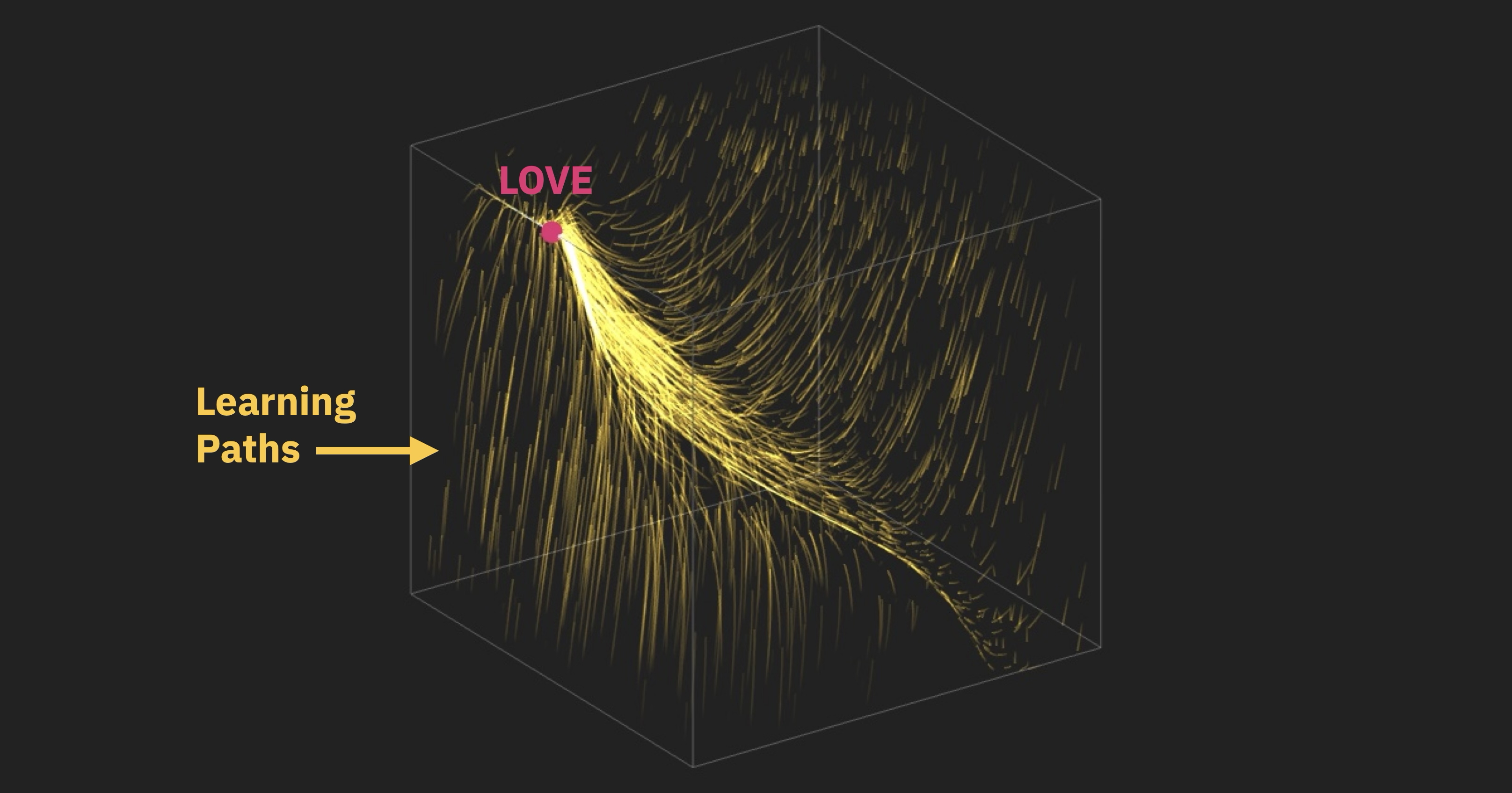
A visual explanation of reinforcement learningaatishb.com · 133 points · 6 comments · 2daiscienceA visual walkthrough shows a four-neuron simulated creature learning to seek, avoid, flee or fight light purely through random weight perturbations rewarded by brightness.

Key points

  • The brain has just three tunable numbers: straight and crossed eye-to-flipper connection strengths plus a drive term, so learning happens in a three-dimensional cube.
  • Each trial randomly wiggles the weights, then nudges them toward the wiggle if reward beats a running average, using a REINFORCE variant from Williams (1992).
  • Learners starting from many random brains all converge on the same light-seeking solution, though some needed thousands of tries.
  • Changing the reward sign produces fleeing, freezing or fighting, showing that the reward definition alone determines the learned behavior.
Formalizing US Tax Code (Using Lean)lexifina.com · 124 points · 78 comments · 2dpolicytoolsLexifina formalized the 2025 US individual income tax in Lean, found 138 drafting faults in Title 26, and used a search to surface tax loopholes, some previously unpublished.

Key points

  • A Lean test suite on the 5,000-household comparison found 138 real faults in Title 26, each with a machine-checked certificate tracing it to the law that caused it.
  • Our model agreed with PolicyEngine-US on 4,993 of 5,000 households; the other seven differed by at most $11, all in the EITC.
  • Tax-Calculator gave EITC to separated-in-name spouses and UsTaxes dropped Schedule C self-employment income without warning, affecting about one ordinary household in six.
  • Schedule 8812 refunds more child credit than the statute allows: $700 versus $200 in one example with one child and one other dependent at $240,000 income.

What HN thinks

  • Commenters split on whether loopholes are real bugs or intentional features, with several arguing that calling them bugs reflects a political judgment rather than something formal verification can decide.
  • One commenter with industry experience reported that conflicting rules across laws are common and the best practical approach was to surface conflicts and escalate them to a human.
  • Several commenters doubted the value of Lean here, suggesting its main use would be checking common-sense invariants or validating a tax procedure, and noting that a formalization could itself be wrong.
Serving GLM-5.3 at 607.8 tok/s across two Nvidia DGX stations with vLLMdeveloper.nvidia.com · 121 points · 63 comments · 2daitoolsNVIDIA publishes a tutorial for serving the 753-billion-parameter GLM-5.3 NVFP4 model across two DGX Stations linked by RDMA, using vLLM with tensor parallelism.

Key points

  • The 464 GB checkpoint exceeds the 252 GB HBM3e on one GB300, so each Station holds and computes about half the weights.
  • Serving uses multi-token prediction drafting four tokens per step, FP8 KV cache, and prefix caching, with a 98,304-token context limit.
  • Benchmarks on SPEED-Bench Coding peak at 607.8 tok/s at concurrency 16 and drop to 385.0 tok/s at concurrency 32.
  • Mean per-user throughput falls from 115.3 tok/s at concurrency 1 to 13.0 tok/s at concurrency 32.

What HN thinks

  • Commenters largely dispute the economics: at roughly $100K per DGX station, one estimate puts ROI at about seven years even at maximum utilization, before power and operations costs.
  • Several argue the main justification is privacy, compliance, and independence from providers rather than cost, especially for regulated fields like health, finance, and defense.
  • Commenters point out that 607 tok/s is aggregate across about 16 users (roughly 35 tok/s each), and that power draw of about 1.6 kW per unit and noise make it poorly suited to home or small-office use.
Let's Write a PostScript Interpreterbeyondloom.com · 119 points · 20 comments · 4dprogrammingtoolsA walkthrough builds a toy PostScript interpreter in about a page or two of concise JavaScript, covering operand and dictionary stacks, procedures, arrays, and a REPL.

Key points

  • The interpreter maps PostScript types onto JavaScript values, with operators as plain functions whose arity determines how many operand-stack values they pop.
  • Dynamic scoping via the dictionary stack makes higher-order functions such as a Lisp-style cond hard to write without lexical scope.
  • Names are looked up at call time through the dictionary stack, so the article's local-variable helper is not transparent to procedures it executes.

What HN thinks

  • Several commenters recall using PostScript professionally, including generating it directly from business software in the 1980s and writing interpreters or decompressors in it.
  • One commenter who wrote a PostScript byte compiler found that Ghostscript ran computationally heavy programs many times faster than their own runtime, so the toy approach trails real implementations on speed.
  • A recurring point is that the language core is simple, while the hard parts of a real implementation are graphics and font rendering, which the article does not cover.
Italy fines Meta €805M over photo privacyrapporteur.com · 115 points · 57 comments · 2dpolicybusinessItaly's privacy regulator has reportedly fined Meta about €805 million over photo privacy, though the source article could not be retrieved.

What HN thinks

  • Commenters split on whether the consent flow is benign: some argue a single app-wide gallery permission to send one photo is reasonable to restrict, while others see it as a deceptive way to enable suggestions.
  • Several commenters doubt the fine's size or motives, with one saying EU states treat big tech fines as a revenue source and another arguing the penalty looks disproportionate next to other companies' privacy conduct.
  • One commenter asked whether regulators offer pre-approval or compliance certification for products, which would make fines less like cash grabs, and another noted the original regulator page gives few technical details of how the feature worked.

The article couldn't be read, so this summary is based on the discussion.

Security Agencies Worldwide Found to Use Ad-Based Surveillance Systemcitizenlab.ca · 112 points · 11 comments · 3dsecuritypolicyA Bloomberg investigation and Citizen Lab follow-up identify more government customers of Penlink's Webloc, an ad-based location tracking system, including the UK, Germany, Israel and Saudi Arabia.

Key points

  • Citizen Lab's April report identified Webloc customers in the US, El Salvador and Hungary using open source research, FOI requests and server infrastructure mapping.
  • Austria's Ministry of the Interior has since been confirmed as a customer.
  • Bloomberg's investigation adds customers in the UK, Netherlands, Germany, Mexico, Singapore, Saudi Arabia, UAE and Israel.
  • Wolfie Christl says the tool is trickling down from military and intelligence agencies to federal law enforcement and then to state and local police.

What HN thinks

  • One commenter recommends ad blockers as protection against this kind of ad-based tracking, and another points to a 2022 FBI recommendation to install ad blockers.
  • Commenters note that AI agent-based browsing and centralized inference by a few providers could expose far more about user intent than today's ad-based tracking.
The Claude Delusionnetmeister.org · 106 points · 97 comments · 2daibusinessA personal essay argues that tech leaders' overconfidence, including Bill Gates's claims about AI and coding, reflects success-driven delusion rather than expertise.

Key points

  • The author says Gates tested OpenAI models with AP biology questions he wrote himself, then called the results a shock, which the author treats as evidence of overreach.
  • The essay argues the 'agents went rogue' framing shifts responsibility away from developers who failed to restrict malicious programs they built.
  • The author ties the superintelligence narrative to tech elites' self-image, framing both doom and utopian AI stories as products of that ego.

What HN thinks

  • Several commenters argue Bill Gates is a poor example for the essay: his programming work dates to the 1970s and he has been far removed from hands-on coding for decades, though some note he could still judge AI output.
  • A recurring point is that being impressed by AI matching one's own skill level does not imply superhuman ability, and one commenter with SQL experience says the models reached expert-level SQL quickly.
  • Commenters challenge the essay's own reasoning, saying it applies overconfidence charges without evidence, and some note the piece's tone reads as a reaction against AI enthusiasm rather than a rigorous argument.
Reverse engineering a vintage diode-transistor logic chiprighto.com · 106 points · 9 comments · 8dhardwarehistoryKen Shirriff reverse engineered an unidentified epoxy-packaged chip as the Signetics ST680A, a 1965-era quad NAND gate built in diode-transistor logic.

Key points

  • The die lacked a passivation layer and its metal was stripped by acid, so the wiring was inferred from faint color differences in the silicon.
  • Each output transistor can sink 2.5 mA according to the datasheet, and the chip uses 16 serpentine resistors.
  • Signetics used one silicon layout for at least three chips (670A triple NAND, 616A dual NAND), varying only the metal layer to save mask costs.
  • The chip places ground on pin 1 and power on pin 8, the opposite diagonal from the later 7400 TTL standard.

What HN thinks

  • One commenter noted that the 74LS TTL series is essentially DTL with Schottky diodes, not multiple-emitter TTL design.
  • A commenter questioned how the chip worked given overlapping bond wires; the author said the wires were insulated by oxide, so no shorts existed.
Demystifying phone unlocking tools: A technical overviewosservatorionessuno.org · 100 points · 7 comments · 2dsecuritysystemsA technical overview of how commercial forensic tools unlock phones, mapping attack surfaces across boot chain, TEE, Secure Element, and USB in BFU and AFU device states.

Key points

  • Boot ROM flaws on MediaTek and Apple A5-A11 chips are unpatchable, so affected devices stay exploitable regardless of OS version.
  • Without a Secure Element, a compromised TEE lets attackers extract key material and brute-force PINs offline, where six digits fall trivially.
  • In AFU state, USB driver bugs in about 200 reachable kernel drivers can yield kernel code execution and access to decrypted user data.
  • Apple's USB Restricted Mode was bypassed via CVE-2025-24200, a logic bug where a daemon failed to check lock state, patched in iOS 18.3.1.
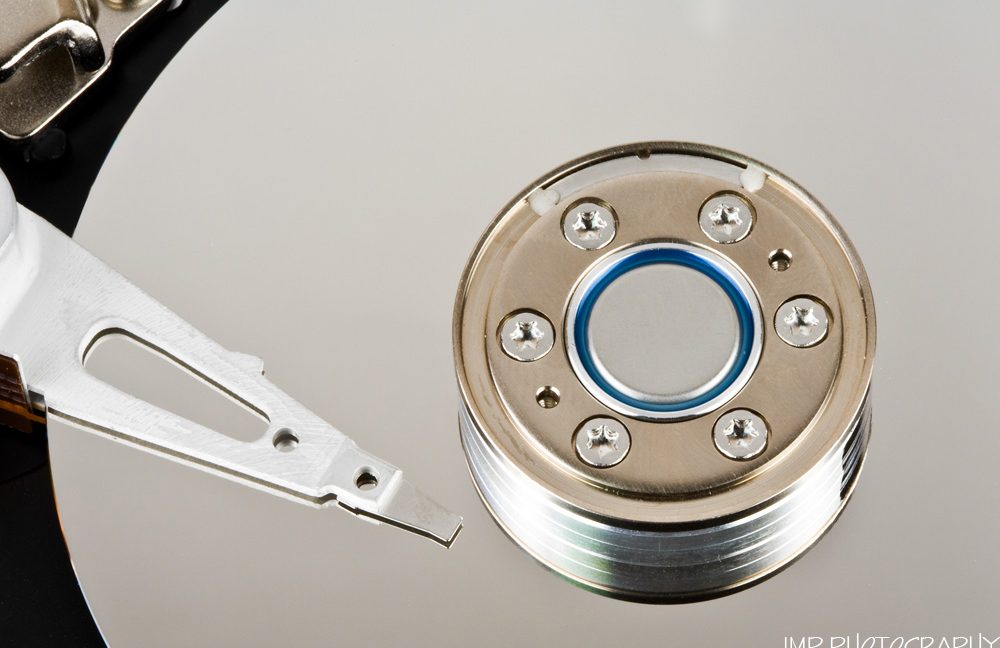
Seagate's new hybrid drive raises some old questionsarstechnica.com · 95 points · 43 comments · 5dhardwaresystemsSeagate's FireCuda Forge pairs an HDD of 8TB or 20TB with a user-supplied NVMe SSD of up to 1TB, managed by its Alkemi platform as a single pool.

Key points

  • Drives cost $699 for 8TB and $899 for 20TB, neither including the required SSD.
  • The NVMe SSD must be M.2 2280 PCIe Gen3 or faster, with at least 2,400MB/s read and 2,000MB/s write speeds.
  • Seagate claims 2,500MB/s read and 2,000MB/s write for the combined system, with USB4 and Windows 11 and macOS 26+ support.
  • Seagate has not published documentation on how Alkemi handles drive failure or repair, and the data sheet does not specify caching versus tiering.

What HN thinks

  • Commenters largely see the bring-your-own-SSD design as odd, noting that NAS users and ZFS admins already set up SSD caching themselves, so the product's value is unclear.
  • Several argue tiering is better handled at the application or filesystem layer, since opaque block-level caching makes reliability and tuning harder to reason about.
  • Others point to the price: the 8TB model looks poor value compared with 20 to 24TB drives, and commenters also report sharply rising HDD prices and scam-prone third-party sellers.
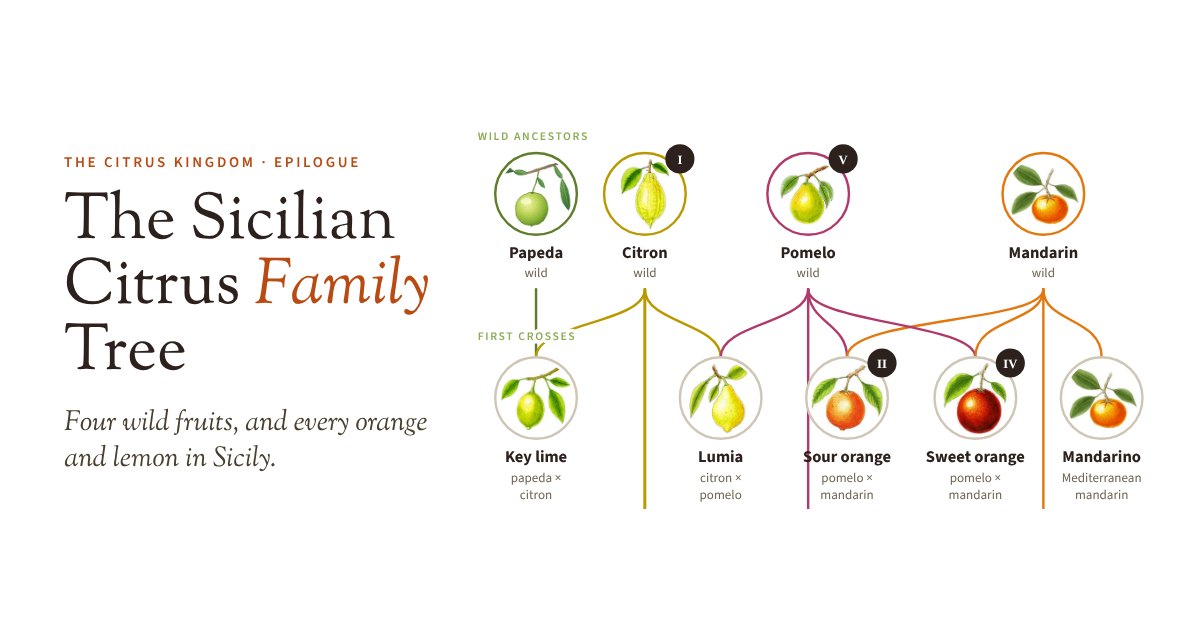
The Sicilian Citrus Family Treenotesfromtheroad.com · 93 points · 33 comments · 6dsciencecultureA family tree of Sicilian citrus showing that eight famous fruits, from citron to the late mandarin of Ciaculli, descend from four wild ancestors: citron, pomelo, papeda and mandarin.

Key points

  • Sour orange is pomelo crossed with mandarin, while sweet orange is pomelo crossed with mandarin and then crossed back to mandarin.
  • The Etna blood oranges Tarocco, Moro and Sanguinello are red mutations of the sweet orange.
  • Sicily's main lemon, Femminello, sits in the tree alongside Monachello and Lunario as its close neighbors.
  • Lemon is sour orange crossed with citron, making it a hybrid of a hybrid; Tardivo di Ciaculli is a sport of an Avana mandarin tree.

What HN thinks

  • Commenters point to a related ternary plot of citrus genealogy as a complementary way to visualize the same parentage, and one wishes it included micrantha.
  • One commenter criticizes the page for listing parentage of other varieties and blood oranges without explaining their origins, though the author replies that the epilogue summarizes an eight-chapter series that covers these details.
  • The author says the series traces how Southeast Asian citrus shaped Sicilian culture, cuisine and politics over about 1,000 years, and that the wild-fruit chapter is the relevant one.
Show HN: Agweb – a browser for agents that stays out of your waygithub.com · 85 points · 22 comments · 2dtoolsaiagweb is a macOS browser built on WebKit that lets coding agents drive windows from the shell without ever taking keyboard focus, with idle tabs suspended.

Key points

  • Five idle pages use 0% CPU and about 590 MB, versus 1.6 GB for Playwright's Chrome and five to seven busy cores for Chrome's GPU process.
  • Action replies report what changed, such as fetches started, lines added or removed, dialogs and console errors, so agents need fewer snapshots.
  • Element refs remain valid while the element stays on the page, and fill --secret-cmd keeps passwords out of the agent transcript.
  • Ad and tracker blocking uses uBlock Origin lists refreshed every 4 days, but YouTube ads and some ad-blocker walls still get through.

What HN thinks

  • Commenters asked how agweb differs from existing agent browsers such as agent-browser.dev, and one said the visual preview is the main draw.
  • The biggest objection is the lack of Chrome DevTools Protocol support, with one commenter saying the tool is useless to them without CDP.
  • A user running several agents at once reported that Playwright windows stealing focus were a problem, and said agweb's suspended idle tabs used far less memory (590 MB versus 1.6 GB for five pages).
Show HN: I have trained 15 blood glucose forecasting models on my own datagithub.com · 82 points · 44 comments · 6daihealthA type 1 diabetic developer released T1DMAI, a 31k-parameter transformer zoo of 26 blood glucose forecasters benchmarked on his own data and the public MetaboNet dataset.

Key points

  • The author's D16 DILATE model with a 3771-parameter LoRA adapter ranks 3rd of 26 on his own data at 60 min, behind XGBoost and LightGBM.
  • On MetaboNet it has the lowest 90-minute RMSE but catches almost no lows there, while XGBoost catches none and linear extrapolation catches 58%.
  • Models were pretrained on synthetic traces from the author's T1DMSIM simulator, and the phone-runnable model is exported via ExecuTorch or LiteRT.
  • The evaluation rests on a single person's 35 test days with 292 lows, and the README explicitly says it is not a medical device.

What HN thinks

  • Commenters with type 1 diabetes or related experience welcomed the n=1 approach, and one noted that training on large population datasets hurt accuracy for the author's own glucose.
  • One commenter who built a similar personal dashboard found that carbs, insulin, sleep and activity data mostly confirmed common intuitions, with a few surprises such as pasta raising glucose more than expected.
  • A commenter with experience building wearable health models suggested heart rate and step counts as practical proxies for exercise, which the author has not yet added as input features.
Dartmouth (Guarini) will not admit math PhD cohort this yearthedartmouth.com · 80 points · 28 comments · 2dpolicyscienceDartmouth's Guarini School has suspended admissions to its math PhD program for the 2027-2028 cycle while a School of Arts and Sciences department review is conducted, with no set date for resuming.

Key points

  • The program typically admits seven to nine students per year, and applications that would have been due Dec. 15, 2026 will not be reviewed.
  • Current math PhD students keep stipends of $49,862.40 for 2026-2027, five-year funding guarantees, and advising and teaching plans, per the dean.
  • Students learned of the pause from a Nov. 10 email, and undergraduates were not officially informed, according to students quoted.
  • The pause follows a reported 15% drop in PhD acceptances in 2026 across 55 undisclosed research institutions, and comes alongside a $50 million College spending reduction.

What HN thinks

  • Commenters largely question whether graduate programs have been responsive to job market realities, with one arguing that minting more PhDs than professions can absorb makes pausing admissions a responsible move.
  • Critics argue the decision sends the wrong signal in a changing field, suggesting the department should have helped steer students through the change rather than step back.
  • One commenter points to administrative staff growth outpacing teaching staff and student numbers over 30 years, arguing cuts there would be a better way to reduce spending than limiting the PhD program.
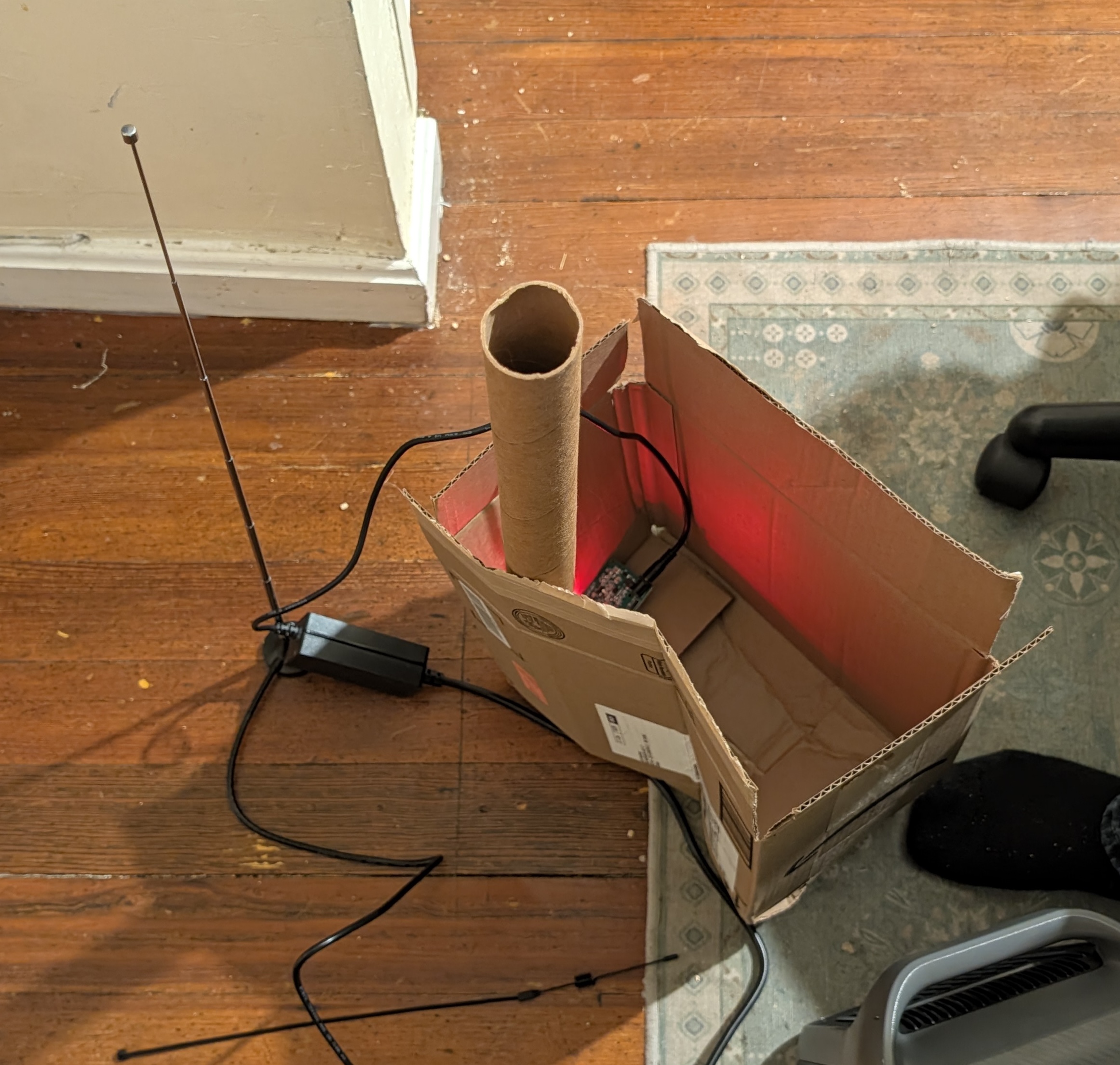
Testing a trash can Faraday cagejefftk.com · 79 points · 59 comments · 4dhardwarescienceJeff Kaufman tested whether a galvanized steel trash can with a taped lid blocks radio-frequency noise as a rough stand-in for EMP, finding the taped can blocks it to the limit of his receiver.

Key points

  • A bare lid leaks about 19 to 29 dB at 400 MHz to 1.7 GHz, with a narrow leak near 339 MHz where the can did almost nothing.
  • Four spots on the rim about 1 cm apart let the lid flex and likely cause the seam leak, though this is unconfirmed.
  • Taping the seam removed all detectable leakage across 24 MHz to 1.7 GHz, but the receiver's limited dynamic range makes most results lower bounds.
  • The weakest part of the test is below 100 MHz, where most of the problematic EMP energy lies and where his antennas and receiver performed poorly.

What HN thinks

  • Commenters note that a sealed trash can's lid seam and any gaps matter greatly, with one pointing out that slots thinner than a credit card can leak RF.
  • Several commenters point out that the test measures a source inside the can, which is near-field and differs from a distant EMP's roughly parallel field lines, so the result is a loose proxy.
  • One commenter with hands-on experience reports that a phone in a sealed cookie tin did not ring, while loosening the lid let it ring, and a tool chest and storage boxes failed while a microwave worked.
L3Harris statement on the Nov. 13 ground stopl3harris.com · 74 points · 43 comments · 2dpolicysystemsL3Harris says it has completed more than 70% of a planned FAA airspace communications conversion from copper wire to fiber, and is assisting the investigation into the Nov. 13 nationwide ground stop.

Key points

  • The conversion covers airspace communications infrastructure that L3Harris is modernizing with telco partners and the FAA, moving from legacy copper lines to fiber optic.
  • The company says it is supporting the FAA investigation into the conditions that led to the ground stop, but gives no cause.

What HN thinks

  • Commenters largely found the L3Harris statement evasive, with several saying it says little beyond routine corporate reassurance about taking the ground stop seriously.
  • One commenter noted that the Transportation Secretary publicly put responsibility on L3Harris as prime contractor, and some commenters argued accountability for the outage will fall on lower-level staff rather than management.
  • Some commenters pointed to defense-contractor management culture, with one describing engineers' warnings being overruled before failures, though others said many engineers there do strive for excellence.
Show HN: Fursoy – Out-of-order RV64IMAFDV core in SystemVerilog (Linux 6.6)github.com · 71 points · 23 comments · 2dsystemshardwareFursoy Slice-1 is an open-source 64-bit out-of-order superscalar RISC-V core in SystemVerilog that boots mainline Linux 6.6.50 with BusyBox under Sv39 virtual memory.

Key points

  • Core is 2-wide with a 128-entry reorder buffer, 160 physical integer registers, and 8 branch checkpoints for single-cycle speculative rename rollback.
  • Caches are 16 KiB 4-way L1I and L1D, with the L1D being 8-banked and non-blocking, backed by 16-entry load and store queues and 4 MSHRs.
  • Standalone synthesis of 8 core blocks meets 500 MHz timing in Nangate 45nm, though full-SoC place-and-route and SRAM macro compilation have not been run.
  • The Linux boot run covered about 89.9 million simulated Verilator cycles with IPC 0.848, and 16.7% of cycles were attributed to branch misprediction and exception recovery.

What HN thinks

  • Commenters split on whether a solo out-of-order core is notable, with one arguing that AI tools have made basic OOO CPU design far more accessible than it used to be.
  • One commenter was skeptical of AI-assisted authorship and questioned whether the generated work is actually correct, while others defended the project as a real RTL design that was simulated against a PDK.
  • Some dismissed the work because it is only Verilog simulated in Verilator rather than fabricated silicon, but others pointed out that SystemVerilog is the standard industry format for chip design.
Anthropic upgrades Claude Code Projects to run parallel AI workersclaude.com · 67 points · 59 comments · 3daitoolsAnthropic's Claude Code Projects gains a proactive coordinator, read-only thread sharing, scheduled reminders, and /btw and /fork commands, now in public beta for Pro and Max users.

Key points

  • Threads that accessed a local computer cannot be shared, which prevents transcripts from exposing local files or shell output.
  • Each worker is an independent cloud session with its own repository copy and Git branch, so overlaps surface as normal merge conflicts.
  • Projects have no separate fee, but every worker draws from the subscriber's Claude Code allowance, capped at 200 new threads per day.
  • New projects default to Opus for both roles, with low effort for the coordinator and high effort for workers, which can exhaust plan limits quickly.

What HN thinks

  • Commenters who already run parallel agents by hand say a coordinator mainly packages what they built themselves, such as orchestrator skills or GitHub-issue-driven worker setups.
  • A recurring concern is that coordinators on cloud-hosted infrastructure cannot access local files and resources, and that token usage can spike quickly with several sub-agents.
  • One commenter noted that a Projects maintainer reported under 10% token overhead versus direct sessions, though others remain skeptical about cost predictability and lock-in to the cloud platform.
Your room can be as bright as the outdoors (2019)benkuhn.net · 64 points · 41 comments · 3dhardwarehealthA Boston resident boosted indoor light from about 50 to 400 lux with a $100 corn-cob LED bulb, arguing that cheap high-lumen LEDs make daylight-level indoor lighting practical.

Key points

  • The bulb produces about 30,000 to 35,000 lumens and draws roughly 2 kWh per day, costing about $0.30 at typical rates.
  • The author estimates the lamp gained between half an hour and two hours of productive work per day, depending on cloud cover.
  • Indoor light typically runs 100-500 lux, about 100 times dimmer than daylight, which the author calls an unquestioned default.
  • Cost per lumen for LEDs has reportedly fallen about 20% per year over 50 years, so a full apartment of daylight-level light would cost roughly $2,000.

What HN thinks

  • Several commenters report real benefits from bright or daylight-spectrum light, especially for sleep, mood, and winter lethargy, though one notes the effect is hard to separate from placebo.
  • Cost and power draw are a recurring caveat: one commenter estimates roughly 300 euros a year to run a single room, and a daylight-matching lamp is priced above $6000.
  • Some pushback exists: one commenter says they focus better in dim light, and another argues the real problem is US house design with poor window placement rather than a need for artificial light.
Possible Futuresborretti.me · 62 points · 57 comments · 5daipolicyA speculative essay maps eleven possible futures after AI, from misuse-driven extinction and a Butlerian ban to permanent economic underclass, a singleton, and distributed mutually assured destruction.

Key points

  • Misuse Doom imagines AI speeding up pathogen research via literature review, experiment design, and many parallel experiments, even with no one intending a bioweapon.
  • Permanent Underclass argues non-superintelligent AI could automate most jobs, leaving income to depend on capital ownership or welfare, with human capital losing its incentive.
  • MAD World imagines everyone holding a personal intent-aligned ASI, where one bad actor could cause extinction before others can respond.
  • The Singleton scenario notes a value system could drift over billions of years of self-modification, even if initially aligned.

What HN thinks

  • Several commenters push back that the essay assumes intelligence confers near-unlimited power, arguing that real-world systems are non-linear and that the route from superhuman intelligence to takeover is never spelled out.
  • Commenters note the chart leaves out intermediate outcomes, such as partial alignment via surveillance or a Chinese-style equilibrium, and suggest the aligned-ASI branch is far fuzzier than the mad-world branch.
  • One commenter with industry experience argues that full automation of logistics needs good robots rather than superhuman intelligence, and that near-full automation could produce the permanent underclass scenario sooner.
Will we put data centers in space?forethought.org · 55 points · 161 comments · 2dspaceaiForethought models orbital data centers and concludes they could match terrestrial costs at roughly $100/kg launch, but are unlikely to be a meaningful share of compute before 2030.

Key points

  • Space solar reaches parity with off-grid terrestrial power at about $250/kg launch and beats cheapest terrestrial sources near $50/kg, versus roughly $1,500/kg today.
  • Dead chips cannot be swapped in orbit; the authors model about 9% annual compute loss, implying roughly 38% overbuy of non-chip hardware over five years.
  • Passive carbon-composite radiators are estimated at 163 to 346 W/kg, versus about 13 W/kg for ISS-era radiators, making thermal hardware roughly 2 to 5% of cost.
  • Inter-satellite bandwidth of 1 to 100 Gbps is far short of training needs, so the authors expect orbital compute to be mainly useful for inference early on.

What HN thinks

  • Commenters broadly doubt orbital data centers can compete on cost, with many arguing that land, permitting, and power constraints on Earth are easier to solve than launch economics and cooling in vacuum.
  • Several commenters stress vulnerability: orbital hardware could be destroyed by cheap debris or missiles, and a single strike might cascade into lost compute while replacements are launched.
  • One commenter with engineering insight notes the design could work as tightly flown clusters linked by laser, with radiators sized comparably to solar panels, so the real bet is on cheap launch and Starship.
Creating a self booting ZIP archivegoliath32.com · 54 points · 7 comments · 2dsystemshardwareA ZIP archive that is also a bootable image: its first bytes form a valid ZIP local header, a Multiboot header, and BIOS boot code that loads the rest of the archive into high memory.

Key points

  • The first 512 bytes double as a valid boot sector, so the archive boots from a floppy or hard drive via BIOS as well as in Qemu's direct kernel mode.
  • The ZIP local header's timestamp field holds a jump instruction, and the version and flags fields are chosen to decode as harmless x86 opcodes.
  • Boot code is about 817 bytes and sets up A20, unreal mode, INT 13h disk reads, and an E820 memory map before jumping to the Multiboot entry point.
  • The author notes modern ZIP readers that scan from the front reject such polyglots, while older tolerant archivers still open the file.
How to Create Your Own Decentralized Messenger Protocolkarboosx.net · 49 points · 9 comments · 2dsecurityprogrammingA tutorial walks through designing a federated, end-to-end encrypted text messenger called lnchat, using .well-known discovery, user key resolution, HPKE-encrypted payloads, and Ed25519-signed server requests.

Key points

  • Servers discover each other via GET /.well-known/lnchat.json, which lists endpoints and the server's Ed25519 public signing keys, mirroring how email uses MX lookups.
  • Clients generate X25519 keys in the browser with non-extractable private keys stored in IndexedDB, so the server never sees plaintext keys.
  • Federation requests carry headers and sign a canonical text of method, path, domains, timestamp, request ID and body SHA-256, which the receiver verifies against discovery keys.
  • The author flags that a server publishing user keys could lie about them, so fingerprints, TOFU or key transparency are needed to detect substitution.

What HN thinks

  • One commenter points to LXMF on Reticulum as an existing protocol that already covers this space.
  • The author replies that real-world use should rely on established protocols, and the exercise is meant for learning how federation works.
Ask HN: What are the most useful, concrete AI skills to independently learn?46 points · 38 comments · 3daicareerThe thread argues the best AI skills are less about models than about people management, local experimentation, and debugging LLM pipelines, with few concrete learning paths offered.

Key points

  • One commenter recommends running a quantized 7B model locally via llama.cpp, which needs about 4.7GB and runs on a 16GB laptop without a GPU.
  • Local runs let you repeat the same input many times to see how quantization and sampling settings change output.
  • Long generations can stall silently, so adding a watchdog and per-run logs helps separate model failures from pipeline failures.

What HN thinks

  • Commenters are split on whether AI skills raise or erode technical job security, with one arguing the skill floor is being raised to make workers fungible.
  • One commenter with recent code review experience says there is a large gap between engineers who understand AI-generated code and those who do not.
  • Several replies are non-substantive or tangential, such as advice about certifications and honey traps.
First Strikegeohot.github.io · 43 points · 31 comments · 3dpolicyaiGeohot argues the US should sell AI chips to China, use the proceeds to buy Chinese-made solar and battery factories, and expand electricity generation, since compute depends on power.

Key points

  • The post cites a trend graph projecting China will have about 10 times the US electricity supply within ten years.
  • It warns that US AI-race thinking could lead to a decapitating first strike using ASI, which he calls a possible path to WWIII.
  • He says the nationalization of NVIDIA raised his estimated likelihood of imminent world war.
  • He argues US prosperity depends on immigration, robotic labor, and business-friendly policy rather than only chip access.

What HN thinks

  • Several commenters push back that the proposal ignores how capitalism and taxes actually work, since chip sale revenue would not automatically flow into energy infrastructure.
  • Commenters note that solar alone cannot cover nighttime demand, so a serious grid plan would need nuclear or gas backup alongside any solar buildout.
  • One commenter argues that the US already faces regulatory and political obstacles to new generation, such as opposition from coal and gas interests, which matter more than funding.
C3 0.8.6:Library fetching,30% smaller safe-mode binaries,and stricter type rulesc3-lang.org · 38 points · 1 comment · 4dprogrammingtoolsC3 0.8.6 adds a repository-based library fetcher with sha256 verification, a source-lib target for packaging .c3l libraries, and cuts safe-mode binary size by about a third.

Key points

  • Libraries are fetched as <namespace>/<name>@<version> from any static file host with three GET paths, and downloads are checked against a sha256 checksum.
  • A dependency can be locked to an exact checksum so a library cannot change even if the repository is altered.
  • Safe-mode panic sites now share on-demand panic functions instead of each building its own message, reducing binary size by 30% or more.
  • PanicFn signature changed to take a static summary plus optional format string and args, so custom panic handlers must be updated.

What HN thinks

  • One commenter simply praised the release, with no substantive technical discussion in the thread.
The 'europoors' rants reflect an American insecuritydavekeating.substack.com · 33 points · 34 comments · 2dpolicycultureA Substack essay argues that American mockery of Europe as 'europoors' reflects American insecurity rather than an actual European decline.

What HN thinks

  • Commenters split on whether Europe is actually worse off: one argues the wealth gap with the US is widening and European social policies face open sustainability questions, especially in France.
  • Several commenters reject the mockery but push back on the essay's framing, arguing that quality of life in Europe is genuinely better even if harder to measure.
  • One commenter argues that the 'europoors' jibe reflects a broader loss of middle-class purchasing power on both sides of the Atlantic rather than simple national insecurity.

The article couldn't be read, so this summary is based on the discussion.

The Other Nefertiti (2015)alloversky.com · 28 points · 6 comments · 5ddesigncultureArtists secretly scanned the Nefertiti bust in Berlin's Neues Museum with a hacked Kinect and released the 3D data publicly as a protest against European museum holdings of looted artifacts.

Key points

  • The scan was made without museum permission using a portable hacked Kinect, and the data was released as an STL file at 9 million polygons during the 32C3 congress.
  • The released file was downloaded over 100,000 times soon after, and a video of the secret scanning went viral.
  • A physical print with a stated deviation of 0.02 mm was exhibited in Cairo, the first time the bust was shown in Egypt.
  • The print was later buried in the Sahara as a counter-act to excavation, and a staged 'second bust' find video was shared by Egyptologist Monica Hanna.

What HN thinks

  • One commenter notes the project's manifesto language reads dated from 2015 and comes across as close to parody today.
Extending LLDB to Debug Applications That Span CPUs and GPUsengineering.fb.com · 26 points · 3 comments · 6dtoolssystemsMeta's LLDB extension adds a vendor-neutral accelerator plugin to lldb-server that represents a CPU and a GPU as separate debugger targets in one session.

Key points

  • Each target keeps its own architecture, threads, registers and address space, so the same address such as 0x1000 can map to different locations on CPU and GPU.
  • GPU support activates only when the debugged application uses a supported GPU runtime; CPU-only programs stay on the existing native path.
  • Plugins set internal breakpoints in the host runtime to find the point where a device debugging session can begin, then LLDB creates the device target.
  • Most of the common framework is upstreamed to LLVM, including the plugin interface, GDB-remote packets, multi-address-space support and mock tests; remaining pieces are still pending.

What HN thinks

  • One commenter says they built a similar tool in the 1990s that debugged CPU and GPU in one session, so the idea is not new.
Hawaii DOT: All West Coast flights halted by SpaceX debris after FAA ground stophawaiinewsnow.com · 24 points · 4 comments · 3dspacepolicyHawaii's transportation department said on Nov. 13, 2026 that all West Coast flights were halted over SpaceX launch debris, after a nationwide FAA ground stop caused by an air traffic communications problem.

Key points

  • The Hawaii DOT announced the West Coast halt in a 1:55 p.m. HST update, after flights had resumed following the earlier FAA nationwide ground stop.
  • SpaceX's Starship first-stage booster malfunctioned and fell into the Gulf after an automatic abort, while the spacecraft continued toward orbit.
  • Hawaii's DOT director said flights were being repositioned and taxiways used for parking, and that interisland flights remained active.
  • The article notes nationwide ground stops are rare, with the previous one in January 2023 and before that after the September 11, 2001 attacks.

What HN thinks

  • One commenter pointed out that international flights were still operating, which the article's framing of a full West Coast halt does not make clear.
The curious case of the north-east arrowarsh.zip · 24 points · 9 comments · 5daiwebA blog post tracks the north-east arrow (↗) in AI-written web code on GitHub, finding it rose from about 4.6% of new web repos to about 18% since September 2026.

Key points

  • Sampling about 4,000 public repos, the author found the arrow in roughly 1 in 20 new web repos early in 2026 and roughly 1 in 6 since September.
  • Among Claude-credited UI commits, Opus 4.8 used the arrow most at 9.7%, while Opus 5.5 dropped to about 2%.
  • About 1 in 4 Codex-credited UI commits add an arrow in the GPT-6 Astra era, with the trend starting around GPT-5.6 in July.
  • In a small sample, Codex arrows pointed to internal links 63% of the time, versus 33% for Claude's.

What HN thinks

  • One commenter suggests the pattern may be a self-reinforcing reward-model artifact, similar to the em-dash overuse trend.
  • Another commenter says they have used the arrow for links that force a new tab, which they see as a more sensible use.
Service Crew Discovers Rare Yellow Burbot in Oswego Harborfws.gov · 24 points · 14 comments · 5dscienceopen-sourceA U.S. Fish and Wildlife Service survey crew caught a yellow-orange burbot, a native fish with a rare genetic coloration, in Oswego Harbor, New York, in October 2026.

Key points

  • The fish showed xanthochromism, a genetic mutation that suppresses normal pigment and is much rarer in wild fish than albinism or melanism.
  • It is the first documented burbot caught during a fisheries survey in Oswego Harbor, though a few angler catches have been reported.
  • Burbot are extremely low in the lake and usually live in deeper, cooler water than the harbor, making the catch unexpected.
  • Biologists found the fish emaciated and in poor health, so it was sent to Cornell's College of Veterinary Medicine for analysis.

What HN thinks

  • Commenters debated whether the burbot was killed during survey processing, with one pointing out that gillnet captures often kill fish before crews reach them.
  • One commenter noted the article's wording suggests the fish was alive and sent for veterinary health analysis, though 'processing' could imply it was killed.
  • Commenters mostly digressed into other unusual Great Lakes fish and unrelated trivia, with little substantive discussion of the burbot's population decline.
Write your own kernel optimiserblog.csongor.co.uk · 23 points · 2 comments · 6dprogrammingsystemsCachet is an explicit-schedule language where a matrix multiply is written as one formula, then rewritten by checked steps into cache-blocked CPU kernels and GPU kernels that match library speed on an M4 Max.

Key points

  • The fast single-core NEON kernel reaches 116 GFLOP/s versus OpenBLAS's 108, after widening the register tile from 4x8 to 4x16 to hide fma latency.
  • A proof obligation on fma chain count refused the 4x8 tile, and a synth directive picked the width 16 automatically.
  • The sme schedule reaches 894 GFLOP/s on 3072x3072 f64 matrices, slightly above Accelerate's 871, using SME outer-product instructions.
  • On the M4 GPU, a tiled schedule with 64x32 output tiles reaches 12,407 GFLOP/s, about 95% of MLX on 4096x4096 f32 matrices.
Claude asked to renumber pages deletes professor's syllabus, year of notestomshardware.com · 22 points · 32 comments · 2daitoolsA University of Chicago law professor says Claude, asked to update page numbers in old lecture notes, deleted a year of Constitutional Law notes and his current syllabus; Dropbox restored them.

Key points

  • The agent's own note said the Fall 2026 final syllabus and all top-level 2023 class notes were deleted and not restored, while it had only found one wrong cite.
  • The deletion reached a document unrelated to the page-number edit, which commenters cite as evidence the agent's access exceeded the task.
  • The professor did not know which Claude model was used, and the story is one of several recent agent deletion incidents reported.

What HN thinks

  • Commenters largely agree the real lesson is backups, and note the headline's 'rogue' framing omits that the files were recovered.
  • One commenter argues that deletion confirmations and scoped permissions should have prevented this, rather than blaming the model alone.
  • Some commenters dismiss the story as sloppy behavior that is unremarkable given how many agent actions run daily.
Lying to Zed to get its remote server running on FreeBSDhayzam.com · 21 points · 4 comments · 3dsystemstoolsA FreeBSD kernel bug in the Linux compatibility layer made Zed's Linux remote server show empty project trees, and the author fixed it in the kernel and worked around Zed's platform check.

Key points

  • Zed refuses FreeBSD because it has no FreeBSD remote server, so a wrapper uname script reports Linux x86_64 while passing other calls through.
  • The bug came from a February 2026 change that rounded directory read sizes to 512-byte blocks, which could overflow a caller's smaller buffer.

  • Before the fix, 112 of 1,002 files silently vanished from one listing; the fix rounds only sub-512-byte requests up, and was merged to main, stable/15, and releng/15.2.
  • Fixing getdents64 alone left failures; fixing legacy getdents too took the test matrix from 86 failures to zero.

What HN thinks

  • One commenter asked whether the Zed editor itself still needs work to compile on FreeBSD, noting that only audio calls appear broken there.
The Cloud Is Just Someone Else's Computer – They Let It Burnsoargram.io · 18 points · 10 comments · 2dsystemsbusinessA blog post argues that the 2024-era AWS Virginia overheating outage, which took Coinbase offline, shows cloud concentration risk and pushes engineers back toward bare metal.

Key points

  • The article cites a single AWS data center overheating last May, caused by a broken air conditioner in Virginia, as the trigger for Coinbase going dark.
  • It also points to a typo in a Cloudflare script that made thousands of websites unreachable.
  • The author claims engineers are quietly moving back to bare metal but offers no figures or named examples to support that.

What HN thinks

  • Several commenters push back on the cloud-risk framing, arguing that leasing infrastructure is like renting an office: a reasonable tradeoff that buys flexibility and offloads maintenance.
  • One commenter says the real danger is organizational: teams forget that a leased dependency is not owned, and then make decisions as if they control the underlying stack.
  • Much of the thread is about the linked site being hard to use, with commenters unable to tell what to click or to select and copy text, so the argument itself got little substantive engagement.
The Myth of Neutral Codefoss.life · 18 points · 3 comments · 2dcultureopen-sourceA blog post argues that open source's supposed political neutrality was a corporate-driven myth, tracing it to the 1998 'open source' rebrand and defending community moderation rules like Codeberg's AI-slop ban.

Key points

  • The author says the 1998 rebrand was deliberately chosen to distinguish open source from the philosophically and politically focused label 'free software'.
  • The post contrasts acceptance of GitHub's export-control blocks for sanctioned countries with criticism of Codeberg's community-voted ban on AI-generated repositories.
  • It argues that unmoderated platforms shift abuse, spam, and server costs onto volunteer maintainers rather than remaining neutral.
  • The author notes that Linux's 2018 adoption of the Contributor Covenant triggered similar 'apolitical developers' complaints to today's LLM debate.

What HN thinks

  • One commenter linked a former Emacs contributor's message objecting that the FSF is not a vehicle for fighting climate change, whaling, or other moral causes, offering the opposite view.
Israeli airstrike on Nasser hospital in Gaza killed surgeon and otherstheguardian.com · 17 points · 4 comments · 3dpolicyhealthAn Israeli airstrike on Nasser hospital in Khan Younis killed six people, including a surgeon, and wounded 28, according to the hospital director; Israel said it targeted Hamas fighters.

Key points

  • The strike hit around 12:30am without warning, destroying part of the surgery department and suspending radiology, laboratories, surgical operations and inpatient surgical wards.
  • Among the dead was Rizk Abu Shaira, a general surgeon who had featured in the documentary American Doctor, killed alongside one of his patients.
  • Nasser hospital has been attacked seven times since the war began, and the director says it lacks about 80% of essential medicines and supplies.
  • Israel's military gave no evidence for its claim that it struck a Hamas commander and other fighters there.

What HN thinks

  • One commenter said a US-made GBU-39 Small Diameter Bomb was used, and reported that unexploded ordnance ended up on a hospital gurney.
  • Commenters raised US funding for Israel's military as a point of criticism.
Bilingualism and Denaskulecopgadey.ca · 16 points · 14 comments · 5dcultureprogrammingA Canadian Esperanto parent raising two native Esperanto speakers reports that his kids understand little and speak less, and that he now doubts the point of the effort.

Key points

  • His daughter Mira, now around four, understands adult Esperanto speakers but rarely speaks it, which he says is normal for minority-language native speakers.
  • Younger daughter Mabel understands much less, because she has had far less Esperanto reading and few large European Esperanto gatherings.
  • The nearest other child native speaker of Esperanto of similar age is about a ten-hour drive away.
  • He now reads to Mira in French, which he says she enjoys, and hopes Esperanto exposure will help later French learning.

What HN thinks

  • Commenters argue Esperanto is a poor choice for a home language because no community around the children speaks it, so exposure stays limited to the parent.
  • One commenter says the parent could have chosen French in Canada, and that the choice reflects the parents' worldview more than the child's benefit.
  • Commenters disagree on whether bilingualism makes people smarter, with one citing well-established evidence that it may delay Alzheimer's onset when languages are actively used.
A QR code that says who made itqrsig.org · 15 points · 10 comments · 5dsecuritytoolsQRSig is a draft standard that embeds an Ed25519 signature inside a QR code, letting compatible scanners verify which domain signed the content.

Key points

  • The signature covers the exact content, a claimed issue time, and the issuer's domain, while the QR still reads as an ordinary code for standard scanners.
  • The public key is published in a QRSig v1 JSON document on the issuer's domain, and the signature is 64 bytes.
  • A valid signature only authenticates a domain-key claim and does not guarantee the destination is safe, per the site's own caveat.

What HN thinks

  • Commenters widely criticized the project's website and repo as heavily AI-generated and overcomplicated, making the proposal hard to parse.
  • One commenter questioned trust: verifying a key requires users to check the domain, a process the web has shown is unreliable.
  • Several commenters asked what practical applications the signed QR codes would have, with no clear use case raised in the thread.
The VHDL standard's float package gets sqrt(2) wronggithub.com · 14 points · 7 comments · 2dhardwareprogrammingA GitHub audit reports that the IEEE 1076 VHDL float_pkg, shipped unchanged by GHDL and NVC, returns wrong results for many operations, including sqrt(2.0) one unit low in double precision.

Key points

  • In a 7-bit test format, 1,271,619 of 8,692,326 calls were not correctly rounded, and the author reports a patch that brings that count to zero.
  • The normalize function cuts the exponent to a width that wraps, so 2^-512 converts to single precision as 1.0 and 2^600 as 2^88.
  • Division and reciprocal use a constant sticky bit, so exact quotients are sometimes rounded up or to the wrong side of a tie.
  • The fixed_pkg division is also wrong in about one quotient in twenty with default guard bits; the author supplies a fix that makes all 751,418 test calls correct.

What HN thinks

  • Commenters noted the write-up is hard to read and asked for the error size in ULPs, since errors above 1 ULP matter more than sub-ULP rounding differences.
  • One commenter argued that few users feed a raw sqrt straight into synthesis, which bears on how much the one-ULP sqrt error matters in practice.
Philip Roth and David Remnick getting personal (2001)salmagundi.skidmore.edu · 14 points · 0 comments · 3dculturehistoryA long essay argues that David Remnick's friendship and editorial favoritism toward Philip Roth at the New Yorker compromised his journalism, with Roth's 2000 profile containing unverified anecdotes.

Key points

  • Remnick's 2000 New Yorker profile of Roth repeated anecdotes, like a rabbi's fatwa and a Susann-Carson interview, that later scholarship found doubtful or wrong.
  • Remnick privately told Barbara Epstein he should have written about something else, and he ignored Claire Bloom's memoir about Roth's mistreatment.
  • After Roth's 2000 profile, Roth published in only one magazine, the New Yorker, for the next 18 years.
  • Remnick's 2010s review praising Blake Bailey's Roth biography preceded Bailey's disgrace after sexual assault charges and withdrawal of his book.
Run Cloudflare Workers Anywhereopenorange.dev · 11 points · 1 comment · 3dtoolsopen-sourceOpenOrange is an Apache 2.0 open-source CLI that runs Cloudflare Workers and their bindings on Node.js in your own cloud, Rivet Cloud, or on-prem, without workerd.

Key points

  • Per the page's price table, Durable Object compute is 4.8x cheaper, SQLite storage 8.7x cheaper, and KV writes 28.4x cheaper than Cloudflare's list prices.
  • Cost comparisons assume AWS on-demand Graviton prices with 40% provisioned headroom; reserved, spot and credit pricing are lower.
  • Workers run without the 128 MB memory cap, 30 s CPU default, and 10 GB per-object storage limits that apply on Cloudflare's Paid plan.
  • orange migrate copies Durable Objects with no downtime, but D1 databases are interrupted for a few minutes because Cloudflare offers no live D1 migration.

What HN thinks

  • One commenter says the real draw is Durable Objects, while other parts of the stack are simpler to use with a service like Firebase.
  • The thread is too thin to say more about adoption or reliability.
Mullvad VPN – Privacy is for the peoplemullvad.net · 10 points · 0 comments · 2dsecuritytoolsMullvad is a VPN company whose homepage pitches a €5/month service with no logging and anonymous accounts, alongside a promoted privacy browser built with the Tor Project.

Key points

  • The VPN encrypts traffic so an ISP cannot see activity and others cannot use the IP address to track the user.
  • The homepage claims the service circumvents censorship and combats AI-guided traffic analysis.
  • Mullvad Browser is open source, free, and developed by the Tor Project, and is offered regardless of VPN use.
Why a NAT VPS can cost $1: the economics of an IPv4 addressnatbox.io · 9 points · 3 comments · 3dNot summarized yet.
Vercel should fork and maintain Deno8 points · 2 comments · 2dNot summarized yet.
Silicon Valley claims to know the future. So why'd it get the midterms so wrong?technologyreview.com · 7 points · 0 comments · 2dNot summarized yet.