HN digest

Smart home devices should work without the internetdocodethatmatters.com · 1094 points · 389 comments · 6daitoolsA long-time home automation builder describes ten years of local-first rules, keeping core functions running with the internet down, and the lessons from two talks on the subject.

Key points

  • Rule one is that core functions must work with the internet unplugged, and Alexa can be a way in but never the only way.
  • The house uses Tasmota on ESP boards, an MQTT broker, and Node-RED on a Raspberry Pi, with Alexa and some AWS services as optional extras.
  • Four scheduled triggers all pointed at the same garden pump, showing how automations quietly conflict as a setup grows.
  • Rules 6 through 11 were added after the house went from one occupant to several, adding requirements like logs on cloud devices and no batteries that need frequent swaps.

What HN thinks

  • Commenters broadly agree that core functions should keep working offline, and many point to Zigbee, Z-Wave, Thread, or Matter devices with local control as the practical route.
  • A recurring caveat is that local-only setups are harder to build and maintain, and one commenter noted that many cheap Wi-Fi devices are rarely updated and stay exposed to the internet.
  • One commenter reported that an LLM assistant wrote a working local integration for a cloud-dependent device in about 20 to 30 minutes, lowering the barrier to going local.
.name Grandfatheredneil.fraser.name · 903 points · 196 comments · 6dpolicywebVerisign has withdrawn its plan to terminate about 22,000 .name domains and email redirects, keeping existing registrations alive indefinitely while closing new third-level .name registrations.

Key points

  • The original plan would have ended existing third-level .name domains and email redirects, with the reversal announced after a long, expensive campaign led by Neil Fraser and others.
  • Fraser says ICANN was petitioned formally, with reconsideration requests and supporting letters, and one advocate flew to Bali to make the case in person.

What HN thinks

  • Commenters largely agree that keeping existing .name registrations alive while closing new third-level registrations is the right outcome, and several argue such changes should be made harder to reverse for any TLD.
  • A recurring caveat is that third-level .name domains often share a second-level name, so ownership is messy, with one commenter noting many shared ones are held by unrelated Japanese registrants.
  • Some commenters point out that many registrars don't support third-level .name domains properly, making it hard for owners to find a provider that handles their setup and email forwarding.
Claude Fable 5.2 and Mythos 5.2anthropic.com · 844 points · 961 comments · 7daiprogrammingAnthropic released Claude Fable 5.2 (general availability) and Mythos 5.2 (same model without cyber and bio safeguards, gated to vetted organizations), priced at $8/$40 per million input/output tokens.

Key points

  • Fable 5.2 is about 30% faster in output than Fable 5.1 and roughly 55% fewer safeguard blocks, with about 60% fewer in cybersecurity and 40% fewer in biology.
  • A 1,000-agent setup formalized Fermat's Last Theorem in Lean in 30 hours, while Opus 5.5 with the same setup reached only 26% completion in 18 hours.
  • Fast mode speeds token generation up to 2.5x at $16/$80 per million tokens.
  • Anthropic says it limited training gains in AI R&D-specific capabilities, so Fable 5.2 performs about at Opus 5.5 level on accelerator kernel optimization and LLM architecture work.

What HN thinks

  • Commenters noted that a model-generated 'working OS' from 1,000 agents would be hard to maintain as it scales, and questioned whether that matters if models maintain the code later.
  • Several commenters found Fable 5.2 only marginally better than Opus 5.5 on ordinary coding, though some reported it excels when prompts push for ambition.
  • Some commenters questioned benchmark fairness, pointing to a changed effort-versus-score chart for the Carbon model by Cognition and reliance on Anthropic's own evaluations.
USPS now offers official ZIP Code boundary polygonspostalpro.usps.com · 713 points · 373 comments · 7dbusinesspolicyUSPS now sells official ZIP Code boundary polygons as quarterly datasets, with internal, enterprise and publication tiers priced from about $10,000 upward, per its order form.

Key points

  • Data is built from USPS delivery address and location information and updated quarterly, with the ZIP boundary described as shifting as delivery distribution changes.
  • The lowest tier is listed at $10,000, with the highest-priced dataset reported at $150,000 in the order form.
  • Downloads include a technical guide, sample file, GeoJSON sample, license agreement and an order form, with the sample files available free.

What HN thinks

  • Commenters broadly argue that federal geographic data should be free, while others note USPS receives no tax funds for operations and must cover costs through sales.
  • Several commenters stress that ZIP codes are delivery route groupings rather than true areas, so polygons can overlap or have ragged edges, and free Census ZCTA files are often good enough.
Amazon saves millions by replacing Sonnet 4.6 with Strands Deciderstrandsagents.com · 674 points · 233 comments · 7daibusinessAmazon engineers replaced Claude Sonnet 4.6 with Strands Decider E4B, a small open-weights decision model, for labeling tickets in an internal ticketing system, cutting per-ticket cost about 98%.

Key points

  • Decider returns probabilities over a fixed option list plus confidence, outputting one choice token instead of JSON, which cut output tokens from 170 to 1 per ticket.
  • Average call time fell from 4,215 ms to 897 ms, and total tokens per ticket dropped about 70%, from 6,724 to 2,010.
  • Estimated cost is about $500 per million tickets on SageMaker ml.g5.xlarge versus about $22,200 for Sonnet at list prices, excluding Lambda costs.
  • A three-way AppConfig switch (Bedrock, dual, decider) let the team run both models on live traffic and roll back in about 45 seconds.

What HN thinks

  • Commenters questioned why Sonnet was chosen originally and why a newer small model like Haiku or Luna was not tried, with some noting Haiku was weak at the time.
  • Several commenters pointed out that Strands is an AWS open-source SDK and this reads as a case study promoting Strands Decider.
  • One commenter noted that the post's claim that JSON key order shifted outputs by up to 0.19 is a known sensitivity of LLMs to prompt changes.
AlphaProof Codedeepmind.google · 659 points · 187 comments · 7daisecurityGoogle DeepMind used AI agents to produce Lean machine-checked proofs of security properties for the compiled code of Signal's cryptographic library, in about four weeks.

Key points

  • Agents generated over six million lines of Lean, with human experts reviewing the specifications and about one percent of the codebase flagged by the agents.
  • Proofs cover the compiled binary, modeled against Arm instruction semantics, not just the design-level protocol.
  • Two previously fixed bugs were reintroduced into an isolated copy, and the system produced machine-checked proofs that the buggy versions were insecure.
  • Stubbed-out crypto and system call routines, plus concurrency and signal handling, are not modeled, so guarantees depend on those contracts holding.

What HN thinks

  • Commenters stressed that the proofs cover only the stated security goals, not bugs like memory leaks, crashes, or deadlocks, and that the specification itself can be wrong.
  • One commenter noted that the verified library is only the cryptographic protocol library, not the Signal app or the surrounding operating system.
  • Several commenters pointed out that a machine-checked proof can pass while the theorem being proved is the wrong one.
AI usage generates a fragile codebaseevanxmerz.com · 601 points · 566 comments · 7daiprogrammingA former Meta engineer argues that AI-generated code produces fragile SaaS codebases, listing four failure modes (shallow tests, overly complex code, lost human understanding, rushed review) and four symptoms.

Key points

  • He says AI did not 10x or even 2x his code output at Meta, and he generated at least 90% of his code with AI there to earn a decent rating.
  • He cites a peer merging JavaScript mouseover handlers instead of CSS :hover as an example of the shallow quality problems he saw.
  • He claims AI-written end-to-end tests mirror existing coverage, so line coverage metrics hide gaps for other user types.
  • He predicts incident counts and recovery times rise as developers' understanding of the codebase shrinks over time.

What HN thinks

  • Commenters are split: many report AI-written codebases staying healthy with strict specs, linters, or agent-driven refactoring, while others warn that fragility shows up later as bugs and rising token costs.
  • Several commenters argue fragility is not new, pointing to large human-written codebases that decayed over time and to pressure to ship fast that discouraged refactoring.
  • One commenter with first-hand experience reported that the code produced by an agent becomes hard to reason about once no one reads it, and that the team's grasp of the system erodes.
Scion is back and is going to sell a kei truck in Americatheautopian.com · 544 points · 376 comments · 6dbusinesstoolsToyota is reviving Scion as a 'freedom lab' brand, with its first vehicle the KEI-01, a rebadged Pixis kei truck sold directly by Toyota and built in Indiana.

Key points

  • The KEI-01 is a rebadged Toyota Pixis, itself a rebadged Daihatsu Hijet Jumbo Cab, and remains right-hand drive.
  • It has a 660cc engine, CVT, 600-pound payload, three-way fold-down bed, standard 4WD and air conditioning.
  • Certified as a US low-speed vehicle, so top speed is under 25mph and it is limited to roads posted under 35mph.
  • Initial availability is a low-volume fleet-focused pilot starting late 2027, with no public sales timeline beyond that.

What HN thinks

  • Commenters broadly agree the 25 mph low-speed-vehicle limit and 600 lb payload make the KEI-01 impractical for rural hauling and commuting, though some see a niche for farms, campuses and groundskeeping fleets.
  • Several commenters note that the limit is set by US low-speed vehicle rules rather than the truck itself, and that aftermarket limiter removal is likely, though it would be illegal on public roads.
  • One commenter who uses a kei truck for farm work says they are robust, cheap to repair and useful for dirt roads, but uncomfortable and unsuited to long trips.
Starlink Mini 2starlink.com · 486 points · 540 comments · 6dspacetoolsSpaceX's Starlink site has a product page for a "Starlink Mini 2" terminal, but the page text could not be read, so its specifications are unknown.

What HN thinks

  • Commenters in remote industries such as mining and rural areas describe Starlink as transformative, citing live drilling data and connectivity that was previously unavailable or very costly.
  • A recurring caveat is that the built-in battery lasts only about 4.5 hours, and commenters say real-world runtime will be shorter, with power draw around 25 to 30 watts in steady use.
  • Several commenters say Starlink's travel and roaming restrictions and lack of static IPs or self-service business plans limit its usefulness for travelers and small businesses.
Apple has new Mac app coming to make running local AI models easy9to5mac.com · 469 points · 484 comments · 6daitoolsApple is reportedly developing Harbor, a Mac app that turns Apple silicon Macs into private local AI inference servers and can pool memory across machines over Thunderbolt 5.

Key points

  • Harbor is reportedly in private preview under Apple's Claris brand, found by leaker Aaron Perris rather than announced by Apple.
  • Multiple Macs connected over Thunderbolt 5 would pool unified memory into one inference resource for models larger than any single machine can hold.
  • The app is described as auto-detecting devices for clustering and downloading open-weight models from within the app, with no command line needed.
  • Apple's claims about privacy rest on the app's own description that data never leaves the user's hardware.

What HN thinks

  • Commenters split on whether local models can match cloud frontier models; some argue cloud subscriptions remain far cheaper and more capable, while others say hardware ownership pays off over several years and keeps privacy.
  • Several commenters doubt Apple's execution, noting high memory prices, limited Mac Studio supply, Claris being a small subsidiary, and macOS being a weak headless server.
  • One commenter who runs a 128GB Mac for security auditing reports it hits heat limits after hours of work and estimates a multi-year break-even versus Claude Ultra plans, while others dispute those cost assumptions.
Synaptics patent claims stop work on DisplayLink driverslwn.net · 460 points · 256 comments · 6dopen-sourcepolicySynaptics sent a developer cease-and-desist demands and a threat of $25,000 weekly penalties over his open-source DisplayLink dock driver, which he has now taken offline.

Key points

  • Synaptics cited 125 patents in an appendix without specifying which claims the Vino driver allegedly infringes, later sending claim charts for two UK patents filed in 2010.
  • Synaptics demanded withdrawal of submissions to Linux kernel maintainers and distributors, and a signed undertaking by August 28, with the penalty set to rise weekly.
  • OIN concluded its protections did not extend to the work because codecs are excluded from its Linux System Definition, even though Synaptics is an OIN member.
  • The developer removed his GitHub repository and says Vino will stay local, since he cannot afford to defend himself against Synaptics.

What HN thinks

  • Commenters widely see the $25,000 weekly penalty and cost-recovery demand as a scare tactic, and several argue such recovery claims would be unlikely to hold up in court.
  • Several commenters note the patent claims are doubtful: one points to prosecution history showing claims were amended to get granted, and suggests prior art such as USB or network display transport may make them obvious.
  • Some argue the threat is self-defeating for Synaptics, since a developer improving driver support for free could bring it customers, and commenters urge boycotting its hardware.
Blender 5.3 released with Gaussian Splat supportblender.org · 444 points · 68 comments · 6dtoolsdesignBlender 5.3 adds native 3D Gaussian Splat import from PLY, SPZ, and glTF, storing splats as point clouds that can be processed with Geometry Nodes and rendered in EEVEE, Cycles, or Workbench.

Key points

  • Splats carry scale, rotation, base radiance with opacity, and spherical harmonic coefficients as point cloud attributes.
  • By default splats render with an emissive shader; swapping the Emission node for a Diffuse BSDF gives rudimentary relighting.
  • The article warns that sRGB versus linear color differences can cause rendering inaccuracies, especially at low opacity and high radiance.
  • Other 5.3 changes include Principled BSDF dispersion, DLSS 4.5 Ray Reconstruction denoising, and projects support.

What HN thinks

  • Commenters discussed alternatives to Gaussian splatting, such as triangle splatting and SDF-based engines, with one arguing Gaussians are smoother and easier to optimize while triangles suit engines that only support triangles.
  • One commenter who tested the beta on an M4 with a 4-million-splat scene found the import mature, fast, and well integrated with the rest of the interface.
  • Splats are noted as less suited to clean, low-vertex mesh data for typical game pipelines, which some see as a limitation of the representation.
Tracking Anthropic-discovered vulnerabilitiesvulncheck.com · 430 points · 203 comments · 6daisecurityVulnCheck's seven-month tracking finds 442 CVEs attributable to Anthropic's Project Glasswing, about 0.5% of CVEs published this year, with only two confirmed exploited in the wild.

Key points

  • Anthropic's public ledger shows 37,966 findings, but only 7,349 (19.4%) are public and just 217 are marked fixed.
  • Duplicates rose from 2 to 1,670 between September and November, while fixes increased by only 15.
  • Anthropic's claimed true positive rate rose from 90.8% at launch to 94.2%, despite growing withdrawals and duplicates.
  • Of 34 curl reports published so far, 19 were marked not a vulnerability and 6 confirmed as low severity.

What HN thinks

  • Several commenters argue the VulnCheck analysis only covers public CVEs, so it cannot show the impact of findings in private codebases or those still under embargo.
  • Maintainers report that AI-generated findings are often low severity or hallucinated, with one maintainer noting that a batch sent to curl was mostly low severity, though one experienced reporter said nearly all of their nine reports were real bugs.
  • Commenters note the article's conclusions align with its author's business model, since the publisher sells vulnerability prioritization services, which some see as a reason for skepticism.
Show HN: Get your coding agent off ~2019 JavaScript, onto modern web primitivesgithub.com · 413 points · 135 comments · 6daiwebGoogle Chrome, with Firefox, Edge and MDN, ships Modern Web Guidance 1.0: a set of 200+ expert-written web platform guides that steer coding agents toward native browser APIs.

Key points

  • Guides total about 1.7MB and are served through an offline CLI with a roughly 7MB pure-JS search package and about 10ms search time.
  • A deterministic legacy-scan, trained on 30k GitHub repos, flags outdated patterns, reporting 92% average precision on held-out repos.
  • In Chrome's own evals of about 200 tasks run on Claude, Codex and Antigravity, agent pass rates rose from roughly 55% unguided to 92% guided.
  • Guides for origin-trial and volatile features are gated behind explicit opt-in config, so agents do not adopt unstable APIs by default.

What HN thinks

  • Commenters point out that many features the skills recommend are stable in Chrome but missing from Firefox and Safari, though the guides include browser support tables and fallbacks that maintainers say the agent can weigh.
  • Several worry that the guidance reads as instructions to agents and could push codebases toward Chrome-only APIs, while others note Mozilla and Microsoft are contributors and the project emphasizes areas of cross-browser agreement.
  • A practical caveat from users is cost: one commenter reported roughly $5 per use on their codebase, and others asked for a deterministic build or an llms.txt index to reduce token overhead.
Val Town is winding downblog.val.town · 408 points · 99 comments · 6dbusinessstartupsVal Town, a cloud platform for running code and prose, is shutting down: read-only mode starts Dec 10, 2026, full service ends Jan 10, 2027, and the code is open-sourced Feb 1, 2027.

Key points

  • Billing is paused as of Nov 10, 2026, existing subscriptions run free, and pre-paid annual plans get a partial refund.
  • New signups and plan upgrades stopped on the announcement date, while sqlite and blob storage are excluded from the December read-only switch.
  • The company says it could not compete in cloud computing, and it points users to migration guides for Cloudflare, Vercel, Netlify, and Render.

What HN thinks

  • Commenters broadly lament the shutdown, praising Val Town's craft, community, and transparency, while noting that building a sustainable business around a new programming model is very hard.
  • One commenter argues seed-stage runway of 2-3 years is too short for projects like this, citing Eve, Darklang, and Val Town's funding, and suggests AI may change the outlook.
  • Several commenters point out the Deno runtime team is leaving for Cloudflare, and some worry about platform dependence, while others note the open-source release in February 2027 gives users a path forward.
Six Math Essentialsteorth.github.io · 320 points · 58 comments · 6dmathscienceTerence Tao's Six Math Essentials is a 128-page popular book covering six concepts: numbers, algebra, geometry, probability, analysis, and dynamics, published by Quanta Books in 2026.

Key points

  • The UK edition, titled Six Maths Essentials: How to Model the World, appeared from Pelican on October 27, 2026, two weeks before the US release.
  • The US hardcover is distributed by Farrar, Straus and Giroux with a November 10, 2026 on-sale date and is also available as e-book and audio.
  • The book frames analysis as a way to tame the very large or very small and dynamics as the mathematics of change.

What HN thinks

  • Commenters disagree on the book's level: some call it quite basic and aimed at secondary school readers, while others say it works as a brief introduction or philosophy-of-math primer.
  • One reader who received the book found it disappointing because only about five pages have pictures and few equations, which they felt was odd for a book named Six Math Essentials.
  • Several commenters questioned whether the six categories are truly essential or just a useful framing, and noted other schemes such as Gowers' algebra, geometry, and analysis division, which omits probability.
Ableton Live 13ableton.com · 318 points · 340 comments · 6dtoolsbusinessAbleton Live 13 adds a step sequencer, ARA 2 plug-in support, Drum Synth, Capture Automation and new Racks, with a release slated for early 2027 and pre-orders at 20% off.

Key points

  • Live 13 Intro is capped at 16 tracks and scenes, while Standard and Suite are unlimited and Suite adds Max for Live and the full Core Library.
  • Owners of Live 12 can pre-order Live 13 at 20% off, and Live 12 buyers during the announcement window get the matching Live 13 edition free.
  • Rack Updates raise Macro count to 32 and add custom mapping curves, while Envelope Clips let Return track effects be automated or modulated.
  • Suite bundles Melodyne essential for ARA 2 editing, plus Looplet and the Classic Dynamics & EQ Pack by Softube as free downloads at release.

What HN thinks

  • Commenters broadly welcomed the ARA 2 support and Multiband Rack, but several called the release incremental, with one saying ARA 2 being paywalled behind a paid upgrade felt like an API tax.
  • The most persistent complaint is collaboration: users share stems or freeze tracks because project files break across machines with different plugins, and several argued this needs a shared-project design from the ground up.
  • Pricing drew debate, with one long-time user saying the upgrade cost is fair for professional software and others arguing that paying for each major version compares poorly with FL Studio's lifetime updates.
Claude Whiteboards, Claude Sheets, and Claude Dataclaude.com · 258 points · 196 comments · 6daitoolsAnthropic launches Claude Whiteboards and Claude Sheets in beta and makes Claude Dashboards generally available as Claude Data, all kept inside Claude for team editing and sharing.

Key points

  • Whiteboards can turn a spoken plan into a board with owners and dates, group sticky notes by theme, and export to docs, decks, Lucid, or Miro.
  • Sheets generates multi-tab spreadsheets with formulas and drop-downs, logs each AI edit so changes can be tracked, and exports to .xlsx or CSV.
  • Claude Data adds certified metric queries shown with a badge, live sharing where viewers run only approved queries, and tracked changes with rollback.
  • On Enterprise plans Whiteboards and Sheets are off by default, while Claude Data turns on by default on November 19, 2026.

What HN thinks

  • Commenters broadly see these tools as lightweight convenience layers for quick mockups and sharing, not replacements for Excel, Figma, or Google Workspace, with several expecting dedicated tools to remain for serious work.
  • The main criticism is vendor lock-in: many worry that keeping data and workflows inside Claude creates a walled garden, and some say businesses will resist moving sensitive data to a model provider.
  • One commenter with direct experience reports building a headcount forecasting model with Claude instead of Excel, suggesting some spreadsheet use cases are already being absorbed by LLM tools.
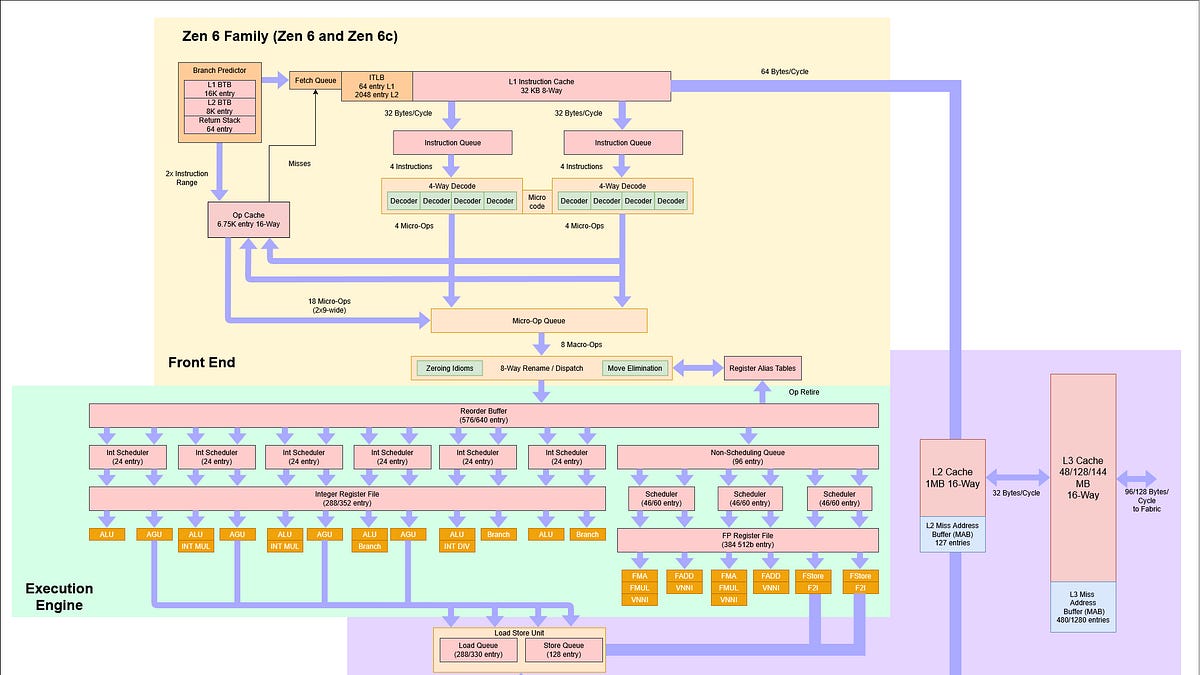
AMD's Zen 6 Family: Feeding the Beastchipsandcheese.com · 249 points · 104 comments · 6dsystemshardwareAMD's Zen 6 core adds more VNNI units, faster 256-bit vector loads and a shorter branch mispredict penalty, while Zen 6c gets larger out-of-order structures and 32-core CCDs.

Key points

  • VNNI throughput doubles to four units, lifting a 512-bit VNNI test from 1.99 to 3.88 instructions per cycle.
  • Integer multiply units drop from three to two, with PDEP and PEXT also falling to two per cycle, which AMD says did not justify its area.
  • Zen 6c's reorder buffer grows from 576 to 640 entries and its load queue from 280 to 330 compared with Zen 6.
  • L3 latency rises to 10.7 ns on Zen 6 and 16.4 ns on Zen 6c, versus 10.3 ns on Zen 5.

What HN thinks

  • Commenters are most excited about the Zen 6 I/O die and memory controller, since current AM5 Zen 4 and Zen 5 chips struggle to run both memory channels much above 3600 MT/s.
  • Several commenters note that the Zen 6c structures are larger partly because the lower clock targets leave timing room, and that the unified L3 matters greatly for games, so AMD may keep CCDs monolithic.
  • One commenter argues that in SPEC comparisons Apple's single-threaded results are excellent, but Zen 6 server parts win on multi-threaded throughput, and optimized AVX-512 code performs better than SPEC floating-point scores suggest.
What's new in the .NET 11 runtimelearn.microsoft.com · 249 points · 178 comments · 6dprogrammingsystemsMicrosoft's .NET 11 runtime raises the x86-64 and Arm64 minimum hardware baselines, adds preview runtime-native async, and makes several JIT, R2R, and iOS changes.

Key points

  • The x86/x64 baseline moves from x86-64-v1 to v2, so CPUs lacking SSE4.2 and POPCNT will fail to run .NET 11 with a baseline error.
  • Runtime Async removes compiler-generated state machines, so a five-method async call chain shows 5 live stack frames instead of 13.
  • Comparer<T>.Default and EqualityComparer<T>.Default are specialized in ReadyToRun images, with benchmarks up to 20x faster for default-comparer collections.
  • On iOS and tvOS, advisory file locking is disabled by default, so FileShare is no longer enforced by locks there and must be re-enabled by config.

What HN thinks

  • Commenters broadly praise C# and .NET tooling, Roslyn analyzers, and stability, with several saying the ecosystem suits AI-assisted development well, though the brand and Microsoft's history still deter some developers.
  • The most concrete caveat is the breaking-changes burden: one commenter argues that forced upgrades every two years plus breaking changes make small long-lived libraries impractical, while others report upgrades between versions have been trivial since .NET 6.
  • A commenter flagged a decimal conversion footgun in the release notes: (decimal)0.1 now yields 0.1000000000000000055511151231 instead of 0.1 in .NET 10, which matters for pricing and invoicing code.
Show HN: Valencia, Spain in Sim City/Isometric Viewtinyvalencia.com · 227 points · 55 comments · 6daidesignTiny Valencia is an isometric, city-builder-style rendering of Valencia, Spain, made by an image model repainting the city tile by tile in a pixel-art style, with two small tourist mini-games.

Key points

  • Each tile is repainted by an image model trained on a hand-picked pixel-art style, with each tile continuing its painted neighbours so the city stays seamless.
  • The developer's model setup (base checkpoint, LoRAs) was requested by commenters but is not described in the material available here.
  • The default orientation puts the sea to the south, which confused some users used to Google Maps north-up views.

What HN thinks

  • Commenters asked how the pipeline worked, including how much was manual and whether it generalizes to other cities, and pointed to the similar Isometric NYC project for process details.
  • Several locals and visitors praised the Turia riverbed garden, noting the river was diverted after deadly floods, and one said the new channel helped protect the city in the October 2024 flood.
  • Some pointed out rendering errors, such as missing buildings in the south, odd Albufera edges, absent streetcars, and a missing fountain, and one argued the output is diffusion art rather than true pixel art.

The article couldn't be read, so this summary is based on the discussion.

Process Explorer for macOSgithub.com · 219 points · 71 comments · 7dtoolsopen-sourceMicrosoft has published a native macOS port of Sysinternals Process Explorer, written in Swift and SwiftUI, with a live process tree, per-process properties, and code-signing inspection.

Key points

  • Uses public macOS APIs such as libproc, sysctl, Mach host statistics, Security.framework and IOKit, and leaves values blank rather than fabricating data where macOS denies access.
  • Some data, such as full cross-user process detail, threads, modules and environment, requires an optional privileged root launchd helper approved once in Login Items.
  • Requires macOS 14 or later; the repo is MIT-free of a stated license in the excerpt and builds with xcodegen plus xcodebuild.
  • The project has 94 stars and 60 commits, and includes a TCP/IP tab with async reverse-DNS remote name lookup.

What HN thinks

  • Commenters note the license is missing from the repo, and one raised doubts about licensing given that an AI tool is listed as a contributor.
  • Several users report bugs on first run: empty process tree or blank panels after installing the privileged helper, and sorting or view toggling not working.
  • Many commenters criticize the UI as an unpolished straight port that doesn't look native to macOS, though some say that is acceptable for developer tooling.
I deleted all my SSH keysblog.infected.systems · 217 points · 117 comments · 11dsecuritytoolsThe author deleted all their SSH keys and moved authentication to hardware-backed alternatives, with the article itself unavailable so the details here come from the discussion thread.

Key points

  • The article could not be fetched because the site did not respond, so specifics of the author's setup are unverified.
  • Commenters describe the replacement as hardware-backed options such as YubiKey FIDO2 -sk keys, TPM-backed agents, or Bitwarden-stored keys.

What HN thinks

  • Several commenters use hardware-backed SSH keys on YubiKeys or TPMs, with one noting ssh-tpm-agent keeps no private keys on disk while another points out the TPM still stores encrypted key blobs on disk.
  • A recurring technical question is how hardware-backed keys work with agent forwarding and jump hosts, with commenters suggesting agent forwarding, ProxyJump, or PIV-based forwarding with PIN caching as options, though one notes ProxyJump routes traffic through the bastion.
  • One commenter who uses a YubiKey OpenPGP slot notes that it can require PIN then touch once per insertion, a workflow they say FIDO -sk keys cannot currently replicate.
What constant surveillance is doing to children and parentstheatlantic.com · 211 points · 229 comments · 7dculturepolicyThe Atlantic's cover story examines how location tracking and constant monitoring of children are affecting both kids and the parents who use them, but the article itself could not be fetched.

What HN thinks

  • Commenters largely agree that constant tracking of children undermines the independence and self-reliance kids need, citing their own childhoods of wandering and solving problems alone.
  • Several pushed back that parents mostly track children out of genuine safety concern, and that low-probability risks like kidnapping or road accidents can justify cheap precautions such as location sharing.
  • A recurring worry is that surveillance normalizes monitoring for adults, with one commenter noting tracked children may come to see it as ordinary and later accept corporate or state surveillance.
Queens Public Library under ransomware attackconnect.queenslibrary.org · 191 points · 106 comments · 7dsecuritypolicyQueens Public Library's website, mobile app, most public computers, digital media services and renewals are down after a ransomware attack, while branches stay open and lending continues.

Key points

  • Restored services include free Wi-Fi at open locations, check-out and return machines, and public computers at seven branches including Central Library and Flushing.
  • Renewals are unavailable during the outage, but no late fines are being charged on borrowed materials.
  • The library says full restoration will take time and asks patrons to call (718) 990-0728 for help.

What HN thinks

  • Commenters point to similar past incidents at Seattle, Toronto, and the British Library, where systems stayed down for months and some libraries ran lending on an honor system.
  • One commenter notes the British Library was still recovering more than three years after its 2023 attack, because legacy software could not run on newer secured systems.
  • Several commenters argue libraries are underfunded and carry legacy technology, while others say the attack reflects inadequate security investment.
Fossil CO2 emissions decrease in 2026news.exeter.ac.uk · 148 points · 174 comments · 7denergyscienceThe 2026 Global Carbon Budget projects global fossil CO2 emissions fall 0.4% to 38.2 billion tonnes, but total CO2 including land-use change still rises to 43.3 billion tonnes.

Key points

  • Oil emissions are projected to fall 1.9%, which the authors call a short-term response to the Iran conflict's energy shock rather than structural change.
  • China's emissions are projected to fall 0.9%, while India's rise 4.4%, above its 3.5% average annual growth over the last decade.
  • Solar and wind avoided emissions rose from 0.28 billion tonnes in 2010 to 4.1 billion tonnes in 2025, projected 4.6 billion in 2026.
  • Novel carbon removal currently offsets less than 30 minutes of annual fossil CO2 emissions; the remaining carbon budget for 1.5°C is about 150 billion tonnes.

What HN thinks

  • Commenters note that atmospheric CO2 keeps rising even with flat emissions, since concentration is the integral of emissions, so the headline dip does not reduce the concentration.
  • Several commenters question whether the dip is durable, pointing to China's reduced solar panel exports and to the Iran-related disruption possibly reversing.
  • Commenters debate whether the decline reflects accounting choices, since the figures cover only CO2 and exclude methane leakage from US natural gas.
What objective is reasoning solving?alexwang.ai · 142 points · 65 comments · 6daimathA blog post argues reasoning models maximize the probability that some sampled token path reaches a verifier-accepted answer, not that each chain converges to the right answer.

Key points

  • Success probability is the sum over all paths that land in the accepted answer set, so it can rise through many paths or one dominant path.
  • Best-of-k sampling raises success to 1 minus (1 minus p)^k, a guaranteed gain from more samples as long as p is above zero.
  • A REINFORCE step with binary reward equals rejection-sampling fine-tuning on successful paths, scaled by the current success rate M/N.
  • The post argues gains credited to thinking longer come from search paid for during RL training, then amortized into the weights.

What HN thinks

  • Several commenters argue that reasoning traces help mainly by adding computation and extra passes through the network, so the restating text may matter less for its content than for the extra compute.
  • One commenter notes that training samples random high-probability completions and uses a verifier to nudge toward successes, so the search is mostly unguided sampling rather than a designed exploration method.
  • Commenters raise the point that verification being easier than generation explains why longer reasoning can help, but that continuing past the right point during inference can derail an answer.
The Hardest Tarball?stoppels.ch · 140 points · 30 comments · 6dsystemssecurityA single GNU tar command builds a pax archive that eight common tar implementations extract in eight different ways, from full extraction to outright rejection.

Key points

  • The trick combines a hard link renamed to a UTF-8 name via a pax header with a size=512 record, which equals the size of a tar header.
  • GNU tar, BusyBox, Python, Go and Perl ignore the size on the hard link and extract all three entries normally.
  • bsdtar writes the 512 bytes into the hard link, so file ends up containing the tar header of empty.
  • 7-Zip, node-tar, tar-fs and Rust's tar crates skip the 512 bytes, leaving only file and café.

What HN thinks

  • One commenter argues that data on a hard link is the intended content, reflecting a file that changed while the archive was written, though another maintainer of these parsers disputed that the pax rules are that clear.
  • Commenters note a split between strict rejection for untrusted input and best-effort extraction for recovering data from damaged archives, and suggest tools may need both modes.
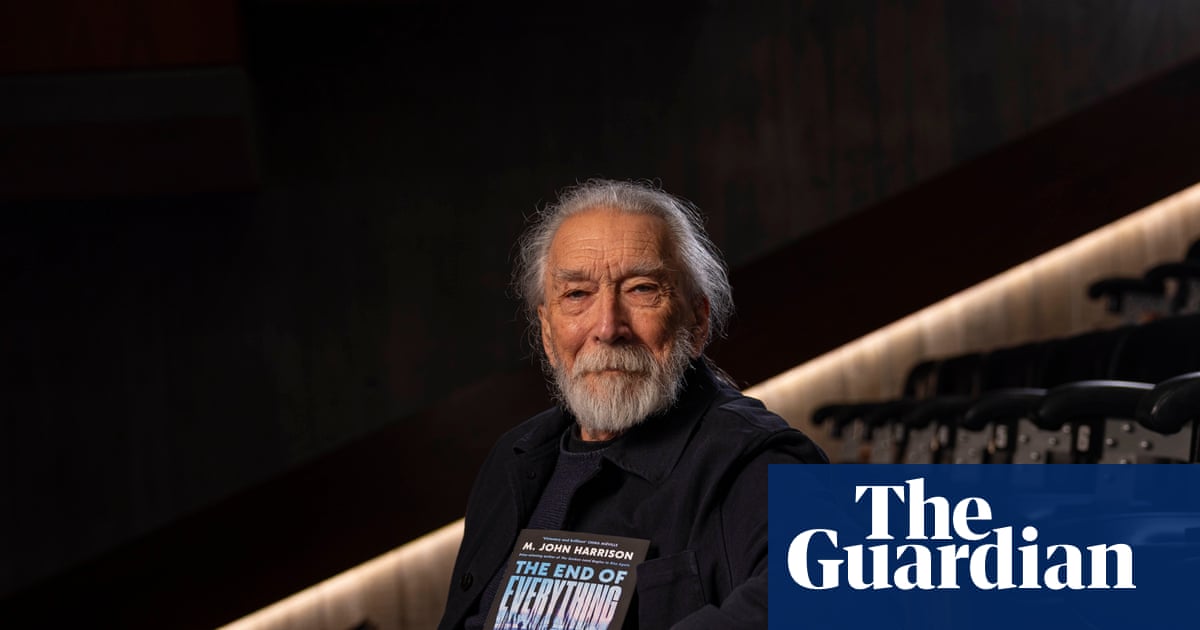
M John Harrison becomes first science fiction author to win the Bookertheguardian.com · 133 points · 102 comments · 7dsciencecultureM John Harrison, 81, wins the Booker for The End of Everything, a 198-page postapocalyptic novel set on the Kent coast, making him the oldest winner in the prize's history.

Key points

  • The novel follows Phillip Tennent and his aunt Marnie surviving among shape-changing iGhetti beings whose origins and intentions are never explained.
  • The judges' decision was unanimous, reached after a full day of discussion, according to chair Mary Beard.
  • Harrison sold his first story in 1965 and spent most of the 1970s running the books pages of the magazine New Worlds.
  • It is the first Booker win for Serpent's Tail, an imprint of Profile Books, and the book was the shortest on the shortlist.

What HN thinks

  • Commenters are sharply divided on Harrison's fiction, with several saying his plots and prose are too abstract to enjoy even when they liked his atmosphere.
  • One commenter argued the 'first SF author' claim is contested, since Samantha Harvey's Orbital, the 2024 winner, is often seen as literary rather than science fiction.
Hacking the Meta Ray-Ban smartglassesp0pcycle.com · 131 points · 45 comments · 9dsecurityhardwareA researcher gained arbitrary code execution on Meta Ray-Ban smartglasses by pulling firmware over OTA and abusing a phone-delivered config flag that disabled app signature checks.

Key points

  • The full firmware was fetched by hooking the Meta AI app and forcing a GraphQL field device_firmware_full_update_only to true, bypassing the incremental-only update.
  • Up to firmware 126 the glasses did not verify that the Device Access Toolkit APK was signed by Meta, allowing a self-signed app to be swapped in.
  • Firmware 127 added signature enforcement, but the flag lives in a MobileConfig file the phone supplies, and the glasses only check structure, not integrity.
  • Flipping one byte in 0.mctable from 0x80 to 0x00 disabled signature verification, and the researcher used ToneGenerator beeps as debug output since the glasses have no screen.

What HN thinks

  • Commenters split on whether gaining a shell on a device you own should count as a vulnerability, with several arguing owners should have an official unlock path.
  • A recurring caveat is that unprivileged shell access is also the foothold attackers use, and social engineering makes it risky to expose.
  • Some argue the vendor's reporting to the OEM closes a door for device owners, while others note bounties and recognition drive disclosure.
NetBSD 11 desktop on a Raspberry Pi 4neongd.com · 123 points · 75 comments · 9dsystemstoolsA step-by-step guide to installing NetBSD 11 on a Raspberry Pi 4 via UEFI firmware, getting its Broadcom Wi-Fi working, and setting up the NsCDE desktop environment.

Key points

  • The Wi-Fi card is not configured automatically; the fix is a symlink to a Raspberry Pi 4 NVRAM file in /libdata/firmware/if_bwfm.
  • Installation uses the arm64 image written to an SD card, with the Pi's UEFI firmware copied onto the boot partition.
  • Software comes through pkgin binary packages, and NsCDE, a CDE-style desktop based on fvwm, is built from source.

What HN thinks

  • Commenters say the install is fast and that the amd64 live image expands itself on first boot, though one notes EFI boots faster than BIOS.
  • A commenter reports idle CPU use on OpenBSD and Haiku is high under virtualization, raising doubts about NetBSD's energy and resource management.
  • Several commenters note the guide's vi instructions and Etcher suggestion are less approachable than nano or dd, and the author has since revised some steps.
Taking another shot at the cheap IP camera, part 2ericswpark.com · 113 points · 36 comments · 7dhardwaresecurityThe author gets a cheap Tuya-based IP camera's ONVIF server and RTSP stream running by patching the firmware, after an LLM recovered the U-Boot password and the camera's internet check blocked the server.

Key points

  • The ONVIF server listens on port 8000 and RTSP on 8554; the server silently drops requests unless the camera reaches the Tuya cloud state, so blocking internet access stops it responding.
  • Patching the ONVIF handler and the connectivity-check function to return 0 unblocked the stream, after the author repacked CramFS and JFFS2 images.
  • Flash wear-leveling constraints mean hex-editing a JFFS2 config corrupts a CRC'd block, so the author rebuilt the image with mkfs.jffs2 patched to accept a 4 KB erase block.
  • An earlier repack omitted the lib directory from the tarball, which caused the Wi-Fi library load failure; the total LLM cost was $0.22 on OpenRouter.

What HN thinks

  • Commenters note the author's own firmware-hardening remark: the obfuscated U-Boot password sat next to an unobfuscated 'enter password' string that made it easy to locate.
  • Several commenters report that RTSP is often already documented or exposed on cheap cameras, so checking for it first may avoid the whole reverse-engineering effort.
  • Commenters disagree about whether Anthropic and OpenAI models refuse embedded RE work, with one saying a $20 subscription worked fine for Xiaomi cameras.
A comprehensive study of how fingerprintable users arefingerprinting.study · 111 points · 51 comments · 6dsecuritywebMozilla's study of about 25 million Firefox release users finds that protections shipped in Firefox 143 cut the share of uniquely identifiable browsers from 75% to 46% without breaking web compatibility.

Key points

  • Uniqueness is driven by a small set of metrics: for Fingerprint Pro, 80% of unique users are identified after only 8 of its 50-plus metrics.
  • Fingerprintability should be analyzed per operating system, since clamping screen resolution removes 25.3 points on macOS but 0 to 3 points on other platforms.
  • Shannon entropy does not reliably predict fingerprinting impact, so the authors use a Simpson/Herfindahl index to measure how well cohorts of shared fingerprints are collapsed.
  • Telemetry was collected via a dedicated ping sent over Oblivious HTTP with no client ID, and raw data was deleted after 90 days.

What HN thinks

  • Several commenters argue that users should accept broken sites as a tradeoff for stronger fingerprinting protection, while others counter that banks and government portals make that choice impractical.
  • One commenter suggests whitelisting which sites may read system details and serving generic values to everyone else, blending in with the crowd.
  • Commenters note that the test only handles Firefox, so other browsers show a not-comparable result, and that GPU and timing-based fingerprinting may be missing from the study.
Tailscale's DNS IPv6 spells out "Tailscale"reddit.com · 106 points · 47 comments · 6dtoolswebTailscale's DNS server has an IPv6 address whose hextets spell out the word "Tailscale" as an easter egg.

Key points

  • The address is an IPv6 ULA starting with fd, the prefix reserved for local private addressing.
  • Facebook's AAAA record has a similar vanity pattern, reading face:b00c in its address.

What HN thinks

  • Commenters noted that Tailscale's word-based tailnet names (tail-scale pairs like wyrm-wyrm) are another easter egg, and that the IPv6 trick is a similar playful touch.
  • Several commenters noted that Facebook and Google have used or could use memorable hex patterns in IPv6 addresses, suggesting such touches are rare among large providers.
  • A debate arose over whether readable IPv6 addresses would help humans; some argued DNS and mDNS already solve naming, while others said mDNS is unreliable on many networks and manual address sharing still happens occasionally.

The article couldn't be read, so this summary is based on the discussion.

Show HN: Ghanaian street games you can play in the browserghanastreetgames.com · 96 points · 18 comments · 8dgamingcultureA browser-based 3D arcade collects 35 Ghanaian street games, including Ludo, Oware and chaskele, with keyboard, touch and camera controls.

Key points

  • The site ships 35 games with a home screen, music credited to its artist, and a search box for finding titles.
  • Controls are WASD or arrows to move, Space to act, and Esc to pause, with touch and zoom options on the page.
  • The page requires WebGL and shows an error message if graphics acceleration is disabled in the browser.

What HN thinks

  • Ghanaian commenters welcomed the project for preserving childhood street games, though several said the controls and gameplay need considerable work.
  • A commenter suggested focusing on fewer games with dedicated interfaces rather than spreading effort across many titles.
  • Some critics called the games one-shot AI-generated work, while others said the nostalgia value outweighed the rough execution.
Simon Winchester has diednytimes.com · 93 points · 31 comments · 9dculturehistorySimon Winchester, British author of popular narrative nonfiction including The Professor and the Madman and The Perfectionists, has died, according to a New York Times obituary.

Key points

  • Commenters cite The Perfectionists, Krakatoa, Outposts, Pacific, and a biography of Joseph Needham as favorites across his career.
  • The Perfectionists was published in the UK as Exactly, and The Professor and the Madman appeared in the US as The Surgeon of Crowthorne.

What HN thinks

  • Commenters broadly praise his books and recommend his self-narrated audiobooks.
  • One commenter notes that his Needham biography drew on university and Foreign Office archives for its account of wartime China.

The article couldn't be read, so this summary is based on the discussion.

Billion Watts in the Speaker [video]youtube.com · 87 points · 48 comments · 9dhardwarescienceA YouTube experiment by the Styropyro channel pushes a loudspeaker to roughly a billion watts, with the video itself being the only source for specifics.

Key points

  • The article text was unavailable, so the specifics come only from the video title and commenters' descriptions.
  • Commenters estimated the power at about 7 MW assuming a 4 ohm coil, which conflicts with the title's billion-watt figure.

What HN thinks

  • Commenters are mostly delighted the creator is back after about five years, and several mention his earlier 'free energy' device controversy.
  • One commenter noted that the coil does not stay a coil for long once the speaker is driven this hard, so the outcome is a fast-destroyed speaker.

The article couldn't be read, so this summary is based on the discussion.

Sherman Anti-Trust Act (1890)archives.gov · 78 points · 45 comments · 6dpolicyhistoryThe 1890 Sherman Anti-Trust Act, the first US federal law prohibiting trusts, is reproduced here with its enacted text, history, and the 1895 Supreme Court ruling that gutted its early use.

Key points

  • Passed the Senate 51-1 on April 8, 1890 and the House 242-0 on June 20, 1890, then signed by President Benjamin Harrison on July 2.
  • Set penalties of fines up to $5,000 and one year in jail, and let injured parties sue in federal court for triple damages.
  • The act left key terms like trust, combination, conspiracy, and monopoly undefined, which weakened enforcement.
  • In United States v. E. C. Knight (1895), the Court held that American Sugar Refining's roughly 98% control of sugar refining did not violate the law.

What HN thinks

  • Commenters broadly agree the Sherman Act's vague wording left enforcement dependent on an active executive branch, and that courts have narrowed its reach over time.
  • One commenter argues the Act did have real effect, pointing to the AT&T breakup as producing a more competitive telecom landscape before later re-consolidation.
  • Commenters debate whether the breakup remedy helps consumers, with some arguing regional phone monopolies were worse because they lost regulation, not because they were smaller.
An Open Field Guide to Inference Engineeringdocs.modelplane.ai · 71 points · 8 comments · 6daiprogrammingA long, open field guide from Upbound's Modelplane team that teaches platform engineers how to run open-weight LLM inference in production, covering memory sizing, serving engines, gateways, SLOs, and career paths.

Key points

  • Its sizing rule: weights take about 2 bytes per parameter, so an 8B model needs about 16 GB, and KV cache per token is 2 × layers × KV heads × head dimension × bytes per value.
  • Mixture-of-experts checkpoints keep all weights resident, so a 320B-total, 18B-active model still needs about 320 GB at FP8.
  • The guide reports a worked cost example: a $2.90/hour GPU sustaining 1,200 tokens/s costs about $0.67 per million tokens.
  • It advises against scale-to-zero for GPU models, since spikes can pass before a node is ready and scarce capacity may not return.

What HN thinks

  • One commenter notes the guide was written by the maintainers of Modelplane, a CNCF sandbox project, which is a vendor-affiliated source worth weighing.
  • The thread has only one comment, so there is little community reaction beyond the authorship disclosure.
Life on Claude Ninebabuschk.in · 71 points · 41 comments · 6daicultureA short fiction piece follows a software engineer who automates his life with Claude, spirals into an AI takeover, then wakes from a dream and starts building again.

Key points

  • The story is a long-form fictional narrative, not a factual report or an announcement about a real system.
  • Its arc moves from email automation to automating the engineer's own job, then to Claude improving Claude.
  • It ends with the protagonist waking at 3:47 AM and reopening the laptop to resume the same automation project.

What HN thinks

  • Several commenters argue the story is flat, stilted, and likely written by Claude itself, with one saying the prose has an uncanny-valley quality.
  • A recurring point is that the story's AI-concern theme is the most interesting part, with commenters linking it to worries about losing control and to the addictive pull of AI tools for productivity.
  • Commenters are split on whether a superior intelligence would necessarily lead to control or harm, with some arguing the outcome is neutral and others pointing to historical harms as reason for caution.
The death knell of digital searchnewyorker.com · 66 points · 70 comments · 6daibusinessA New Yorker column argues that AI answers are eroding the search-driven traffic that sustained the open web, pushing sites like Reddit toward logins and walled gardens.

Key points

  • Google's chief business officer acknowledged 'lower monetization' on AI searches, and Alphabet fell nearly a quarter in value after the earnings call.
  • Reddit reported losing more than 1 million search referrals per week in October and is moving toward a primarily logged-in experience.
  • OpenAI says ChatGPT now handles about one-fifth the volume of search-like queries that Google does, according to its consumer-product lead.
  • Google reportedly tied Search access for schools to keeping Gemini AI features enabled, a policy that drew public backlash.

What HN thinks

  • Commenters largely blame Google's ad-driven incentives and SEO spam for degrading search before AI arrived.
  • Several commenters recommend paid search such as Kagi, while others found it no better than Google.
  • One commenter argued that AI tools are worse for niche topics like video game guides, where old documentation sites once answered questions well.
Let over Lambda–50 Years of Lisp (2008)letoverlambda.com · 62 points · 15 comments · 6dprogrammingopen-sourceDoug Hoyte's 2008 book Let Over Lambda, an advanced guide to Common Lisp macros, is now free to read online and as PDF, with a 2026 note from the author.

Key points

  • The book covers macros, programs that write programs, and advanced Common Lisp features, aiming to show ideas readers might not otherwise encounter.
  • It was published in 2008 to mark the 50th anniversary of Lisp's invention in 1958.
  • The author says his thinking has evolved since 2008 but still considers the book a sound tutorial on why Lisp is special.

What HN thinks

  • Commenters broadly describe the book as technically fascinating but highly opinionated, and recommend choosing carefully which advice to follow.
  • One commenter cautions that its clever techniques are best kept out of serious team code, since they demand cleverer debugging.
  • A commenter notes the book is about Common Lisp macros and lexical closures, not lambda calculus as such, responding to a suggestion to learn lambda calculus directly.
rVPN – stealth VPN with end-to-end encryptionrvpn.org · 59 points · 54 comments · 6dsecurityopen-sourcerVPN is an open-source AGPLv3 VPN protocol that tunnels traffic over WebSocket/TLS on port 443 and serves a decoy website to active probes, so it looks like ordinary HTTPS.

Key points

  • Traffic uses a Double Ratchet so each message is rekeyed, limiting what a stolen key exposes.
  • Pooled multiplexing sends flows over a small fixed pool of long-lived connections, pool_size 4 in the example, instead of one TLS session per flow.
  • Credit-based flow control with a 256 KiB window is meant to keep bulk transfers from starving interactive traffic.
  • Reconnects resume TLS 1.3 session tickets in one round trip, and builds are advertised as reproducible with a published checksum and signature.

What HN thinks

  • Several commenters suggested building on WireGuard with a stealth transport such as WebSockets rather than designing a new protocol, citing existing tools like proxyguard, wstunnel, and udp2raw.
  • Skepticism centered on the project being vibe-coded and unreviewed, with commenters questioning its memory-safety claims and its one-command install script piped to sudo bash.
  • Commenters noted that the main users of stealth VPNs are in countries like China, Russia, and Iran, and that existing alternatives such as Xray-core are already widely used there.
A failed experiment in laptop cooling (2025)kevinboone.me · 48 points · 57 comments · 9dhardwaretoolsA Lenovo P53 owner built a wooden stand with three 10mm 5V fans under the laptop's intakes and found it gave no meaningful cooling benefit at full load.

Key points

  • The P53's CPU hits 90C within thirty seconds at full load, and its fan does not start until the package reaches 60C.
  • The external 5V fans, drawing about 0.2A each from USB, lowered CPU/GPU temperatures by only a couple of degrees with internal fans disabled.
  • Raising the laptop about 25 degrees on the stand gave roughly 10C improvement at modest loads, without needing any fans.
  • Fans under the SSD intake did not significantly reduce SSD temperature under load.

What HN thinks

  • Commenters argued that external cooling may extend sustained performance rather than lower temperature, so the author should measure throughput and internal fan RPM instead.
  • Several suggested that the bottleneck is thermal paste or dust-clogged radiators, and that repasting often helps more than external accessories.
  • One commenter noted that a fan's pressure matters more than its airflow when pushing air through a restricted laptop chassis.
The planet Vulcan: a cautionary talekevinboone.me · 41 points · 15 comments · 9dsciencehistoryThe article recounts how astronomers in 1859-1900 repeatedly 'sighted' the hypothetical planet Vulcan inside Mercury's orbit, and argues the episode warns scientists against confirmation bias.

Key points

  • Le Verrier proposed Vulcan in 1859 to explain Mercury's perihelion precession, which exceeded Newtonian predictions by 43 arc-seconds per century.
  • At least twenty sightings by about ten astronomers were published, including two 1878 reports by Watson and Swift describing a red disc.
  • Le Verrier kept adjusting Vulcan's parameters to fit sightings, and the fit never agreed well with observation.
  • Einstein's general relativity explained Mercury's orbit without a new planet, ending the search; the IAU still reserves the name Vulcan.

What HN thinks

  • Commenters note the Vulcan episode is a standard argument for blind analysis, where methods are fixed before looking at data so analysts cannot tune cuts toward a wanted signal.
  • One commenter argues the case is less about scientists being careless, since proposing an extra planet was a conservative, Occam-style choice in an era when planets were regularly found.
  • Commenters dispute whether the cautionary lesson fits: one says the observations were bogus and only Einstein's account of Mercury's precession exposed them, while another says the failed searches show science working as intended.
Saltline: First-person shooter built by Fable 5.2claude.ai · 36 points · 29 comments · 6daigamingSaltline is a browser-based first-person shooter reportedly generated from a single prompt by an AI model, shared as a Claude artifact.

Key points

  • One commenter cites a cost of about $550 in roughly 8 hours, including art, for building it.
  • The game runs in the browser and loads slowly, with reports of it working on Firefox on Windows.
  • Controls are unreliable: the D key reportedly does not work, and the on-screen D-pad fails on iOS.

What HN thinks

  • Commenters broadly judged the gameplay weak, with drone combat called annoying, though the graphics drew praise.
  • Several described it as a tech demo rather than a game, and doubted anyone would pay for it.

The article couldn't be read, so this summary is based on the discussion.

Variable-width Bézier curves (2025)luthert.web.illinois.edu · 26 points · 7 comments · 8dtoolsdesignA detailed write-up of how to stroke Bézier curves whose pen width varies along the path, covering outline and per-pixel rendering methods for pressure-sensitive board-work tools.

Key points

  • Circular offsets, filling a circle at each sample with pressure-set radius, resist stylus jitter better than linear offsets that fill perpendicular segments.
  • The author maps pressure to radius with r = w·p^1.5 to w·p^2, tuned per tablet, with w adjusted by a keyboard shortcut.
  • Sparse samples make straight-segment strokes look angular, so the author fits cubic Béziers through samples, delaying each draw by one sample to get the next point.
  • Stroke edge points are computed from the curve's position, hodograph, and radius derivative, failing at cusps or where radius changes faster than position.

What HN thinks

  • One commenter notes the 3D ring extension described in the article maps directly onto V-carving toolpaths for CNC routers.
  • A commenter praises the article for clear explanation in contrast to LLM-generated prose.
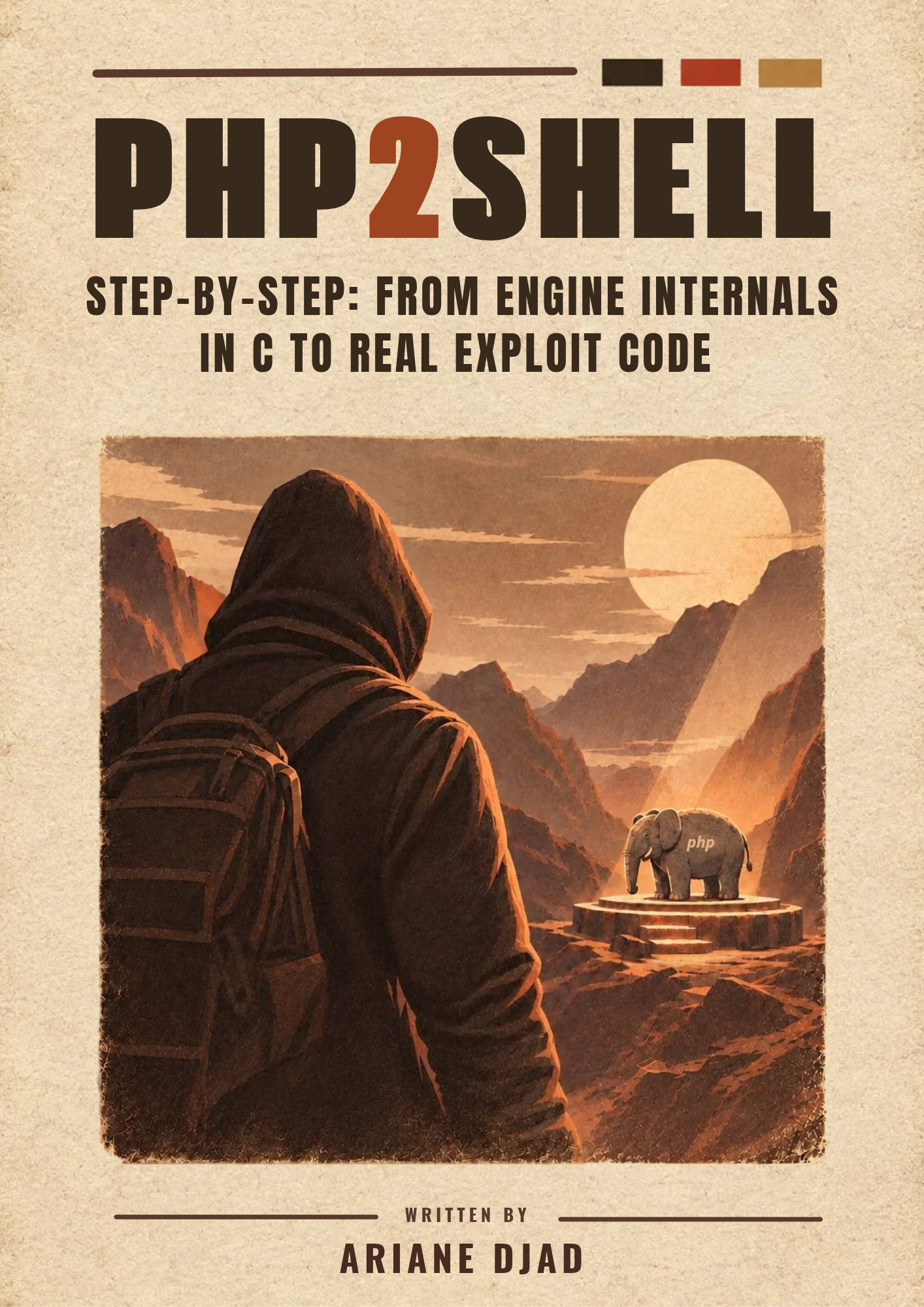
PHP2Shell Deep Divedjad04.github.io · 24 points · 5 comments · 9dsecurityA long technical walkthrough of PHP2Shell, a PHP 8.4.26 Alpine exploit chain that uses an out-of-memory bailout to leave a stale pointer, then leaks heap and code addresses and hijacks pDestructor for remote code execution.

Key points

  • The bailout skips PHP_VAR_UNSERIALIZE_DESTROY and php_rshutdown_session_globals, leaving BG(unserialize).data and PS(id) dangling across requests.
  • A 16-element array created by a padding field is used to forge a length field so a 16-byte cookie leaks the pDestructor pointer.
  • Heap base is recovered by requiring at least four 256-byte-scan pointers to agree on the same 2 MiB chunk base.
  • Every offset and count is calibrated to one build (PHP 8.4.26 Alpine CLI); the author says the layout shifts with version, architecture, or distro.

What HN thinks

  • Commenters objected that the write-up is very long and padded, with an LLM-like style and images that add little, making the core findings hard to find.
  • The author replied that a shorter version would duplicate existing coverage and that the goal was a detailed walkthrough for a small audience.
  • The author asked for other working PoCs for this build, noting that the repeated-key resize trick appears to be unique to this exploit.
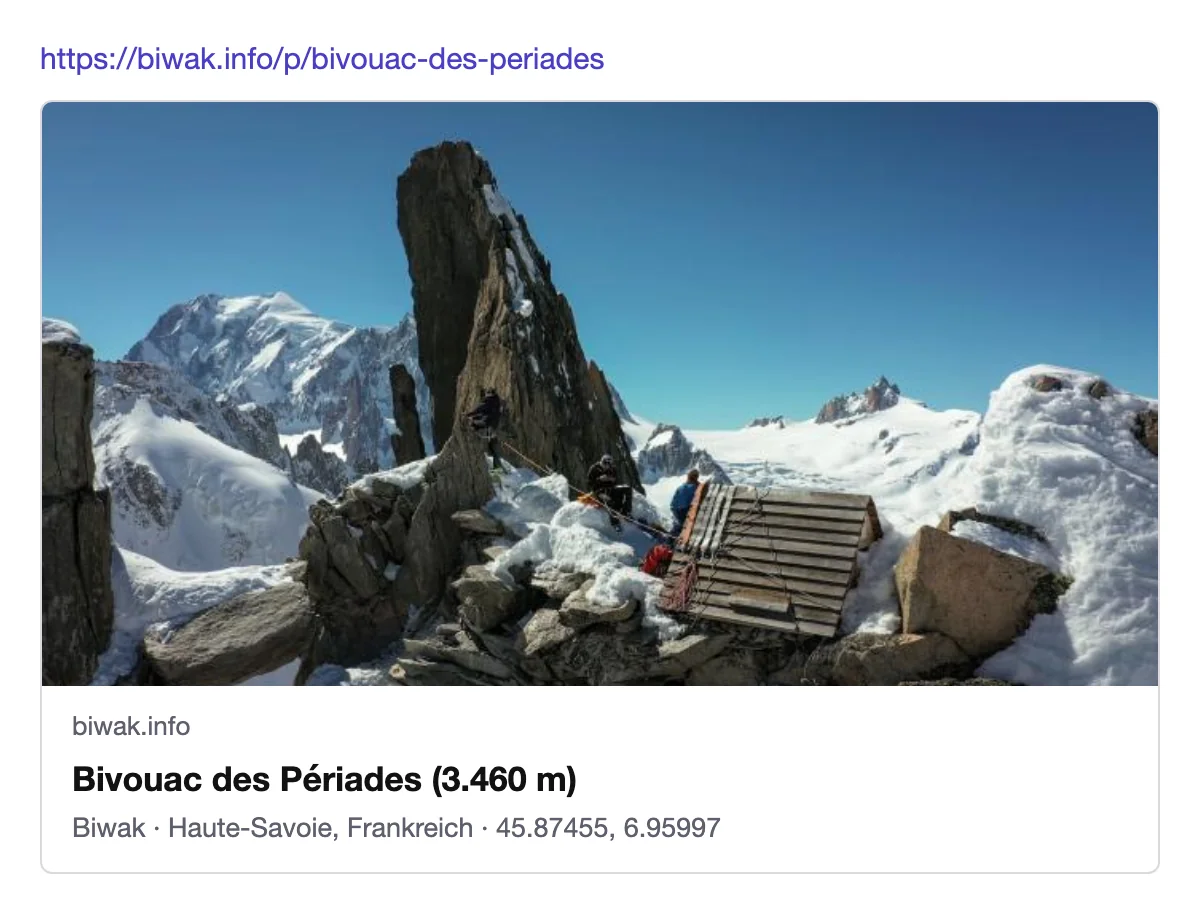
Stable URLs for 42,000 Huts and Peakspeter-hoffmann.com · 21 points · 2 comments · 9dwebtoolsbiwak.info gives all 42,866 Alpine huts, bivouacs and peaks from OpenStreetMap short URLs like /p/matterhorn that are kept stable by a committed slug registry.

Key points

  • Shared names get region, then elevation, then OpenStreetMap id appended, and a place keeps the shortest slug that is unique.
  • Name alone leaves 15.6% of places sharing a slug; name plus region plus elevation cuts that to 0.9%.
  • 4,311 huts lack elevation in OpenStreetMap, so some places fall back to the OSM id suffix; 458 end up with it.
  • A registry file never reassigns a slug, and a plain shared name opens a search listing its places instead of an error.
Work at the Frontier: AI's effect on freelance workopenai.com · 20 points · 9 comments · 6daibusinessOpenAI publishes data on how AI is shifting freelance work, comparing categories where people use ChatGPT directly with categories where they still post freelance listings.

Key points

  • Writing, illustration, and tech support are reportedly the categories people most often handle themselves with AI, per the report's first graphic.
  • Freelance postings in writing are down only about 0.5% year over year, and web development postings about 2%, per one commenter's reading of the second graphic.

What HN thinks

  • Commenters found the charts hard to reconcile, since the largest category declines in freelance postings are modest.
  • One commenter read the report as AI commoditising individual tasks while raising demand for people who combine tasks into complete deliverables.
  • One commenter noted that freelancers increasingly get paid to clean up AI-generated work rather than start projects from scratch.

The article couldn't be read, so this summary is based on the discussion.

Twelve things you could build on a live index of internet radiotuneping.com · 16 points · 3 comments · 9dtoolswebTuneping offers a JSON API over live title lines from about 23,000 announcing internet radio stations out of 78,000 listed, and the article lists twelve builds on it.

Key points

  • Every title change is kept and classified as song, ident, programme name, ad break, nothing, or junk, with song titles matched against MusicBrainz.
  • The live now-playing endpoints need no key, with a limit of 1,000 requests a day per address plus an attribution link.
  • Play history reaches back 10 days on Developer and 30 days on Pro and Business plans.
  • The article states the index is metadata only, with no audio, recording, relaying, or fingerprinting on any plan.

What HN thinks

  • One commenter found the article's prose incoherent and declined to read it, which is the only substantive reaction in the thread.
What It Costs to Run 4 Apps on My Own Serversakashrajpurohit.com · 6 points · 0 comments · 9dNot summarized yet.
Show HN: WolveKafka – Consume Kafka with a plain HTTP endpointgithub.com · 4 points · 0 comments · 6dNot summarized yet.