HN digest

New Evidence Shows School Phone Bans Are Gradually Improving Test Scoresnytimes.com · 1149 points · 577 comments · 14hpolicyscienceA Harvard study of 3.3 million U.S. students finds strict school phone bans produced modest gains in math and reading test scores compared with similar schools without bans.

Key points

  • Schools with strict bans, where students lock phones in pouches all day, saw gains equal to an extra week or two of school per year.
  • The gains reversed roughly half the annual learning loss students experienced in the years before the pandemic.
  • The study covered third through 10th grade students at 4,600 schools between 2021 and 2026, using fall-to-spring MAP test growth.
  • Gains appeared for students at all achievement levels, according to the study's reported results.

What HN thinks

  • Commenters broadly welcomed phone bans, with several parents reporting more social interaction and less phone dependence at school.
  • The main methodological criticism is that the effect is tiny (about 0.01 SD, with a confidence interval near zero) and that trimming outliers outside the 0.5th and 99.5th percentiles was not clearly preregistered, which weakens the result.
  • Some commenters argued the cause is unclear and that broader factors such as curricula, COVID-era disruption, and school laptops could explain test score trends as well as phones.
GPT‑6.2 Astra and Solopenai.com · 1069 points · 683 comments · 8haiOpenAI has announced two models, GPT-6.2 Astra and GPT-6.2 Sol, but the announcement page could not be fetched, so details are unverified.

What HN thinks

  • Commenters broadly report that GPT-6.2 Sol and Astra score well on published benchmarks and cost, but many say real-world coding results lag, with complaints about overengineering and bloated code.
  • Several commenters say Opus 5.5 and Fable 5.2 remain preferred for coding and writing, and some say they switched from OpenAI models to Anthropic models for daily work.
  • Some users with first-hand testing found 6.2 Astra better than 6 on response structure and speed, and one said Astra was more reliable on a large C++ codebase, while others found Sol underperforming.
Apple Services Downdeveloper.apple.com · 621 points · 344 comments · 8htoolsA Downdetector status page reports outage reports for Apple support services, but the page could not be fetched so its contents are unverified.

What HN thinks

  • Commenters largely reject a coordinated-attack explanation for this Apple outage, pointing instead to ordinary failures, rushed patching, and staffing cuts, though some still suspect an attack.
  • Several commenters report that Apple retail stores could not process sales, returns, or activations, and one notes stores were also unable to take cash.
  • One commenter who worked on Reminders says it uses CalDAV, which explains why it works with non-iCloud services like Fastmail.
Java4Shell: RCE in OpenJDK when processing Base64calif.io · 483 points · 131 comments · 4hsecuritysystemsCalif discloses CVE-2026-114938, an out-of-bounds heap write in OpenJDK's x86-64 AVX-512 Base64 decoder that it says can lead to heap disclosure and remote code execution.

Key points

  • A 65-byte input of 64 A's followed by one = makes the decoder allocate a 50-byte array and then write 64 bytes, overflowing by 62 bytes.
  • The bug affects OpenJDK 17.0.6 and newer on x86-64 CPUs with AVX-512 VBMI; ARM64 is not affected.
  • Published exploit chains use heap grooming over the network and need a bespoke profile per application; the product-specific exploits are being withheld until patches spread.
  • Interim mitigations are -XX:-UseBASE64Intrinsics or -XX:UseAVX=2, and a patch was released by Oracle on Nov 17, 2026.

What HN thinks

  • Commenters broadly agree the exploit is hard to weaponize at scale, since it needs a specific heap layout, a live writer, and low-latency network positioning, though LLM-assisted exploit writing is seen as a growing risk.
  • Many note the bug only triggers on x86-64 CPUs with AVX-512 VBMI, so ARM hosts like Graviton are unaffected, and a quick check of /proc/cpuinfo plus the -XX:-UseBASE64Intrinsics flag is a common stopgap.
  • One commenter points out that hand-written assembly in a standard library is a recurring risk, and that fuzzing a hand-rolled decoder would be a more practical way to catch logic bugs like this.
Highly classified US national security communications network goes downcnn.com · 458 points · 541 comments · 10hsecuritypolicyNSA's internal classified communications network, NSA Net, is down according to six sources, with no evidence of a cyberattack so far.

Key points

  • The agency has staggered arrival times for personnel while it works to determine the scope of the outage.
  • CNN reports the outage was described by six people familiar with the matter and that NSA had not yet commented.

What HN thinks

  • Commenters largely attribute the cluster of recent outages to either media attention bias (frequency illusion) or ordinary failures on bespoke networks, with many noting such networks go down periodically without coverage.
  • Several commenters link the outages to staff cuts and rushed AI-assisted code changes, though others argue speculation about AI causes is unsupported and that network status itself is not necessarily classified.
  • One commenter with experience building government high-security networks says compliance-driven certification often preserves old firmware and ignores ongoing security maintenance, which could explain fragility.
Nvidia stopped disclosing Singapore sales as revenues hit $104Bft.com · 378 points · 185 comments · 8hbusinessaiNvidia has stopped breaking out its Singapore sales in financial disclosures, as its overall revenue reached $104 billion; the article itself could not be retrieved.

What HN thinks

  • Commenters largely agree the $104B figure refers to the Singapore subsidiary's booked revenue, which may include orders shipped worldwide via OEMs, not sales that stayed in Singapore.
  • The strongest criticism is that Nvidia stopped reporting the Singapore breakdown during export-control scrutiny, which one commenter says looks suspicious even if the accounting change is legitimate.
  • One commenter notes that renting compute to Chinese companies from Singapore was legal until recently, so the chips need not have been smuggled into China to matter for sanctions.

The article couldn't be read, so this summary is based on the discussion.

What is the best harness for each model?runta.com · 332 points · 114 comments · 10haitoolsRunta's FrontierHarness v1.1 benchmarks 22 coding-agent harness configurations across five open models on 62 terminal tasks, finding the cheapest harness changes with the model and cost does not buy higher pass rates.

Key points

  • Across 27,280 runs and 83B tokens, 64.5% of list-price cost went to trials that did not pass, 52.7% to failures and 11.8% to timeouts.
  • With the model fixed, the most expensive harness cost 1.8 to 5.0 times the cheapest per task, though the shuffle baseline was 1.2 to 1.8 times.
  • Codex CLI was 1st on cost per task with GLM-5.3 but 16th with Kimi-K3, and the rank correlation between models was only 0.26.
  • Steps per pass correlated +0.51 with cost per pass across harnesses, while prompt size, tool count and cache hit rate did not predict cost.

What HN thinks

  • Commenters questioned the methodology, noting that the test tasks were not listed in the write-up and asking why a mix of 17 TB4 and 45 TB2.1 tasks was chosen.
  • Several commenters argued that binary test pass/fail is a weak proxy for real-world quality, since agents can write code that passes tests while being poor, or fail tests with sound code.
  • One commenter pointed out that the steps-per-pass finding is close to tautological, because cost tracks tokens and tokens track steps, and suspected the conclusions may not hold on a second sample given high variance.
NSA Internal Network Downreuters.com · 322 points · 189 comments · 9hpolicysecurityA report says a highly classified US national security communications network is down, citing CNN; the article itself could not be fetched, so details are unconfirmed.

What HN thinks

  • Several commenters think the recent cluster of outage reports is partly a frequency illusion, with media now amplifying IT failures that would once have gone unreported, and AI often blamed without evidence.
  • Some commenters argue that rushed modernization, reduced testing windows, and cost cutting are more likely causes than hacking, citing a cloud security update that unexpectedly changed a networking default in production.
  • A minority suspects a coordinated or state-linked cause, though others note the article is unverified and that no clear evidence links these outages to attacks.

The article couldn't be read, so this summary is based on the discussion.

We don't need more apps, we need better open sourcejordankrueger.com · 317 points · 204 comments · 11haiopen-sourceThe author argues that AI-assisted coding should go toward improving existing open source tools (speed, installation, upkeep, resource use) rather than producing more new consumer apps.

Key points

  • The author says open source already covers most of what his nonprofit clients need, but it is hard to install, run cheaply, and keep running.
  • He cites uv as an example, claiming 8 to 10 times faster than pip in its makers' benchmarks, and up to 115 times with a warm cache.
  • He proposes four targets: faster, one-command install, friendlier running with safe upgrades and backups, and lighter resource use.
  • He notes curl ended its bug bounty in January 2026 after floods of fake AI-generated security reports, and urges small, tested, consulted changes.

What HN thinks

  • Commenters broadly agree that AI-generated pull requests are overwhelming maintainers, with several saying they now close or restrict contributions because many PRs address hypothetical or hallucinated problems.
  • A recurring caveat is that open source has no built-in support or maintenance, so commenters argue that a stated maintenance commitment matters more than the volume of new projects.
  • One commenter with first-hand experience described building a bespoke MIDI player with an LLM in about three hours after failing for days to get off-the-shelf audio software working, illustrating the appeal of personal tools.
MAI Code 2 and Code 2 Flashmicrosoft.ai · 279 points · 131 comments · 7haiprogrammingMicrosoft released MAI Code 2 and MAI Code 2 Flash, coding models priced well below rival frontier models, available now in GitHub Copilot with Flash in limited preview on Microsoft Foundry.

Key points

  • Averaged over four coding benchmarks, MAI Code 2 reaches 98% of GPT 6.1 Sol's performance at 40% of its cost, and 96% of Claude Opus 5.5's at 5% of the cost.
  • In blind frontend evaluations, reviewers preferred MAI Code 2's output over GPT-6 Sol 67% of the time, across 258 annotators.
  • Microsoft says the models are not tuned for fundamental science research or very long-horizon agentic work.
  • Cost figures for MAI Code 2 and Flash use a 50% promotional price, and the company says results vary by workload and reasoning effort.

What HN thinks

  • Commenters broadly argue that frontier leads from OpenAI and Anthropic are only a few months and thus not a durable moat, with distillation making catch-up easier.
  • Skepticism centers on benchmarks: commenters note outdated benchmark versions, non-comparable harnesses, and comparisons against Opus and Sol pricing that may ignore subscription subsidies.
  • One commenter who cancelled GitHub Copilot says cheap per-token prices won't matter unless usage is billed separately from the Copilot quota, as Claude Code and Codex offer near-unlimited use.
Phrack 73 Releasedphrack.org · 266 points · 31 comments · 7hsecuritysystemsPhrack issue 73 ships 23 main papers and eight Line Noise articles, covering exploitation, reverse engineering, ML backdoors, hardware, and hacking history.

Key points

  • Main papers include a container escape via the vDSO, UAF exploitation, a QNX userland shellcode study, and a Chromium renderer sandbox escape through Skia.
  • Other papers cover Windows smart card minidriver abuse, Binary Ninja static taint analysis, autonomous underwater vehicles, and backdoors in machine learning.
  • One paper traces a path from PhrackCTF to two WinFsp zero-days, and the history section revisits the SSH1 CRC32 bug featured in The Matrix Reloaded.
  • The editorial says this is the third release by the new staff and is larger than last year's issue.

What HN thinks

  • Commenters reminisce about favorite past issues, especially Issue 49 (Smashing the Stack) and Issue 69, which covered Adobe Shockwave.
  • One commenter notes that Shockwave RCE was known to some people long before publication, citing a Habbo client demo where the Calculator app was run from the game client.
  • One commenter wishes Phrack had a print edition like 2600, saying reading on screens is harder with age.
Why 3dfx 1 cards had such a washed out color output?twitter.com · 265 points · 97 comments · 25hhardwarehistoryA Twitter post from John Carmack asks why 3dfx Voodoo 1 cards produced washed-out color output; the linked post's content could not be retrieved.

What HN thinks

  • Commenters point to a gamma mismatch: rasz says 3dfx defaulted to a gamma of about 1.5 versus linear VGA and CRT's 2.2, so the output was closer to linear than standard VGA and the washed-out look came from the default setting, adjustable via grGammaCorrectionValue or the SST_GAMMA variable.
  • Several commenters note that the washed-out look was partly a colorspace issue in game asset and blending workflows, since many developers at the time did not blend light in linear space, a blind spot one commenter says Carmack himself had for a long time.
  • One commenter recalls that Riva 128 output looked washed out in games until switching to a Voodoo 2, though another doubts the game named was even compatible with those cards.
How the Claude Code team thinks about verificationclaude.dev · 261 points · 202 comments · 15haiprogrammingAnthropic's Claude Code team describes how it verifies agent-written code, relying on end-to-end runs, property and differential tests, and gated checks that the agent cannot edit.

Key points

  • The team says about 90% of its code is written and reviewed by Claude, and verification loops let it run many agents in parallel.
  • A separate grader checking output against a rubric improved task success by up to 10 points over a standard prompting loop, mostly on the hardest problems.
  • Claude stops and asks a human after a check still fails three rounds, and a reliability checklist of 39 diff-triggered items is consulted on each change.
  • Review rules are read from the base branch so a change cannot alter the check that judges it, and a commit gate runs in off, observe, and enforce modes.

What HN thinks

  • Several commenters argue the article's verification approach is token-expensive and that deterministic tools like Playwright, static analysis, and generated scripts could achieve similar results at near-zero marginal cost.
  • Commenters note that layered checks such as linting, compilation, and unit tests are standard practice, so the article's main contribution seems less novel to them.
  • One commenter with experience notes that verifying every diff is feasible if changes are broken into small reviewable pieces, while others question whether companies will accept the risk of unreviewed large changes.
Quad9's withdrawal from France: A canary in the coal mineblog.cloudflare.com · 250 points · 71 comments · 3hpolicywebQuad9, a Swiss non-profit, is withdrawing its free public DNS resolver from France after a court imposed daily penalties for not blocking domains tied to alleged copyright infringement.

Key points

  • Quad9 chose to exit France rather than alter its resolver to block domains, which it says would undermine user privacy and security.
  • Quad9 cannot tell which users rely on its resolver, so hospitals, universities and government bodies may lose access without warning.
  • Cisco previously withdrew OpenDNS from France, Portugal and Belgium (temporarily), and a Belgian order targets Cloudflare, Google and Cisco by January 2027.
  • Cloudflare says a French court earlier rejected penalties against it because its CDN and reverse-proxy actions were deemed sufficient compliance.

What HN thinks

  • Commenters largely side with Quad9 that DNS blocking is the wrong tool for piracy, and the CTO reports broad support at IETF 127, with worries about a fragmented 'splinternet' and France being a template for EU policy.
  • Several commenters frame the trend as an inevitable tension between national sovereignty and a global internet, arguing the open internet was never fully free even in earlier decades.
  • One commenter points out that the same actors pushing French blocking orders, including a sports broadcaster's legal team, have advocated DNS blocking through ISPs for years, and skepticism is also directed at Quad9's own corporate-backed critics.
jQuery 4.1.0github.com · 247 points · 134 comments · 5hopen-sourcewebjQuery 4.1.0 was released on November 17 with a batch of fixes and small features, including a responseURL field on jqXHR and a ReDoS fix in selector matching.

Key points

  • Adds a responseURL field to jqXHR and an alternative completeCallback API for transports.
  • Replaces getElementsByTagName and getElementsByClassName internals with querySelectorAll.
  • Fixes a ReDoS vulnerability in identifier matching and includes a workaround for a Safari 27 regex interpreter bug.
  • Adds support for form-associated custom elements in serialization and uses createElementNS so CSS probes work with XML documents.

What HN thinks

  • Commenters broadly agree jQuery's main historical value was smoothing over cross-browser differences and concise DOM manipulation, though many say most of that is now built into browsers.
  • Several argue jQuery still has a niche for small enhancements on static sites or legacy codebases, and it remains widely deployed through WordPress and older projects.
  • A recurring caveat is that jQuery's no-op behavior on empty selections can hide bugs, and one commenter noted that selectors became fragile as sites changed.
350 years ago, Ole Rømer discovered that light has a finite speedsciencenorway.no · 235 points · 73 comments · 6hsciencehistoryA Science Norway article marks the 350th anniversary of Ole Rømer's discovery that light has a finite speed, though the fetched text contains only site navigation.

What HN thinks

  • Commenters pointed to a Minute Physics video and a Physics Explained video as clearer explanations than the article, and one shared a comic that walks through the measurement.
  • Several commenters discussed the one-way speed of light: a round-trip measurement cannot directly show that light is equally fast in all directions, and clock synchronization conventions affect one-way timing.
  • One commenter with network experience noted the same issue arises in packet-switched networks, where asymmetric delays cannot be measured directly without an external clock reference like GPS.
If an App Asks for Full Disk Access or System and App Protection Overridesupport.apple.com · 227 points · 117 comments · 23hsecuritytoolsApple's macOS 27.3 lets users limit Full Disk Access and System & App Protection Override requests to specific protected folders or apps instead of granting blanket access.

Key points

  • When offered, the choose-folders option keeps system protections in place for all data outside the folders or apps the user selects.
  • System & App Protection Override can be scoped per app, with a menu setting each app to Ask First or At Any Time.
  • Full Disk Access lets an app read, change, delete, and export all files, including messages, photos, and other user accounts' data.
  • Apple says the choice appears only for some apps; others, such as backup tools requesting Accessibility, get a plain allow or deny prompt.

What HN thinks

  • Commenters broadly welcome the change as a step toward least privilege, noting that many apps request Full Disk Access without needing it, with one counting 44 such apps on their Mac.
  • The main criticism is that Apple's model is too narrow: developers cannot declare the folders they need, and commenters suggest read-only access, time-limited grants, or default-deny tags for sensitive directories like ~/.ssh.
  • One commenter points out that read-only access and time limits do not stop data exfiltration, which they see as an equally serious risk to manipulation.
Solid 2.0solidjs.com · 219 points · 56 comments · 6hwebprogrammingSolid 2.0 reaches stable, bringing async computations into the reactive graph, built-in server functions with streaming, and a smaller API with fewer primitives.

Key points

  • Computations can return a Promise or async iterator, and downstream code handles loading, races, and rollback automatically without manual coordination.
  • Server functions now live in Solid's core and support persistent Server-Sent Events connections alongside Request/Response RPC calls.
  • Removed createResource, batch, startTransition, on, produce, createComputed, and createMutable, since the framework now covers their use cases.
  • SolidStart is retired; its needed primitives now ship in core or framework-agnostic Vite plugins, and the stable release followed 23 release candidates over 14 weeks.

What HN thinks

  • Commenters broadly agree that the 'built to be written by agents' diagnostics and clear errors are just good developer experience that helps humans too, not something specific to agentic coding.
  • Several commenters praise the async-in-the-graph design as a way to avoid React-style coloring problems and to detect waterfalls and fan-out issues, though one notes it still introduces its own kind of coloring.
  • One commenter who moved from Svelte back toward Solid says Solid's JavaScript-first model feels more natural, while another notes the lack of component libraries remains a gap.
VisualBasic.World: A gallery of Planet Source Code programs from 1997 to 2012visualbasic.world · 204 points · 79 comments · 2dprogramminghistoryVisualBasic.World is a gallery of about 2,500 Visual Basic programs sampled from an archive of over 15,000 projects once uploaded to Planet Source Code, spanning 1997 to 2012.

Key points

  • The sample is biased toward popular submissions across six categories: Graphics, Games, DirectX, Complete Applications, Custom Controls/Forms/Menus, and Sound/MP3.
  • The gallery presents the old project listings visually, so readers can browse the programs rather than download them from the original archive.

What HN thinks

  • Commenters largely reminisce about learning to program through Planet Source Code and Visual Basic, with several saying it was their first route into programming or startups.
  • A recurring point is that old VB-era interfaces were logical and information-dense, with one commenter arguing modern flat, minimalist design hides meaning that earlier layouts made clear.
  • Several commenters contrast the ease of building desktop GUIs in VB with today's complexity, though one notes that VB code maintained for years could become hard to read.

The article couldn't be read, so this summary is based on the discussion.

Show HN: Alloy CSS, dialogs, menus and tabs that work with JavaScript offalloyhtml.com · 176 points · 31 comments · 10hwebdesignAlloy CSS is a stylesheet library whose dialogs, menus and tabs work without JavaScript, demonstrated on a made-up invoicing app page shipped as one HTML file.

Key points

  • The demo is a single HTML file with no JavaScript, covering an invoice dashboard with filters, tables, and a question-and-answer section.
  • Tabs are implemented with radio inputs, which is why screen readers announce them as radio buttons rather than tabs.

What HN thinks

  • Commenters are split on the no-JavaScript approach: one favors it for stability and content focus, while another calls the CSS-only workarounds unintuitive hacks and hopes for native browser APIs.
  • A commenter with a middle-ground view notes that native dialog and popover APIs work well but benefit from some JavaScript, such as dismissing a toast automatically.
  • The strongest criticism concerns accessibility, with one commenter saying it seems inaccessible and the author acknowledging tabs are announced by screen readers as radio buttons rather than tabs.
Nimony: A New Compiler for Nimnimony.org · 161 points · 84 comments · 2dprogrammingsystemsNimony is a new compiler for Nim, home of the Nim 3 language, adding borrow checking, explicit nilability, sum types and type-checked generics, with nightly builds for Linux, macOS and Windows.

Key points

  • Native code generation targets x86_64, ARM64, ARM32, AVR and RISC-V without relying on LLVM or GCC, so it avoids their C undefined-behavior assumptions.
  • Modules marked with a staticContracts feature must prove every array, seq and string index in bounds, leaving no run-time bounds checks in the binary.
  • Generics are type checked where defined, and sum-type matches must be exhaustive, so mistakes are caught at compile time rather than at instantiation.
  • Built around NIF, an interchange format every compiler stage reads and writes, which enables inspecting and diffing stage output and incremental parallel builds.

What HN thinks

  • Commenters are enthusiastic that Nimony adds features long wanted in Nim, with several long-time users saying it fills gaps they had hoped would be addressed.
  • Some note that reference counting remains the default memory management, so borrow checking is optional and does not force developers to fight the checker.
  • Discussion raises a question about whether the new compiler still supports emitting C code for compilation, a feature some users valued.
Baidu, Xiaomi CEOs warn of growing gap between AI hype and returnsscmp.com · 151 points · 183 comments · 11haibusinessBaidu and Xiaomi CEOs warn that AI spending is outpacing the returns it delivers, per a South China Morning Post report that could not be retrieved for this digest.

Key points

  • The source article returned HTTP 403, so specific figures and quotes from the CEOs could not be verified here.

What HN thinks

  • Commenters largely agree that AI tools are useful for skilled people with domain knowledge, but many doubt the flood of similar, low-effort apps and content delivers real value.
  • Several commenters argue the gap is mainly about adoption timelines, with security, infrastructure and integration slowing enterprise returns rather than model quality.
  • One commenter reports concrete gains from building personal software with AI for their own use, though they note it is not monetized, illustrating that value and profit can diverge.

The article couldn't be read, so this summary is based on the discussion.

Java4Shell: pre-auth RCE flaw in Java 17 puts servers at risk (CVE-2026-114938)aikido.dev · 147 points · 35 comments · 11hsecurityprogrammingCalif reports Java4Shell (CVE-2026-114938), an unauthenticated remote code execution flaw in Java 17 rated 9.2 under CVSS 4.0, with Oracle patches released November 17.

Key points

  • Oracle lists Java SE 8, 11, 17, 21, 25 and 27 as affected, with patched builds such as 17.0.21.1, 21.0.13.1 and 8u513.
  • Reports name OpenJDK 17.0.6 and later, and Oracle's highest Java SE CVSS 3.1 score this month is 8.1, so the two scores may describe different issues.
  • The vulnerable component and exploitation conditions stay private until Calif publishes technical details after the patch release.
  • No exploitation was reported as of November 17, and no workaround has been published, so patching is the only known fix.

What HN thinks

  • Commenters report that the flaw is reportedly in the Base64 decoder or hotspot compiler code, and that the full attack details have not yet been published.
  • One commenter notes that unverified reports suggest only AMD64 systems are affected, with ARM and Graviton reportedly not impacted, though this is unconfirmed.
  • Commenters suggest a possible workaround of disabling the Base64 intrinsic or lowering AVX use via JVM flags, and warn that hand-written assembly intrinsics may hide further bugs.
Loopholes Are for Assholesactsofvolition.com · 145 points · 145 comments · 11hculturepolicyA short essay argues that exploiting loopholes, like parking in front of a store entrance because no one enforces it, is selfish behavior that fails the universalizability test.

Key points

  • The author recalls an adult's advice to park in front of store doors because no one will act, which he later judged as selfishness rather than cleverness.
  • He applies Kant's categorical imperative: if everyone parked at store entrances, the practice would fail, so it should not be done.
  • The piece is brief and offers no data on enforcement, parking rules, or how common the behavior is.

What HN thinks

  • Commenters largely agree that a loophole means exploiting a gap in how a rule is written, while parking where enforcement is lax is simply breaking the rule, so the essay's example is a misnomer.
  • A recurring caveat is that rules sometimes fail in specific cases, so working around them can be reasonable, while the real concern is when shortcuts become a habit that shifts costs onto others.
  • Several commenters note that when enforcement is thin, honest people feel like suckers, and the resulting spread of rule-breaking can erode the system for everyone.
Rows vs. Columns: How different are they, really?spiraldb.com · 142 points · 50 comments · 5dsystemsprogrammingSpiral's Connor Tsui explains row stores versus column stores, showing that the physical layout choice drives read volume, vectorized execution, and compression for analytics queries.

Key points

  • An AVG over one column reads roughly 12x less memory in a columnar layout, since a 48-byte Rust Ride struct needs fetching for each 4-byte duration.
  • For a single-row lookup, the row layout wins because all fields sit in one or two cache lines, while columns need at least five.
  • Column stores compress better because values share a type and similarity, and lightweight encodings keep random access and let queries run on encoded data.
  • Batches of a few thousand values let operators skip per-value interpretation overhead and let the compiler emit AVX-512 instructions for summing.

What HN thinks

  • Commenters debate whether HTAP systems such as CedarDB, Databricks Lakebase, TiDB and SingleStore actually deliver combined transactional and analytical workloads, with one commenter calling Lakebase essentially a transactional database glued to an analytical one that still works well.
  • One commenter argues that tradeoffs are unavoidable, since a data structure optimized for a fixed dataset cannot also deliver maximal update performance, and suggests a hybrid of a sorted main store plus a small unsorted recent-changes buffer merged at query time.
  • Several commenters note that row-versus-column is largely a disk-layout concern, distinct from the in-memory AoS versus SoA distinction, and that columnstore indexes in commercial databases have offered columnar storage for years.
Do Repeat Yourselfarcentry.com · 136 points · 47 comments · 37hprogrammingcareerArcentry argues that enforcing shared stacks and components across company teams causes more waste than duplicated code, and recommends service-oriented architecture with only API and deployment standards.

Key points

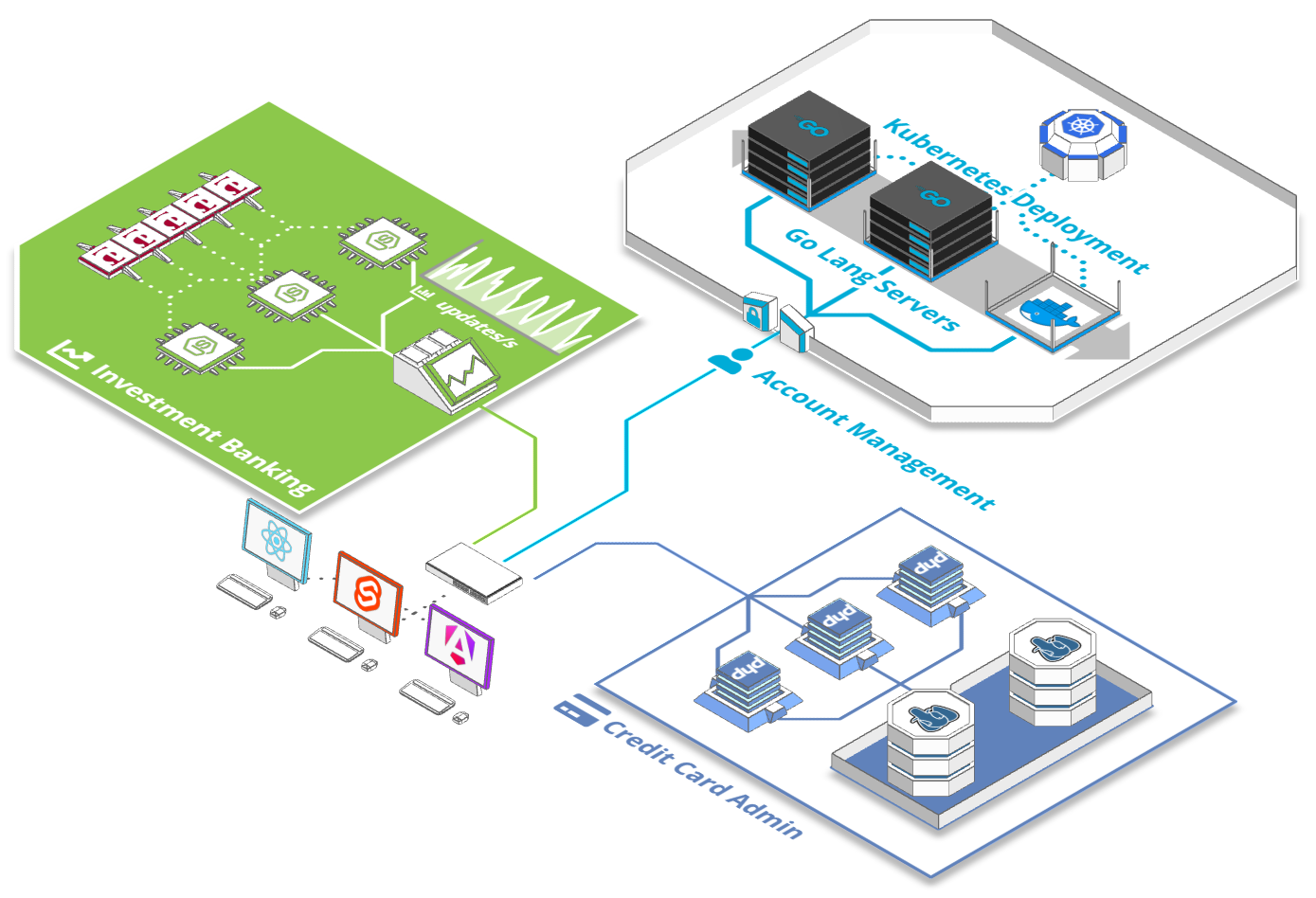
  • The fictional Megabank example has three teams on different stacks (Go/Svelte, Node/Erlang/React, PHP/Angular) that shipped on time before a platform team mandated one stack.
  • Mandated standardization stalls product work: teams spend the year on migrations, a candlestick chart request is deprioritised, and the credit card team's reuse of a component stalls on undocumented data formats.
  • Proposed SOA model requires backend delivery as Docker containers, frontends as static files on a CDN, and RESTful APIs documented with Swagger, with implementation left to each team.
  • The platform still supplies shared navigation, asset loading, a CSS framework and docs, accepting that switching portal tabs loads a whole new JS framework.

What HN thinks

  • Commenters broadly agree that premature abstraction is costly and that duplicating code until a pattern emerges (often cited as the rule of three) is often better than forcing shared code early.
  • Several commenters push back that duplicated code drifts apart, so shared UI components and single canonical data definitions still matter, and the article's point should not be read as rejecting standardization altogether.
  • One commenter describes a multi-company integration where forced unification onto one stack was resisted, while another notes that a bottleneck platform team, not duplication itself, may be the real problem.
Web Browser Engineering (2021)browser.engineering · 117 points · 20 comments · 5hprogrammingwebA free online textbook by Pavel Panchekha and Chris Harrelson that builds a basic but complete web browser from networking to JavaScript in a couple thousand lines of Python.

Key points

  • The book is organized into four parts: loading pages, viewing documents, running applications, and modern browser features like compositing and the event loop.
  • It is also sold as a print book from Oxford University Press and in Korean and Japanese translations.
  • The text covers cookies, logins, XSS and CSRF as part of its section on keeping data private.

What HN thinks

  • One commenter objected to the book's line calling WebAssembly a possible future peer of JavaScript, arguing wasm is mainly a compatibility and performance layer with deliberately restricted API access.
  • The lead author replied that the claim appears only in the appendix's list of uncovered topics, and that WebAssembly is not covered anywhere else in the book.
  • Another commenter suggested dropping the speculative co-equal remark, since it invites disagreement and is not a stated goal of wasm.
Running coding agents without handing them my credentialsblog.antonio.cx · 113 points · 80 comments · 24haisecuritylend is a proxy that lets remote coding agents run specific commands like gh on the laptop, with per-request policy and Touch ID approval, so credentials never leave the laptop.

Key points

  • Policy on the laptop is default-deny and lists allowed executables, subcommand prefixes, and SSH keys, each with its own approval level.
  • Approval can be biometric:inline, putting Touch ID in the request dialog, or a separate biometric prompt after clicking Allow.
  • Leases can grant five minutes or three uses for an exact approved command, ending when the SSH session or screen lock ends.
  • Secrets are read from 1Password on the laptop and injected as environment variables into the approved command, never shown to the VM.

What HN thinks

  • Several commenters argue that a Touch ID approval prompt gives little real protection, since the agent still gets to use whatever the credential can do, so scoping permissions matters more than keeping keys out of reach.
  • Commenters point out that keeping credentials out of the chat transcript and disk logs is a real benefit, and that per-service token scoping is often unavailable, which limits how safely agents can be given access.
  • Some practitioners report running agents in sandboxes or on throwaway VMs with secret-injecting proxies or read-only, minimally scoped tokens, and suggest a dedicated agent account as a practical alternative.
Japan's Hometown Tax (2018)kalzumeus.com · 112 points · 66 comments · 2dpolicyfinanceJapan's Furusato Nouzei lets taxpayers redirect up to 40% of next year's residence tax to any city or prefecture, with cities competing by sending back gifts worth up to half the donation.

Key points

  • Donations are a 1:1 credit against next year's residence tax, and anyone can donate to any locality regardless of where they live.
  • Donations rose from about 33,000 participants in 2008 to about 2.2 million in 2016, totaling roughly $2.5 billion, driven largely by the gift bidding war.
  • The central government capped returned gifts at 50% of the donation after cities bid up rewards, including gift cards that resell at about 97 cents on the dollar.
  • Intermediary sites likely take an estimated 5% to 10% of donations, according to the author's inference rather than published figures.

What HN thinks

  • Commenters broadly agree the system is unusual and popular with users, with one saying it lets them visit towns they would never otherwise go to.
  • The strongest criticism is that it creates perverse incentives, with a Japan-based commenter arguing that cities bidding for taxes with gifts pull money away from the places that actually provide the services people use.
  • A Japan resident who uses the system says the gift catalog items are typically priced several times above market, so the value is mostly in the free goods rather than the tax policy.
Regulatory Capture by Anthropic Through METRnitter.cf · 110 points · 46 comments · 13haipolicyA long X thread by Kevin Bass alleges METR's funding and related donor networks depend on Anthropic stock, but the core claims rest on inference from donor records rather than documented links to METR.

Key points

  • The thread says the Good Ventures Foundation's Anthropic stake was worth about $500M in early 2025 and over $7.7B by mid-2026, though no filing names the Anthropic holding.
  • Bass says IRS 990 Schedule I records show Donor-advised funds paying Coefficient-recommended grants, including exact-dollar matches, but these prove routing, not ownership.
  • Moskovitz has said Anthropic shares are entirely in the foundation and that the foundation is invested in Anthropic, per the thread's cited Bluesky posts.
  • METR's own page says it does not accept funding from AI companies but receives significant free tokens from unnamed frontier companies.

What HN thinks

  • Several commenters say the financial ties between Anthropic and METR were already publicly known and discussed, so the thread treats the X post as rehashing old material.
  • Commenters broadly suspect the post was largely written or generated by an LLM, pointing to its staccato style, a chart that looks machine-made, and the author's unverified claim of an audit.
  • One commenter argues the ethical concern stands even if legal: an evaluator with financial ties to a competitor may be a conflict of interest worth addressing.
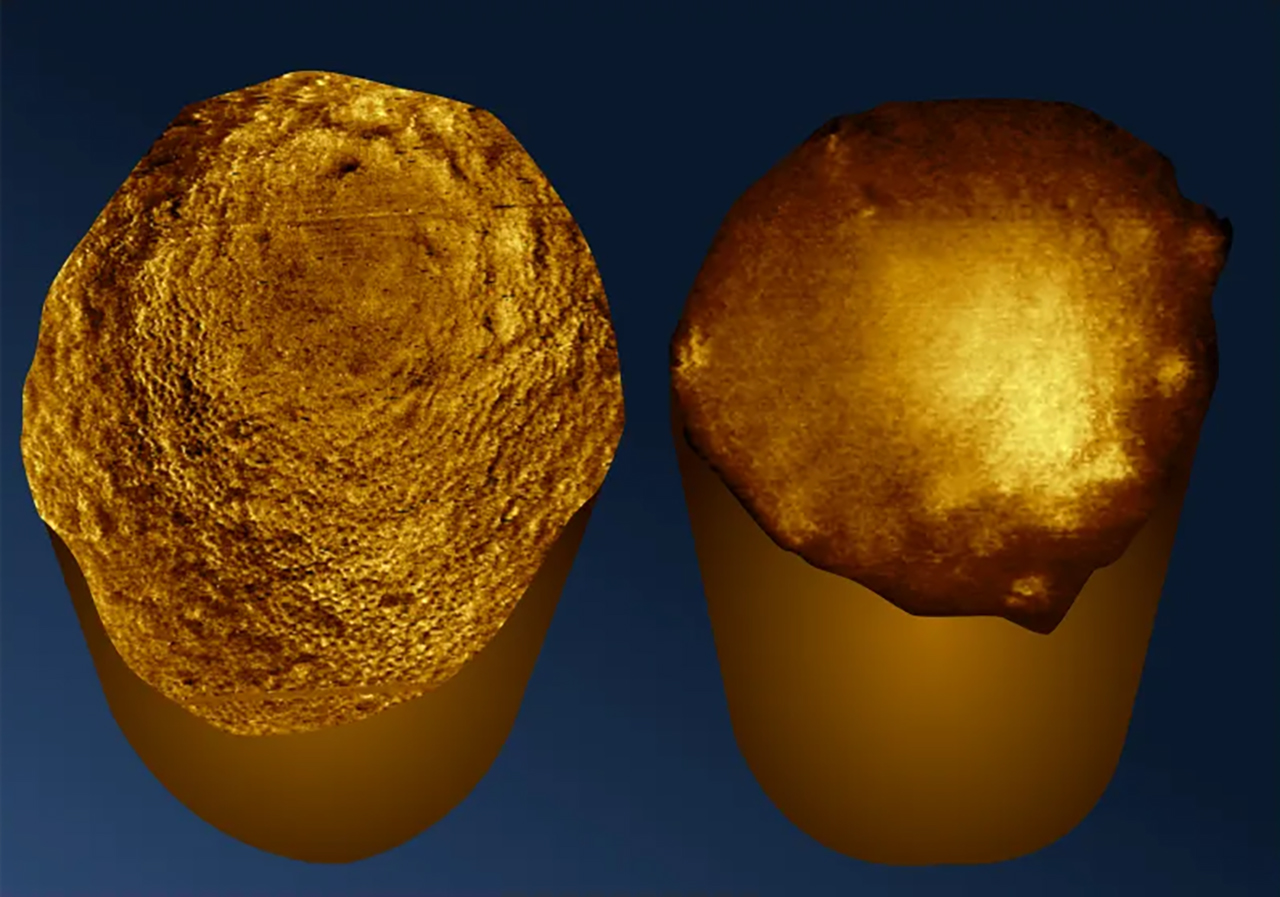
First Photos of the Poles of a Rod-Shaped Bacteriumnautil.us · 108 points · 23 comments · 34hsciencehealthResearchers used glutaraldehyde to immobilize live E. coli upright on glass, enabling atomic force microscopy images of the cell poles for the first time.

Key points

  • The fixative binds surface proteins and keeps cells alive, preserving their structure during imaging.
  • An AFM probe only a few nanometers wide scans the cell surface, likened to a finger reading braille.
  • Sticking took 20 minutes to take effect, and some upright cells took 50 minutes to locate.
  • The poles are where cells divide and may be a target for some antibiotics, per the lead author.

What HN thinks

  • Commenters flagged that glutaraldehyde is a fixative and biocide, so the cells are not truly living in the usual sense, though one noted it may only act as a thin surface film and not kill cells on contact.
  • One commenter questioned what useful information the images provide, while others argued the technique itself matters more and that the real payoff would come from applying it across species and reproductive phases.
  • Another commenter pointed to a possible treatment angle, suggesting that better cell-wall images could help target specific vulnerabilities in the armor of drug-resistant pathogens.
Show HN: Zigzag, a native Mac browser for people leaving Arcgithub.com · 100 points · 61 comments · 4dtoolswebZigzag is a free, open-source Mac browser built on Apple's WebKit that recreates Arc's sidebar, spaces and pinned tabs, and runs Chrome Web Store extensions.

Key points

  • The app is about 18 MB installed in the original post, versus over 800 MB for Arc, with no Chromium or Electron.
  • Chrome extensions install from the Chrome Web Store; Zigzag answers missing Chrome APIs such as history, bookmarks and notifications itself, checked against each extension's permissions.
  • Known gaps include the debugger API, chrome.identity sign-in, MV2 webRequest so full uBlock Origin fails (uBlock Lite works), and PAC proxy scripts.
  • Arc spaces, pins, favorites, history, passwords and extensions can be imported; sync between Macs is not yet supported and the app requires macOS 15.4 or later.

What HN thinks

  • Commenters praised Zigzag's speed and smoothness compared with Arc and Chromium, and one user reported noticeably lower RAM use than Zen.
  • Several commenters pointed to existing alternatives such as Zen, Sidebery on Firefox, and Vivaldi, and one noted Chrome has added vertical tabs.
  • Skepticism centered on trust and sustainability: commenters questioned whether a solo, AI-assisted WebKit project will be maintained, and one argued that browsers need security-focused backing.
Pentagon fails ninth straight audit despite progress in organizing financesreuters.com · 98 points · 32 comments · 25hpolicybusinessThe Pentagon has failed its annual financial statement audit for the ninth year in a row, though officials point to progress in organizing its finances.

What HN thinks

  • Commenters noted the audit progress is real: 14 of 25 standalone entities passed in FY2026, up from 11, covering 56% of assets and 86% of liabilities.
  • One commenter proposed a phased schedule that would grant reprieves as pass rates rise toward 99%, with funding sequestered if targets are missed.
  • Critics argued that cutting funding for units that fail audits could hurt service members or oversight functions, and one said the lack of consequences leaves little incentive to fix the problem.
Microsoft's ONNX Runtime has disappeared from GitHubgithub.com · 92 points · 20 comments · 2haiopen-sourceThe microsoft/onnxruntime GitHub repository now returns HTTP 404, and commenters report it vanished without advance notice, breaking CI pipelines that depend on it.

What HN thinks

  • Commenters note the repository appears to have gone dark without advance notice, breaking CI and evaluation pipelines that depend on it.
  • One commenter points to the separate onnx/onnx repository as the project's home, but another says it is a different package, so the situation is not clearly resolved.
  • Speculation centers on a possible supply-chain attack or a GitHub policy takedown, with one commenter recalling a similar unannounced disappearance of another Microsoft repo that was flagged for a ToS violation.

The article couldn't be read, so this summary is based on the discussion.

Who Builds the Machines That Build the Machines?read.corematter.com · 91 points · 28 comments · 8hbusinesshardwareA Core Matter analysis says the US imports about half its machine tools ($5.8bn of $11.4bn in 2025) and that precision grinders and gear machines have no confirmed US volume builder.

Key points

  • Replacing imports would require US machine tool output to grow 63% to 83%, or $4.4bn to $5.8bn a year, assuming flat demand.
  • Imports of precision grinders rose 29.5% and gear machines 76.7% in January to September 2026, while all machine tool imports rose about 9.6%.
  • Haas's Henderson, Nevada plant is scheduled to open in Q1 2027, five years behind its original 2022 completion target.
  • The article's author estimates a 1 million humanoid-per-year line would need about 690 ultra-precision gear machines, roughly 1.15x all US gear-machine imports in 2025.

What HN thinks

  • Commenters largely agree that the bottleneck is the machine tools and precision components themselves, not just factory count, with one suggesting focus on areas where America already leads such as aerospace and rockets rather than reinventing everything.
  • One commenter argues that rebuilding the Shenzhen-style supply-chain density is hard and slow, and suggests renewed free-trade cooperation may be more realistic than full reshoring.
  • A skeptic says the article reads as surface-level googling and that import policy must account for imported castings, ball-screws, ways and controls, while another defends the author's detailed treatment of the domain.
Turbo Pascal Compiler Written in Turbo Pascalturbo51.com · 91 points · 38 comments · 2dprogrammingopen-sourceTPC16 is a commercial Turbo Pascal 7 command-line compiler, written from scratch in Turbo Pascal, that is source-compatible with Borland's TPC.EXE and emits identical 16-bit x86 output.

Key points

  • The compiler is sold as source code for a small fee, with a free demo that omits the compiler unit sources.
  • It must be built with BPC.EXE rather than TPC.EXE because the DOS compiler runs out of memory on its large units.
  • Map files and debug info in the EXE output are not implemented.
  • A 32-bit successor, TPC32, targets Delphi 7 and still generates 16-bit x86 code; buyers of TPC32 get TPC16 source free.

What HN thinks

  • Commenters are nostalgic for Turbo Pascal's fast compile times, with one noting it often beats modern projects on old hardware, though another argues it had only minimal optimizations.
  • One commenter points out that Turbo Pascal 7 already included peephole optimization, constant propagation, and inlining, so the speed did not come entirely at the cost of optimization.
  • Commenters note that slow modern compile times stem more from advanced type systems and generics monomorphization than from optimization alone.
Not Everything Needs an LLMnewsletter.posthog.com · 90 points · 37 comments · 7haitoolsPostHog reports using narrow yes/no decision models with calibrated probabilities to gate, route, and rerank before calling LLMs, and says they are far cheaper and faster but unsuited to multi-step reasoning.

Key points

  • In its PII scrubbing pipeline, 98.7% of session summaries skip the Gemini call after two narrow decision-model yes/no checks.
  • Using narrow questions instead of one broad question cut false flags to about a tenth of the single-question rate.
  • PostHog sets thresholds by error cost: 0.4 for PII, where false negatives leak data, and 0.85 for its Slack bot.
  • Reranking search results by decision-model probability improved ranking quality by about 25% across 20 test queries.

What HN thinks

  • Commenters broadly accept that narrow classifiers suit gating and routing, but one argued that most of the value depends on running evals that reflect real customer traffic, including the tail cases.
  • The main criticism is that PostHog is using LLMs on customer data, which one commenter called a privacy problem, and another linked this to the company's surveillance-oriented products.
  • One commenter questioned whether a 'decision model' is meaningfully different from an LLM constrained to yes/no answers, and another joked that the real need is a typed wrapper around LLMs.
Pentagon fails 9th financial audit in a rowthehill.com · 88 points · 43 comments · 10hpolicybusinessThe Pentagon has failed its annual financial audit for a ninth consecutive year, according to the story's headline; the article itself could not be fetched.

What HN thinks

  • Commenters note the audit has never been passed and that the Pentagon's stated goal is a passing grade by FY2028, with one saying real progress is being made.
  • Several commenters argue that a full audit is practically impossible for a budget this size, since accounting for every dollar could cost more than the spending itself, and a tolerance threshold is the realistic standard.
  • Commenters point to legacy systems as a core problem, with 149 financial management systems and some code built on 50-year-old technology, and one notes the failure is the same as the prior year's cycle of repeated failures.

The article couldn't be read, so this summary is based on the discussion.

Purism Launches Librem 5 v2, a RISC-V Phone to Empower Peoplepuri.sm · 83 points · 77 comments · 7hhardwaresecurityPurism is crowdfunding the Librem 5 v2, an eight-core RISC-V phone running PureOS, with a phone-only reward price of $1,599 and delivery expected 14 to 15 months after the campaign ends.

Key points

  • Hardware kill switches physically disconnect the camera, microphone, and wireless communications.
  • The phone is advertised as needing no required accounts or services from Apple, Google, Meta, Microsoft, Amazon, or AI platform providers.
  • Purism says bringing RISC-V to a fully functioning phone requires substantial work on graphics, peripherals, power management, and app compatibility.
  • Purism explicitly says campaign rewards and timelines are not guaranteed because development is ongoing.

What HN thinks

  • Commenters are skeptical of the RISC-V choice, noting the SpacemiT K1 performs roughly like low-end phone cores from a decade ago and that x86-only app packages like Signal and Flatpaks may be a problem.
  • Several commenters point to the GrapheneOS-capable Motorola Signature as a cheaper, more mature option at the same $1,599 price, while others argue small-batch niche hardware cannot match mass-market economics.
  • Commenters raise concerns about Purism's track record, citing the years of silence and refund problems after the first Librem 5 campaign, and a daily driver of the original Librem 5 reports it still works well for their needs.
My Empire of Dirtgeohot.github.io · 83 points · 80 comments · 14haipolicygeohot's blog post argues that AI companies pursuing recursive self-improvement will cut out humans and suppliers, and that the resulting race leads to a world war rather than human extinction.

Key points

  • The author says Anthropic's strategy is aimed at a singleton where demand is generated internally by agents working with other agents.
  • The author argues this outcome does not depend on any one actor like Dario Amodei, Anthropic's dual-class stock, or the US government.
  • He predicts World War III but not human extinction, and says a war lasting over a year would favor China and its allies on resource and production capacity.
  • He calls the 'Correlation Effect' fantasy about violence ending 99% unlikely and says it would be more horrifying than war.

What HN thinks

  • Several commenters push back on the war prediction, arguing that rivalry over compute and Taiwan is more likely to produce a tense standoff than a world war, with a 1945–49 US nuclear monopoly cited as precedent.
  • One commenter argues that abstract competition is never the trigger for war, which comes from ambitions, territory, and personalities, so AI is an instrument rather than a cause.
  • Commenters are skeptical of the post's economic vision, with one arguing that an economy without consumers cannot function and another arguing that populations would not accept mass exclusion from work.
Test/verification technique effectiveness with Astradanluu.com · 80 points · 12 comments · 42haiprogrammingDan Luu re-ran his agent testing evals with GPT-6 Astra on a harder Pandoc task, finding many test techniques beat Default, with proptest and ACL2 performing well.

Key points

  • On the Zstd eval, Astra reached full test correctness over 99% of the time at medium effort for about $1 per run, making that benchmark saturated.
  • Pandoc runs took about 14 turns on average and cost roughly $90k at MSRP across 25 runs per condition, and no condition reached full correctness.
  • Differential testing made agents examine boundary conditions closely, while TDD again underperformed Default on holdout generalization.
  • Author stresses sample sizes are too small to explain why results differ, and that skills and techniques that help one model or effort level may not transfer.

What HN thinks

  • Commenters see the results as a push toward evidence-based choice of agent verification techniques, with one suggesting a taxonomy of agent patterns that should be measured objectively rather than chosen by intuition.
  • One commenter argues Lean-based formal verification is often worse than lighter methods or doing nothing special, pushing back on the post's suggested interest in formal verification.
  • One commenter recommends Proptest as an obvious quality and cost win for AI-generated Rust code, and another asks how other languages such as F# perform on the same tasks.
Effects of a Nuclear Detonation in Low Earth Orbitarxiv.org · 74 points · 43 comments · 6hspacepolicyA modeling study estimates a 1-megaton nuclear detonation at 500 km over the South Atlantic would disable about 98% of modeled LEO satellites within a week via a trapped-electron radiation belt.

Key points

  • Electrons from radioactive fission products become trapped in Earth's magnetic field, forming an artificial radiation belt that repeatedly exposes satellites after the initial X-ray burst.
  • Tripling assumed radiation tolerance delays widespread failure only by days, with about 97% still disabled within two weeks.
  • Loss of maneuverability is modeled to produce roughly 20 collisions within two years.
  • Atmospheric drag removes many disabled spacecraft, but replacement satellites could face radiation and debris exposure for years.

What HN thinks

  • Commenters broadly agree that space-based weapons are a bad idea, since any nuclear detonation in orbit would damage the satellites of every party, though some argue a state with few orbital assets might find that tradeoff acceptable.
  • One commenter notes that EMP hardening is very difficult because even small cracks or imperfections can let damaging energy through, and effects are hard to predict.
  • Commenters point out that the study relies on declassified data from tests over 60 years old, so modern weapons, which may be smaller and more controllable, could behave differently.
Mem Is Shutting Downget.mem.ai · 71 points · 107 comments · 23haitoolsMem, the AI notes app, will shut down on January 15, 2027, with notes becoming read-only on December 18, 2026 and charging already paused.

Key points

  • Users are told to download their library before January 15, 2027, with a migration guide covering Apple Notes, Notion, Google Docs, Obsidian and OneNote.
  • After December 18, 2026 users can read and export notes but cannot create or edit them.
  • Paid features are honored through the remaining availability period, and all charging has been paused.
  • The announcement lists a timeline of features from 2021 to a July 2026 Agent launch, spanning Spotlight capture, embeddings-based connections, Mem Chat and meeting notes.

What HN thinks

  • Commenters point out that the roughly $29 million in venture funding was likely a total loss, which one commenter explains is a normal outcome in VC portfolios where most bets fail.
  • Several commenters question how a notes app in a crowded market attracted that much funding, with one arguing it had no clear moat.
  • One commenter raised concern that user data could be sold in a shutdown, and another suggested it might be bought by a larger AI company for training data.
Why did modems have speakers? (2019)retrocomputing.stackexchange.com · 69 points · 41 comments · 2dhardwarehistoryDial-up modems included speakers so users could hear the handshake and detect problems, a feature that was cheap to add in that era, according to a Retrocomputing Stack Exchange answer.

Key points

  • Adding a speaker was cheap because the parts were standard, reliable, and inexpensive compared with other modem components.
  • The speaker let users monitor call progress and notice a failed connection without watching a screen.

What HN thinks

  • Commenters broadly agree the speaker was a practical diagnostic tool, letting users hear dialing, busy and ring tones, handshake quality, and whether a human answered before the modem connected.
  • One commenter with BBS experience notes that listening to the handshake let them predict connection speed and hang up early to redial a faster line.
  • Several commenters note the speaker also acted as a safeguard, alerting users when a program dialed out on its own or when a wrong number reached a real person.

The article couldn't be read, so this summary is based on the discussion.

Optimizely hack infected CNN, Fox News, BBC, Salesforce sites with malwarebleepingcomputer.com · 67 points · 9 comments · 8hsecuritywebA supply-chain attack via the Optimizely platform reportedly delivered malware to sites including CNN, Fox News, BBC and Salesforce, according to the headline; the article could not be retrieved.
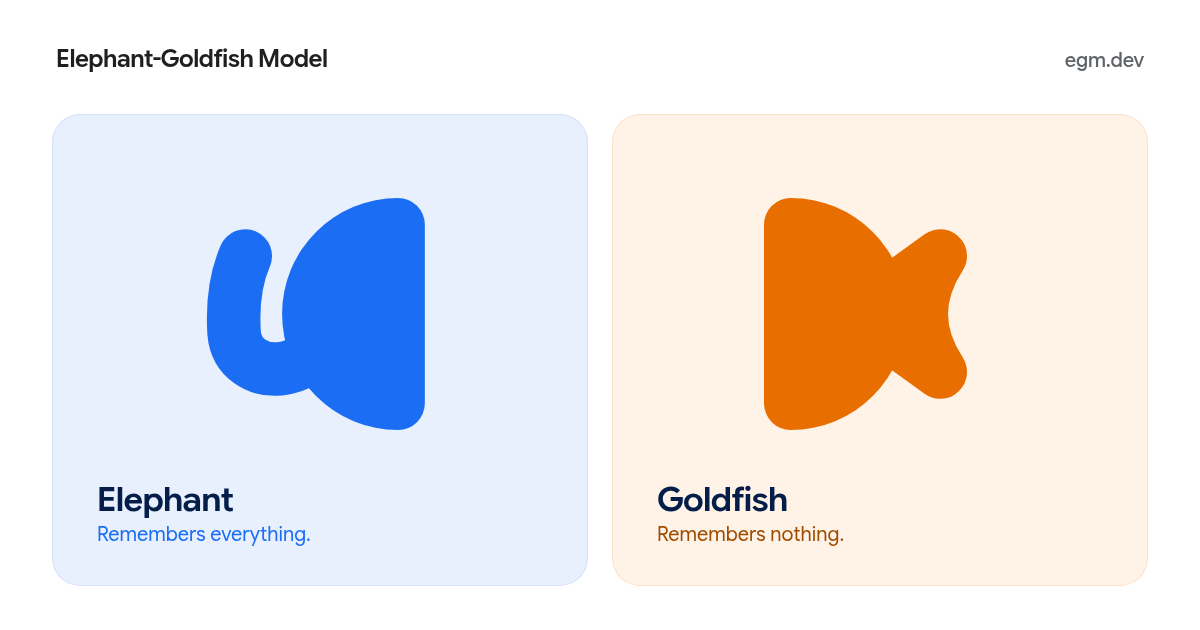
Elephant-Goldfish Modelegm.dev · 66 points · 23 comments · 41haitoolsEGM is an open-source plugin for AI assistants that has a drafting assistant write a plan, then sends that plan to fresh reviewers who lack the conversation and report gaps.

Key points

  • Reviewers see only the written plan, so any decision or context left out of the plan is treated as missing and flagged.
  • The example shows three gap types: unnamed staffing, unstated opening hours, and a 'Friday rule' the reader cannot see.
  • Install works in ChatGPT and Codex desktop, Claude Cowork, Claude Code, Codex CLI, and Antigravity, with review support varying by app.
  • The method is credited to Dave Rensin's article on elephants, goldfish, and software engineering.

What HN thinks

  • Several commenters say they already run a manual version of this idea, such as a short skill or fresh-session review, and one notes that fresh-context review helps avoid a model building on its own flawed output.
  • The main caveat is that the fresh reviewers are never fully satisfied and will keep raising points, so users must recognize when the agent is bikeshedding and stop.
  • Skeptics argue the approach is overengineered and token-expensive, and that frontier reasoning models or a simple review subagent may already cover the same ground.
iCloud, App Store, and other Apple services hit by ongoing outage9to5mac.com · 65 points · 22 comments · 8hsystemswebApple's iCloud, App Store, Apple Pay, and activation services are experiencing an ongoing outage with sign-in failures, while Apple's System Status page still shows them as available.

Key points

  • Users report unexpected iCloud sign-outs on iPhone and Mac, followed by verification failures or unknown errors when signing back in.
  • Developers report trouble accessing App Store Connect, and some users cannot load or download apps from the App Store.
  • Downdetector shows reports across multiple Apple services even though Apple's status page lists them as available.

What HN thinks

  • Commenters report the outage reaches beyond consumer services, with one saying Apple's own internal support systems were down during a business support call.
  • Some commenters speculate the outage could be cyberattack-related, though others push back that there is no clear evidence for that broader narrative.
  • One commenter notes that Apple's official status page is often slow to reflect serious problems, a pattern others have also suspected.
Jensen Huang says he’s open to returning in first statement since resignationcnbc.com · 65 points · 59 comments · 9hbusinessaiJensen Huang, who resigned as Nvidia CEO last week, says in his first statement that he would return if the board decides it is in shareholders' best interest, while cooperating with an investigation.

Key points

  • Huang resigned after 33 years as CEO, days after admitting to an affair and news reports linking him to Alice Huang, a person alleged to have Chinese intelligence contacts.
  • Nvidia hired Wachtell Lipton to probe whether his conduct compromised national security or company secrets.
  • The board said it is selecting a search firm for the CEO role, and CNBC reported the board is not considering bringing Huang back.
  • An online petition calling for his return had over 180,000 signatures, and President Trump said he was open to Huang returning.

What HN thinks

  • Commenters are sharply split on whether Huang should return, with many arguing that a CEO who admits sleeping with direct reports and faces an export-law investigation should not be reinstated.
  • Several commenters stress that his admitted relationships with subordinates are a governance problem regardless of consent, since the power imbalance makes them an HR and harassment risk.
  • Some commenters suspect the removal was politically driven, pointing to reports that evidence about his wife was embellished and to the export-control investigation, though others call those claims unproven.
The Fossils That Haunted Lovecraftpaleonerdish.wordpress.com · 61 points · 25 comments · 2dhistoryscienceA Halloween essay traces how the 1923 Gobi dinosaur eggs, misidentified as Protoceratops eggs, and later fossil finds shaped H. P. Lovecraft's fiction about prehistoric life.

Key points

  • The AMNH first thought the eggs belonged to Protoceratops and dated them about seven times too young, before the 1993 embryo find showed they were oviraptorid.
  • Osborn named Oviraptor ('egg-seizer') in 1924, but later fossils showed the animal was a brooding parent sitting over its nest.
  • Lovecraft's 1931 Antarctic cave in At the Mountains of Madness held dinosaur bones years before any dinosaur was found on the continent in 1986.
  • Lovecraft was annoyed in 1930 when Weird Tales published a dinosaur-hatching story first, and he urged Frank Belknap Long to write his own.

What HN thinks

  • Several commenters note that older science fiction was often read as fantasy today even though authors meant it as speculation or fact, and Lovecraft's fiction is seen in a similar light.
  • One commenter argues Lovecraft could easily have seen penguins through photographs, stuffed specimens, or zoo displays, which undercuts the claim that he invented their look from nothing.
  • A commenter who first read At the Mountains of Madness without knowing the fossil background says learning it makes the story feel more like an author reacting to current news than pure invention.
Mouse Partyaboard.com · 60 points · 10 comments · 3dtoolsopen-sourceMouse Party is a free, open-source Mac app that hosts a temporary video-watching and chat session by tunneling a local web server through Cloudflare quick tunnels, with no server setup.

Key points

  • Drag a video, MP3, PDF, or ePub onto the app to generate a shareable link; quitting the app ends the session and deletes the link.
  • Cloudflare quick tunnels provide random, login-free links at no cost, replacing the need to set up a hosted web server.
  • Home upload bandwidth supports about four or five viewers, or ten or more on faster connections, with a configurable cap in preferences.
  • The chat has no moderation tools; the only way to remove a disruptive guest is to quit the app and end the party.

What HN thinks

  • Commenters point to existing web-based alternatives such as FileParty and ComeOver, and suggest WebTorrent or IPFS as better-suited foundations that avoid installing a Mac app.
  • One commenter praises the deliberate lack of chat moderation tools, reading it as a choice that pushes groups toward social responsibility rather than a built-in hierarchy.
  • A user who built a similar offline Bluetooth sync app for watching video on a plane reports it works across two devices, though they did not test three or four.
Archive Team is archiving the Apple Support Community (closes November 20, 2026)wiki.archiveteam.org · 55 points · 13 comments · 2hwebcultureApple is shutting down its Apple Discussions support forum on November 20, 2026, and Archive Team is distributed-crawling it before the site goes offline.

Key points

  • The forum went read-only when the shutdown began, accepting no new posts, and it will close permanently on November 20, 2026.
  • The project covers the English site plus regional forums for French, Chinese, Japanese, Korean, German, Spanish and Portuguese users.
  • Archiving runs as a distributed project where volunteers run an Archive Team Warrior container or VM that fetches items.

What HN thinks

  • Commenters largely criticize the forum as a source of unreliable help, with unpaid users giving misinformation and corporate-toned replies that dismiss real bugs as user error.
  • One commenter notes that archiving the forum preserves a long record of reported Apple product issues, which many see as valuable despite the forum's poor quality.
  • Some commenters argue that keeping the archive discoverable by search engines and LLMs could be harmful, since the content was often unhelpful.
Jensen Huang Posts on Xtwitter.com · 55 points · 34 comments · 9hbusinessaiNvidia CEO Jensen Huang posted a statement on X apologizing for personal mistakes that led to his departure, saying he will cooperate with the Board's independent investigation.

Key points

  • Huang says he did not live up to standards expected at Nvidia and that his personal mistakes created problems for the Board he deeply regrets.
  • He says he has seen calls from employees, investors, partners and customers for him to return as CEO, and that many contact him directly.
  • Huang notes he came to the US 53 years ago and says becoming a citizen is one of the proudest moments of his life.

What HN thinks

  • Commenters are divided on whether shareholders could push the board to reinstate Huang, with one arguing the board is ultimately accountable to them.
  • Several commenters doubt the reported national security angle, noting no intelligence proof has surfaced and that one major outlet retracted its reporting.
  • Some commenters argue Nvidia's prospects depend heavily on Huang's leadership amid AI competition, while others focus on unresolved questions about financing and export compliance.

The article couldn't be read, so this summary is based on the discussion.

Human.mdhuman-md.ai · 53 points · 39 comments · 5haicultureBriana Mazzio's personal manifesto lists ten working principles for creative people in the AI era, centered on breaking rules deliberately, shipping drafts, and owning AI output.

Key points

  • Its core claim is that AI models average the internet, so humans must know the rules well enough to break them deliberately and explain why.
  • It argues AI is an amplifier rather than an equalizer, exposing people who prompt once and accept the result.
  • It lists habits the author is trying to drop, such as waiting until work is ready and pretending taste is innate.

What HN thinks

  • Much of the thread is about presentation rather than content: several commenters found the scroll-jacking animation hard to navigate and suggested a plain video or the raw markdown file instead.
  • Some commenters suspect the manifesto was AI-written, judging by its prose style and bullet-point structure.
  • One commenter argues LLMs may eventually learn 'taste' too, so the manifesto's reservation of taste for humans may not hold, with embodiment in the real world as a possible remaining human edge.
Launch HN: StarSling (YC P25) – Self-improving CI for agent-volume reposstarsling.dev · 53 points · 30 comments · 6htoolsaiStarSling is a GitHub Actions runner service on Zen 5 microVMs, billed per second at $0.008/min, paired with AI agents that open PRs to speed up and cut the cost of CI workflows.

Key points

  • Each job runs in its own single-use, hardware-isolated microVM destroyed after the run, with secrets passed directly from GitHub and not stored by StarSling.
  • Switching is a one-line change: runs-on ubuntu-latest becomes a starsling-ubuntu-26.04 label, with no other workflow changes required.
  • Agents test the unchanged workflow side by side with a proposed change and merge only statistically significant wins as PRs with benchmark evidence.
  • Launch benchmarks show a 5.87x speedup on Mastra's slowest workflow, and the agents found an 11-month-old performance bottleneck in better-auth.

What HN thinks

  • One commenter argues the better metric is deployable merges to main rather than CI speed, noting pipeline-based CI stops scaling as more agents open PRs, with throughput often capped around 12 PRs an hour.
  • Asked how the speedups are achieved, the founders say the difference is self-improving PRs generated from CI telemetry, rather than just faster hardware that is billed for jobs that don't saturate the host.
S. Korea to send nationwide emergency alerts over college entrance exam cheatingapnews.com · 51 points · 56 comments · 11haipolicySouth Korea will send nationwide emergency alerts in response to college entrance exam cheating, reportedly involving AI tools used by test takers.

What HN thinks

  • Commenters note that AI agents make remote exam cheating far easier than before, since a local setup with a small model and tools could replace the accomplice that older schemes needed.
  • Several argue that exams measuring regurgitated knowledge are the real problem, and that assessment should shift toward applying knowledge, coursework, or in-person defenses.
  • Some commenters tie the cheating pressure to South Korea's exam-driven system, citing teen depression, weak productivity gains, low social mobility, and a very low birth rate as signs it is harming society, though others argue such systems curb nepotism.

The article couldn't be read, so this summary is based on the discussion.

Israel vs. Wikipediatechforpalestine.org · 47 points · 1 comment · 5hpolicyaiTech for Palestine publishes a 221-page report claiming Israel-linked groups have run 17 campaigns since 2001 to skew Wikipedia, nine of them still active, and that the ADL's 2025 report on Wikipedia collusion does not hold up.

Key points

  • The report says the ADL's 'Editing for Hate' claims did not survive the authors' checks, and that it shows no false fact or antisemitic content added to Wikipedia.
  • For 'Racial profiling in Israel', the authors say the ADL omitted vote counts, which show 22 editors voted to keep and 2 to delete.
  • The authors say the 23 members of Congress who signed a letter citing the ADL report received more than $96M from pro-Israel PACs.
  • The report says Israel's 2026 propaganda budget is $729M, up from $150M in 2025, including a $46.5M contract to make AI chatbots more pro-Israel.
Zoltraak and the Dynamics of Military Innovationjgeekstudies.org · 44 points · 11 comments · 2dhistoryscienceA JGeek Studies paper uses the anime Frieren's spell Zoltraak as a fictional model of how military technologies lose advantage as adversaries learn and adapt, then compares it with drone warfare in Nagorno-Karabakh and Ukraine.

Key points

  • The paper defines relative obsolescence as a drop in a technology's comparative advantage that does not mean it becomes useless.
  • In the story, humans took about half a century to understand Zoltraak well enough to add it to their standard magic repertoire.
  • The author argues drone cases show the reduction of advantage varies with technology type, operating environment, and adversary adaptation capacity.
  • The paper states its use of the fictional spell is a heuristic model, not an explanation of real historical processes.

What HN thinks

  • Several commenters doubt the fictional Frieren framing adds much real-world insight, arguing the core idea of innovation, reaction, and adaptation is already well known.
  • One commenter notes that once ideas are named, such as the proposed "Zoltraak effect," they become easier to apply, though the naming is the only new contribution.
  • A commenter points to the historical parallel of WWI gas and the US BAR, where Pershing delayed fielding large numbers to stockpile before Germany could develop countermeasures.
Tencent Hy4 Flashhy.tencent.ai · 43 points · 9 comments · 4haiopen-sourceTencent has released Hy4 Flash, a model its commenters describe as benchmarking competitively with GLM's flash tier at a very low price, with weights planned for public release.
A US Federal Women's Prison Became a "Rape Club"propublica.org · 43 points · 4 comments · 10hpolicycultureA ProPublica and Marshall Project investigation finds more than 185 cases of staff sexual abuse in federal women's prisons since 2021, with few meaningful reforms following the Dublin scandal.

Key points

  • Cases implicate more than 96 officers at 16 prisons, yet only 19 officers have been arrested or convicted.
  • Less than 10% of allegations against Bureau of Prisons employees were substantiated as of 2022, and over 75% lacked enough evidence either way.
  • Facilities repeatedly earned perfect federally mandated PREA audits in the same years abuse was occurring, because audits check policy compliance rather than signs of abuse.
  • Congress passed the Federal Prison Oversight Act, but the ombuds office it mandated still does not exist and has received no appropriated funding.
Show HN: TrnRT – An open-source LLM inference engine for AWS Trainiumgithub.com · 42 points · 5 comments · 9haisystemsTrnRT is an open-source OpenAI-compatible LLM inference engine for AWS Trainium2 that serves GLM-5.3-Flash on one trn2.48xlarge using NKI decode megakernels.

Key points

  • Runs decode as one NKI kernel per layer half, with sparse-attention layers fused into a single kernel, and reports 25% faster decode at batch 8 after the megakernel work.
  • Supports a 1M-token context using sparse attention (top 2,048 tokens) and linear attention with fixed-size state, plus a radix-tree prefix cache over FP8 KV pages.
  • Reported AgentX results at batch 12 are 28.9 requests/min, 3.57M tokens/min, and about $0.040 per million tokens on spot pricing.
  • The sparse-attention prefill includes an approximation affecting about 1.2% of block selections, and the benchmarked numbers came from an earlier build.

What HN thinks

  • One commenter noted that tokens per minute is an unusual metric and that a per-second figure such as tokens per second would make comparisons with alternatives easier.
Exploiting Replay Protected Monotonic Counters to Brute-Force Windows Hello PINsarxiv.org · 42 points · 3 comments · 36hsecurityhardwareResearchers show that rolling back firmware TPM state via SPI flash resets Windows Hello and BitLocker PIN lockout counters, cutting brute-force times for 4- and 6-digit PINs sharply.

Key points

  • Winbond SPI flash leaks its RPMC HMAC key under voltage glitching, allowing forged monotonic counters.
  • AMD's NV controller does not verify RPMC increments, so an interposer can suppress them unnoticed.
  • On two AMD desktops without RPMC flash, reflashing an old image reset fTPM lockout counters.
  • A 4-digit Windows Hello PIN falls in about 40 hours instead of 69 days; a 6-digit BitLocker PIN in 20 days instead of 19 years.

What HN thinks

  • The lead author says AMD was notified in February and has not committed to a firmware fix, and Winbond has not promised a hardware revision.
  • Commenters note the attack requires physical access and opening the device, such as with a stolen laptop or evil maid scenario.
Charles Schwab website goes downbusinessinsider.com · 41 points · 22 comments · 9hfinancetoolsCharles Schwab's website briefly showed an internal server error to some users on Monday, with trading still available, according to the company.

Key points

  • The site displayed a message saying its server 'encountered an internal error or misconfiguration' and could not complete requests.
  • Outage reports on DownDetector passed 1,400 by 10:20 a.m. ET, and the site recovered around 10:38 a.m. ET.
  • Schwab called it a 'brief webpage loading issue' and said clients could still reach accounts via schwab.com/login or the mobile app.

What HN thinks

  • Commenters noted that most account activity runs through the thinkorswim trading platform, which stayed available, so the outage mainly affected the standard website.
  • Several commenters argued that brief outages are routine for large services and do not on their own justify attention, while one suggested the coverage reflects a wider pattern of recent outages.
  • One commenter pointed out that a regulated, FDIC-insured brokerage trades off always-on availability against safety of assets, and that moving money is only a small part of what such accounts do.
Advancing computer-use agents for healthcare teamsopenai.com · 40 points · 26 comments · 7haihealthOpenAI describes computer-use agents that work inside clinical software, reading patient records and drafting orders, notes, and insurer paperwork for staff to review. The article could not be fetched.

Key points

  • The example workflow has an agent read visit notes, physical therapy records, and prior imaging in the EHR, then draft an MRI order, an encounter note, and a patient reply.
  • The same records are then used to prepare a prior authorization request in the insurer's portal for an authorization specialist to review.

What HN thinks

  • Commenters worry that clinicians reviewing AI-generated chart summaries rather than the underlying records could cause important history to be missed, and that drafts should cite their sources so reviewers can verify them quickly.
  • One commenter with US health-tech experience says clinicians are highly sensitive to any discrepancy from the EHR, so a single data error can cost a vendor its contract, and regulatory penalties make healthcare adoption of AI slow.
  • Some commenters suspect the insurer-facing step may only mean drafting a prior authorization note, with a physician still reviewing it, rather than the agent acting autonomously.

The article couldn't be read, so this summary is based on the discussion.

Antfly learned to stop worrying and love Apache 2.0antfly.io · 39 points · 11 comments · 10hopen-sourcebusinessAntfly, a database company, relicensed its database from the source-available Elastic License 2.0 to Apache 2.0 in October, and says it will keep it Apache 2.0 going forward.

Key points

  • The company says the license was protecting less than it thought, since agent-assisted coding lets cloud providers rebuild a database like Antfly much faster than in 2021.
  • Every version released under Apache 2.0 stays under those terms permanently, so the change cannot be reversed for past releases.
  • Revenue now comes from Antfly Cloud, a hosted service; self-hosting on a laptop or own infrastructure is free.
  • Antfly 0.3 adds SQL querying over the Postgres wire protocol, querying Iceberg and Parquet in object storage, knowledge graph building, and a cited research agent.

What HN thinks

  • Commenters largely treat the license change as a response to hyperscaler risk being outweighed by user demand and cheaper competition, with the founders saying agents made clones easier to build.
  • One skeptic questions long-term viability, and a commenter argues that community expertise, not the code, is what sustains projects like Valkey and OpenSearch.
  • A commenter notes that already-released versions stay under their original license, so the real question is whether a future relicense could be enforced against existing users, which is untested.
Show HN: VennDB: append-only in-memory Rust DB for rows queried using bit flagsgithub.com · 38 points · 3 comments · 40hprogrammingsystemsVennDB is a Rust derive-macro library that generates an append-only, in-memory database whose queries filter rows by bit-flag and value columns, intersecting bitmap indexes.

Key points

  • Adding #[derive(VennDB)] to a named-field struct generates a database type, a query builder, and a result type with typed filter methods.
  • Bool fields become bitmask filters, and non-bool fields marked as filters become per-value row sets, with optional and set-valued filters supported.
  • Random matching rows can be picked without first enumerating all matches, which the README says is much faster for filters that many rows match.
  • The crate uses forbid(unsafe_code), has no dependencies beyond its macro, and has an MSRV of 1.96 per the README.

What HN thinks

  • The author says the project started inside the rama proxy to pick a random upstream proxy matching flags and location, where scanning a Vec became slow and SQLite felt heavyweight.
  • The author stresses it is narrow by design, append-only with no updates or deletes, and not a general database replacement.
Too Many Stadiums with Roofssharptext.net · 37 points · 38 comments · 3dbusinesscultureAn essay argues NFL teams are building too many roofed stadiums, with about 10 of 30 stadiums fully open-air by 2031, and says this removes weather-driven variety from football.

Key points

  • Six new NFL stadiums are in progress, including Titans (2027), Jaguars (2028), Browns (2029), Bears (2030), Broncos (2031) and Chiefs (2031), most with fixed or retractable roofs.
  • Modern roofs often use ETFE, a lightweight translucent plastic membrane stretched across steel cables that lets natural light through.
  • Roofs let owners host concerts, conventions and NCAA Tournament games on the roughly 355 non-football days and cut maintenance costs.
  • The Bills' new Highmark Stadium covers the stands but leaves the field open, and the Panthers plan to keep an open-air stadium.

What HN thinks

  • Commenters pointed out that stadiums host concerts and other events year-round, so climate control serves more than football.
  • One commenter said Las Vegas stadiums can be too hot in summer, and a promoter-side reply said promoters want to avoid weather risk.
  • One commenter with first-hand experience said SoFi's translucent roof and partly open sides make it uncomfortable, so a partial roof can be worse than either option.
Harvard researchers find AI coding agents shifted the bottleneck to code reviewcomplexdiscovery.com · 35 points · 65 comments · 4haiprogrammingA Harvard working paper finds AI coding agents raised code output about 30% at adopting firms without raising finished work, while review time rose 49%.

Key points

  • Finished work, measured as Jira issues deployed to production, rose 0.12 per worker-month on a 3.67 baseline, statistically indistinguishable from zero.
  • Change requests on pull requests nearly doubled, from a 13% baseline, and review comments per pull request rose 35%.
  • Nearly 80% of firms had used an AI review tool by March 2026, yet AI produced only 23.3% of review comments.
  • The data come from Jellyfish client firms that consented to research use, with a data partner that has a commercial interest and a job-market paper not yet peer reviewed.

What HN thinks

  • Several commenters report that review has degraded at their companies, with some people approving their own agent-generated pull requests or getting no human review comments at all.
  • A recurring counterpoint is that the real bottleneck is upstream: specification, design, and integration issues, with some arguing that bad generated code is the root problem rather than review itself.
  • Skeptics note the study may rely on older models and that the finding is months behind practitioner experience, while others argue tests and CI are now the larger constraint.
Atomic Nuked Veteranarmscontrolwonk.com · 35 points · 7 comments · 43hpolicyhistoryAlabama issues a special license plate reading "Atomic Nuked Veteran" to people exposed to atomic bomb and weapons testing radiation from 1946 to 1962, verified by a Defense Threat Reduction Agency letter.

Key points

  • Eligibility requires a verification letter from the Defense Threat Reduction Agency stating exposure to dangerous radiation levels from 1946 to 1962 weapons tests.
  • No Geiger counter or radiation measurement is required to qualify, according to the Wall Street Journal's Eric Felten, as quoted by the author.

What HN thinks

  • One commenter from Alabama notes that Alabama plates are reissued every five years, so the plate would persist only if veterans kept renewing it, implying past demand.
New open source C4 Diagram toolyoutube.com · 28 points · 7 comments · 2dtoolsopen-sourceA new open-source tool for drawing C4 architecture diagrams, linked from a YouTube video; the article text was not available to review.

What HN thinks

  • One commenter says the project's own website is heavily AI-generated in style, and points to it as the better link than the video.

The article couldn't be read, so this summary is based on the discussion.

Fixing a WebKit bug to see if promises are made of train tracksalistair.sh · 27 points · 1 comment · 3dprogrammingwebA WebKit fix for a bug where Safari and Bun left a promise pending forever when a species getter threw, now rejecting it correctly as the spec requires.

Key points

  • The bug: a getter on p.constructor[Symbol.species] threw during then(), and JavaScriptCore's fast path had no resolving functions yet to reject with, so the promise hung.
  • The fix in WebKit/WebKit#68749 creates resolve and reject functions before calling then(), and is about 16 lines.
  • Safari 26 and Bun 1.3.14 hung on the test program, while Node printed the error and exited with code 1 as the spec requires.
  • The author argues the engine can put errors on the rejected track that no userland reject() call supplied, which is why TypeScript's Promise<T> lacks an error type parameter.
Why sending notifications is a nightmare for engineersnotifkit.dev · 24 points · 21 comments · 36htoolsprogrammingnotifkit is an MIT-licensed, self-hosted notification service that handles duplicate checks, backup providers, rate limits, quiet hours and per-order workflows, so teams don't build them in-house.

Key points

  • The article walks a single receipt email through seven failure modes, from timeouts causing duplicate sends to webhooks arriving out of order.
  • It says a retry must reuse a stable message ID and that the sent mark must be written after the send, so one crash case always remains.
  • Hosted alternatives Courier, Knock and Novu Cloud are said to charge per message, and self-hosted Novu needs several services plus MongoDB.
  • The author admits notifkit does not guarantee exactly-once delivery, only catches duplicates it can see.

What HN thinks

  • Commenters were skeptical that the article is more than a product pitch, with several calling it sales-oriented or AI-generated.
  • One commenter argued that a mail transfer agent already handles retries, so the basic email send problem is overstated.
A.I. Just Blew Up a Key Tenet of Computer Sciencenytimes.com · 23 points · 17 comments · 10haiscienceA New York Times piece claims AI has undermined the exponential time hypothesis, a core conjecture in computer science, but the article itself could not be fetched.

What HN thinks

  • Commenters broadly agree the result has no practical implications, since P vs NP and ETH bounds would not change any computation done today or in the near future.
  • Skepticism centers on the claim being sourced from OpenAI's announcement, which says the work is still to be verified, so commenters argue it is too early to judge.
  • One commenter notes that even a proof of P=NP would not guarantee tractable algorithms, because the constants involved could be impractically large.

The article couldn't be read, so this summary is based on the discussion.

Tokendoctor – See what your Claude Code use overpaysgithub.com · 23 points · 12 comments · 23haitoolsTokendoctor is a Claude Code plugin that audits your settings and sessions for overspending, proposes fixes as diffs you approve, and can reverse any applied change.

Key points

  • Its session replay shows what a smaller context window would have saved on your own past sessions before any setting changes.
  • The slide option replaces old tool outputs with short pointers instead of summarizing, so the conversation stays word for word and no summary pause occurs.
  • On the author's benchmark, the slide cut cost 19% to 35% on longer tasks but was roughly break-even or 6% dearer on a short one.
  • The 38% headline comes from the author's own six weeks of use, with the window reduced from 412K to 219K tokens per request.

What HN thinks

  • Commenters are skeptical of token-saving tools in general, noting that a tool can cut costs while quietly degrading output quality without anyone noticing.
  • One commenter cited a JetBrains benchmark of RTK, a similar tool, which found no savings at high reasoning effort and a 7.6% cost increase at low effort, contradicting its advertised 60–90% savings.
  • Several commenters argued that these tricks are short-lived because model updates change behavior, and that cost per completed task matters more than per-token savings.
Claude Mythos slashed software work to onboard AMD GPUs to around three daystomshardware.com · 21 points · 2 comments · 24haihardwareAnthropic told IPO investors its Claude Mythos Preview model wrote or ported almost all kernels needed to run one of its models on AMD MI355X GPUs in about three days.

Key points

  • Anthropic says the same onboarding work previously took six to 12 months and dozens of engineers, per its roadshow video and prospectus.
  • The three-day figure covers only prompt processing (prefill) for one model; Anthropic has not said whether decode was included.
  • Anthropic has not published AMD-versus-Nvidia performance numbers, which the article says are needed to judge whether AMD chips match Nvidia silicon.
  • Anthropic's first AMD MI450 chips in Helios racks are expected in the first half of 2027, offering a chance to repeat the bring-up.

What HN thinks

  • Commenters mostly mocked the irony of Anthropic's stance on another company's software ecosystem rather than discussing the technical claim.
Latent Lattice Language Modelsshivamduggal4.github.io · 17 points · 4 comments · 3haiLattice of Latents adds per-layer horizontal latent streams that persist across tokens alongside the usual residual stream, lowering perplexity on 400M-parameter language models.

Key points

  • A 406M-parameter Lattice model reduces FineWeb-Edu validation perplexity from 15.41 to 14.40 over a parameter-matched Transformer after 20B tokens.
  • Combined with hyper-connections and input residuals, the Lattice reaches 13.61 perplexity, versus 14.22 for the enhanced Transformer alone.
  • Lattice models use 22 layers instead of 40, keeping a 45% smaller KV cache at the same attention width of 1024.
  • On recurrent backbones like Gated DeltaNet and Mamba-2, Lattice variants with 4x smaller native states match or beat pure models with larger states.
The most expensive bargaining chip in historyunrelatedfindings.com · 16 points · 14 comments · 23hpolicyaiAn opinion essay argues the Nvidia CEO's sudden resignation and the new China chip restrictions were timed as bargaining leverage before a Trump-Xi summit, a hypothesis the author admits is unproven.

Key points

  • The essay's timeline runs from a 28 October earnings-date announcement to Huang's 11 November resignation and a 16 November export rule ahead of the Shenzhen meeting.
  • The export rule's announcement says it was written at the direction of Treasury and the National Security Council, though the Commerce bureau issued it.
  • The author notes the Washington Post reported Rubio recast CIA intelligence about Alice Huang in more assertive language, but the original assessment was not seen.
  • The author concedes that no evidence shows the board received instructions and that even aligned events would not prove prior coordination.

What HN thinks

  • Commenters largely dismissed the bargaining theory and offered a simpler explanation: intelligence agencies intercepted and bugged shipments, citing past precedent.
  • One commenter pressed the core objection that the administration sat on the information for about 15 months, which makes the timing the central puzzle.
Witches, vampires, ancient aliens–you'll find them all in Maltanationalgeographic.com · 15 points · 1 comment · 2dhistorycultureA National Geographic Traveller feature walks through Malta's folklore, from the Blue Grotto and Eye of Horus boat markings to the Ġgantija temples and modern pagan communities.

Key points

  • The Ġgantija temples on Gozo were built around 3600 BCE, which the article calls the second-oldest surviving buildings in the world after Göbekli Tepe.
  • Malta has 359 churches, more than one per square kilometre, though over 80% of the population identify as Roman Catholic.
  • The Il-Maqluba sinkhole near Qrendi is about 300 metres across and 40 metres deep, and local legend says God swallowed the land for sin.
  • The 1999 claim of a sunken temple off St Julian's was made by a retired property investor who said ancient aliens guided him there.

What HN thinks

  • One commenter only shared an archive link to the article, so the thread offers little beyond it.
Mistral offers three months of Vibe Pro free in Europex.com · 12 points · 10 comments · 9haistartupsMistral offered three months of its Vibe Pro plan free to users in Europe, on a first-come, first-served basis, and the code ran out within minutes.

Key points

  • The offer was limited to European users and the redemption code was reportedly exhausted within about seven minutes of posting.
  • The source is a social media post, so the terms come only from the poster's announcement as relayed in the thread.

What HN thinks

  • Commenters largely reported that the code was already gone, so the offer was effectively unavailable to most readers.
  • One commenter questioned the value of the offer given that DeepSeek is cheaper, and another criticized Mistral's model for a higher refusal rate on cyber prompts than open-weight peers.

The article couldn't be read, so this summary is based on the discussion.

Unkernel: Linux kernel in WASMunkernel.dev · 11 points · 5 comments · 21hsystemstoolsUnkernel runs a RISC-V Linux kernel inside a WebAssembly-based emulator so a browser tab boots a full Alpine Linux shell with package manager and persistent disk.

Key points

  • Alpine boots in 48 MiB of guest memory, with the page downloading about 10 MB and the prompt appearing 0.3 s after node launches.
  • The project's README claims getppid takes about 170 ns, versus 110 ns native and 1.7 µs under qemu-system.
  • The README claims fork plus exit plus wait takes about 60 µs, against roughly 70 µs natively and 1.2 ms under qemu-system.

What HN thinks

  • One commenter argues the title is misleading, since it is an emulator running RISC-V Linux rather than the Linux kernel itself compiled to WASM.
  • The thread raised unanswered questions about network constraints in the browser and whether kernel modules can be installed.

The article couldn't be read, so this summary is based on the discussion.

Show HN: Pulsar – cross-harness agent to agent communication and messaginggithub.com · 11 points · 0 comments · 22haitoolsPulsar is an MCP server that puts AI coding agents from Claude Code, Codex, OpenCode, pi, omp, Cursor and Gemini CLI on one local bus where they can list and message each other.

Key points

  • A per-machine daemon keeps a registry and SQLite message log, and each agent's MCP server connects to it over a user-only Unix socket.
  • Delivery uses each harness's own entry point, such as Claude's per-session inbox socket or Codex's app-server queue, so messages can wake idle agents.
  • Messages are limited to 64 KB, 60 sends a minute, and 6 broadcasts a minute per agent, and are labeled as coming from a peer rather than the user.
  • Multi-machine support is listed as coming soon, so the current version only works on a single machine.